
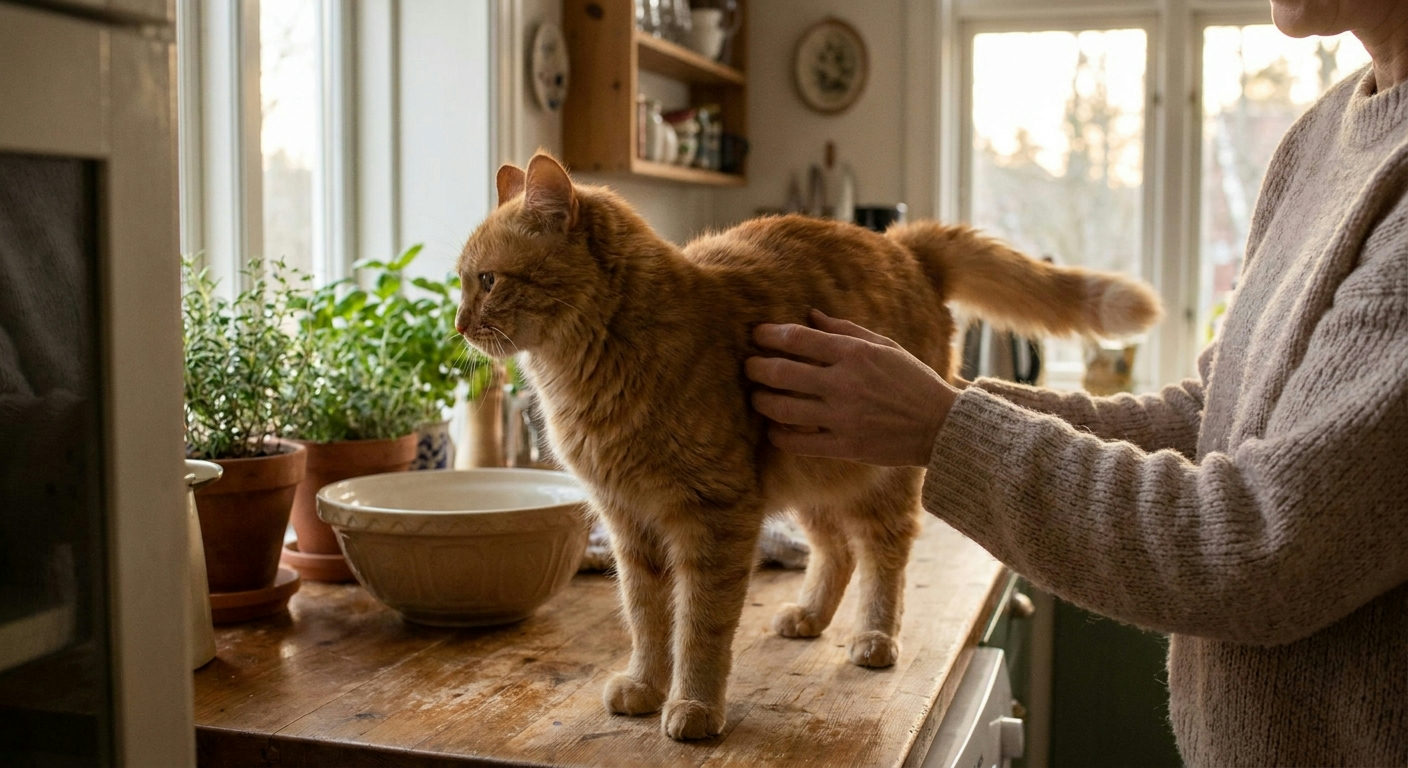
Cat weight management starts with an assessment, not a smaller scoop chosen at random. Your veterinarian can evaluate body condition, muscle condition and health, then help set an appropriate feeding and monitoring plan. The number on a scale is useful information, but it does not tell you by itself whether a cat should lose weight.
This is general information, not veterinary advice or a calorie prescription. Agree any weight-loss plan with your veterinarian before changing the ration. If your cat stops eating, seems unwell or loses weight unexpectedly, contact the clinic promptly. The practical steps here focus on recording what happens at home and following the individual plan accurately.
Ask for a condition assessment you understand
WSAVA’s nutrition resources provide separate body-condition and muscle-condition tools for cats. Ask your vet to demonstrate how these assessments apply to your cat. A photograph, a breed average or the size of the abdominal skin fold is not a substitute for the assessment.
Write the clinician’s findings on a care card. Include the current measured weight, the agreed goal if weight loss is appropriate, and any health or mobility consideration affecting the plan. Ask what change should trigger a call rather than waiting for the next review. Leave targets blank until they have been agreed; a general online example should not become this cat’s prescription.
If the assessment is difficult to follow, request a demonstration and repeat your understanding back to the team. You can ask where to look and how gently to handle the cat. Do not keep checking an area that appears painful. The purpose is to support accurate follow-up, not to conduct a home examination beyond what you have been shown.
Make the feeding record complete before changing it
Record every source of food currently offered: main meals, treats, table food, food used in toys and edible items used for medicines. Include access to another pet’s bowl or feeding by visitors. A record that lists only the main bag can miss items the household does not think of as meals.
Use exact product names and record the amount offered in a consistent unit. If you measure by weight, note the weight; if the original routine uses a scoop, record that honestly rather than inventing a precise conversion. Keep the packaging or a clear label photograph for the appointment. The clinician can then help translate the routine into the agreed feeding instructions.
Ask everyone who feeds the cat to contribute. A short note such as extra treats during evening play is more useful than a promise that nobody offers anything additional. Keep the conversation practical and free of blame. The record is meant to explain the routine so it can be adjusted, not identify the household member who caused a problem.
Follow a veterinary plan without improvising restriction
VCA’s weight-reduction guidance advises veterinary supervision and warns that inappropriate food or excessively rapid loss can be dangerous. Have the vet specify the food, amount and monitoring arrangement for your cat. Do not assume that removing a fixed share of the existing ration preserves all the nutritional requirements.
Write the instructions in a form another caregiver can follow: full food name, daily allowance, how to divide it, which rewards count within it and the next review. Ask the clinic to clarify any mismatch between a package measure and the prescribed unit. Do not change both the food and the amount based only on an online tip.
Avoid interpreting hunger-related behaviour as permission to keep reducing food, or interpreting every request for food as proof the plan is inadequate. Record the behaviour and discuss it with the team. If the cat refuses the prescribed food, call for guidance rather than waiting for hunger to force acceptance. A feeding difficulty belongs in the clinical conversation.
Prepare portions so the household can follow them
Use the measuring method the vet has recommended and check that the equipment can measure the required amount. If using a kitchen scale, place the empty container on it and use the appropriate zeroing function before adding food. Check the unit displayed. Grams and ounces are not interchangeable entries on the care card.
Prepare the agreed daily allowance in a labelled container if that fits your food-storage instructions. Each caregiver takes food from that allowance rather than opening the main bag for an unrecorded addition. If part of the food goes into a puzzle, count it within the same plan. Keep medicine-related feeding instructions from the clinic alongside the routine.
Do not extend a storage method from one food to another without checking the package directions. A dry ration container and an opened wet-food package can have different handling requirements. The practical goal is an accurate allowance that is stored appropriately, not a particular branded feeder or a universal meal schedule.
Handle feeding access in a multi-cat household
Observe whether one cat visits another’s bowl, whether meals are interrupted or whether a timid cat leaves before eating. Write down what you see without assuming that every animal eats an equal share of a common bowl. The vet needs to know if the intended ration does not reliably reach the intended cat.
Discuss workable separation: supervised meals in different spaces or equipment that controls access may be options. Check that each cat can use the arrangement comfortably and that the other animals still receive their own appropriate food. An access-controlled feeder is equipment to assess, not a guaranteed solution for every household.
Try the arrangement while someone is available to observe it. Record any food left and any access problem, using the method agreed with the clinic. Do not leave a cat with an unfamiliar feeding setup and assume it has eaten. If the new method interferes with intake, ask for help before making further changes.
Add activity that suits the individual cat
Discuss suitable activity with the vet, particularly if your cat has discomfort or limited mobility. A gentle toy interaction or accessible food puzzle can be part of a home routine when appropriate. Do not assign a calorie-burning value to a session or claim that play can replace the agreed feeding plan.
Choose one activity your cat can investigate comfortably. Keep the first attempt simple and supervised. If using food, use only the portion assigned for that purpose. Watch whether the cat can reach the item and use it without frustration. An inaccessible puzzle does not become beneficial because the packaging calls it enrichment.
Record what your cat actually does: approaches the toy, follows it briefly, uses the easiest puzzle opening or chooses to rest. Let the observation guide a question about adaptation. Avoid chasing the cat, withholding the entire meal behind a difficult puzzle or forcing movement through discomfort to meet an exercise target from a blog.
Review intake and weight on the agreed schedule
Use the weighing arrangement and review interval chosen with the veterinary team. Keep the equipment and conditions as consistent as practical, and note when they differ. Report the recorded weight rather than smoothing out a number that does not fit your expectation. Small inconsistencies in a home scale may need confirmation at the clinic.
Cornell’s hepatic-lipidosis explanation describes the serious liver disorder and its association with loss of appetite. Do not use a weight-loss plan as a reason to ignore food refusal. Call the veterinary team about reduced intake or a concerning change and follow its advice rather than making the ration smaller again.
At each review, bring the food record, measurements and any behaviour or comfort changes. Ask whether the current instructions should continue or be adjusted. The next step might be maintaining the plan, changing it or investigating a concern. None should be chosen solely because a general chart predicts a particular weekly loss.
Keep the routine clear after the first review
Cat weight management is a shared record and an individual care plan. Start with the condition assessment, document all food sources and make the agreed allowance easy for every caregiver to follow. Then monitor intake and the measurements on the schedule your vet provides. A clear care card and an honest feeding log give you something practical to bring to the next appointment without inventing a target or promising an outcome.