
This is not veterinary advice. It does not set a dose, a date, or a result.
The new kitten checklist is six lines
A new kitten checklist, on this page, is a list you can finish before the kitten has the run of the house. It is not a medical plan. Your vet writes that plan. This page tells you what to write down, and which public page to copy from when a number is required.
- Food the label calls a kitten food, plus a food dish and a water bowl.
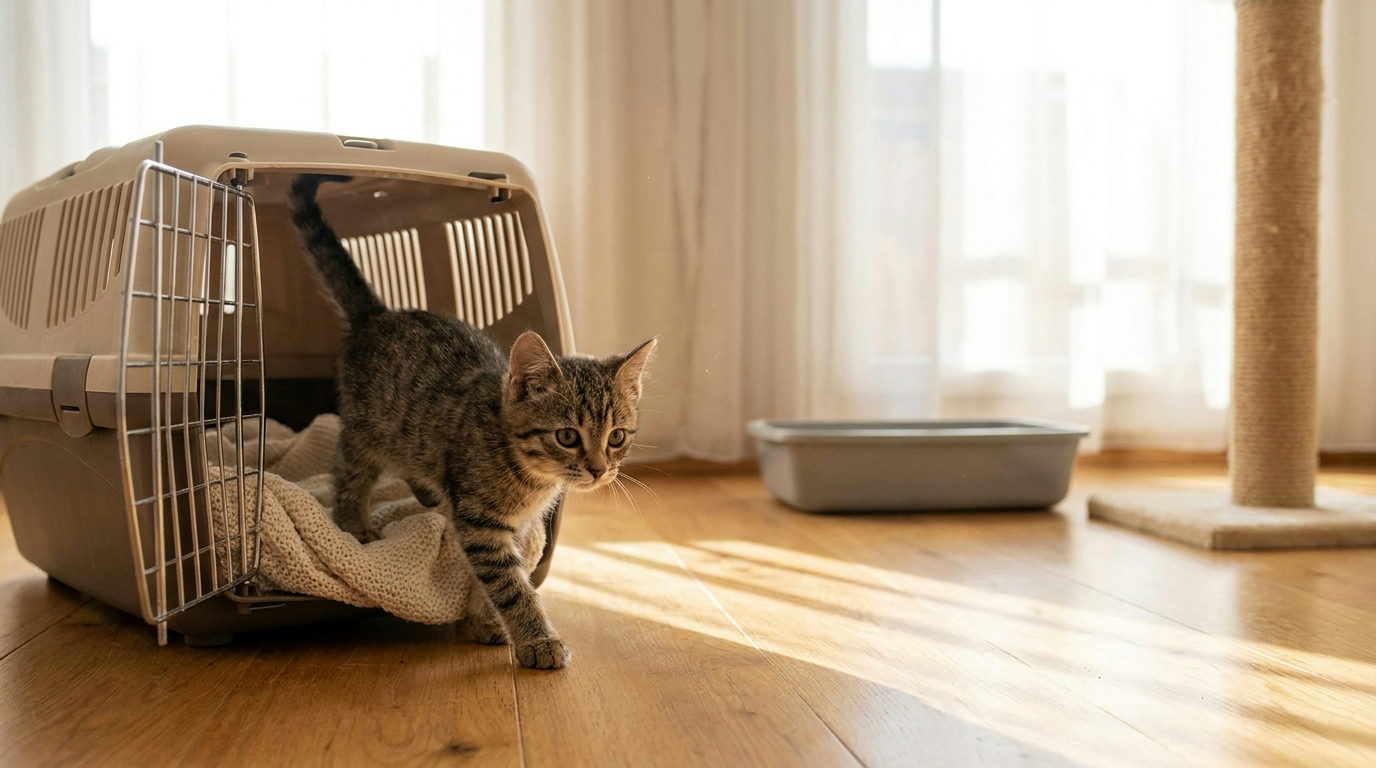
- A litter box, litter, a bed, a carrier, and a toy that is not your hand.
- A scratching post. If you need a height or a covering, copy it from the ASPCA general cat care page. Do not type a height from memory.
- A collar plan and a microchip question for the vet. If you need the collar detail, copy that sentence from the same ASPCA page.
- A vet visit on the calendar. Ask them what this kitten needs. Do not paste a schedule from a blog into the appointment.
- A walk through the home for shut appliance doors, tied cords, and closed cupboards, done before more rooms are opened.
That list is the whole checklist. Anything with a figure lives on the source page, not in a remembered sentence.
Where the figures live
The ASPCA general cat care page is the household source for this note. Open it when you want their supply list, their litter-box routine, their scratching-post description, or their poison-control contact. Copy the line you need, including the unit, and write “ASPCA” beside it. If you did not open the page, write “not copied.”
International Cat Care publishes a kitten booklet and a vaccination article. Meal frequency and a common vaccine course are their sentences. This article will not restate those ages or those meal counts. Open the kitten booklet and Vaccinating your cat, and copy only what you actually read. Your vet can change any of it for this kitten and this place.
If a video gives a different age, a different meal count, or a different product, it does not replace those pages or your vet. Leave the video off the checklist.
The room, without a day count
Start in one quiet room. Put the bed, the food, the water, the litter box, and a hiding place in that room. Keep food away from the tray. A new kitten checklist that opens every door in the first hour is a bigger change than the list requires.
This page will not assign a number of days to that room. When the kitten is eating, using the tray, and approaching you, you can open one more room and leave the first room available. If eating or energy drops, stay in the first room and call the vet. Do not wait for a blog to name a deadline.
Other notes on Best Cat Care are vocabulary. They are not the clinic, and they are not the ASPCA page.
Food, without a brand and without a gram weight
Use a food whose label matches a kitten, unless your vet says otherwise. This page does not name a brand. If you change the food the kitten came home with, change it gradually and ask the vet if the stomach looks wrong.
Treats are not the meal. If you want a ceiling for treats, copy it from the ASPCA page rather than from this article. This article does not print one.
Do not use a jar of baby food until you have read the ingredient line and asked your vet. The ASPCA page discusses foods that do not belong in a cat’s bowl. Read that page. Do not rely on a paraphrase.
Water stays available. Wash the bowl on the routine the ASPCA page describes if you are following their page. If you have not opened it, write that down instead of inventing a schedule.
The vet conversation
Book the first visit because you want a baseline, not because this page predicted a problem. Take a short list of questions:
- Which vaccines does this kitten need, and what date is next?
- Which parasite product is for cats, and how do you want it used?
- When do you want this kitten spayed or neutered?
- Can a microchip be done at this visit or later?
- How should I judge body condition, not only how full the bowl looks?
Write their answers on the checklist. A date they did not say is not a date. A product they did not name is not a product. Dog products do not go on a cat. If the box is unclear, do not use it.
Insurance is a contract. This page will not say a policy is worth buying. Read the exclusions yourself and ask the insurer how they treat a condition that already exists.
The house, as a walk not a diagnosis
Before the kitten leaves the first room, look at machines with doors, gaps behind furniture, blind cords, and cupboards that hold cleaners or human medicine. The ASPCA page says not to give a cat a medicine a veterinarian has not prescribed. Follow that. Do not add a medicine this article invented, because it invented none.
If you think the kitten chewed a plant or swallowed something odd, call your vet. If you want a poison-control number, copy it from the ASPCA page while you are looking at it. This article does not reprint the number, so the note cannot drift from the page.
Windows and balconies need a screen you trust with a climbing kitten. The ASPCA page discusses indoor and outdoor risk. Read it. This article will not add a lifespan figure.
Scratching is ordinary. Point the kitten at the post. If you want their nail-trim interval, copy it from their page.
Four weekly notes, with no ideal to fake
Use the first month as four notes. They are a log, not a test.
- First note: the quiet room, short handling, and the vet time written down.
- Second note: meals at times you chose, short play with a wand, and the carrier left open so it is a nap spot too.
- Third note: one more room only if the first room is going well, and scent swapping before any meeting with another pet.
- Fourth note: the next date the vet gave you, the neuter question asked, and whether the kitten is eating and playing.
If a week does not look like that, write what happened. Do not backfill a perfect week. A short play session you will repeat beats a plan you will skip. This page does not promise that the house will feel calm.
When the note stops and the phone starts
Call the vet when you are worried. Do not use this article as a reason to wait out a change in eating, energy, breathing, or the litter tray. The ASPCA page tells you when they want a cat seen. Read that sentence on their page and follow your vet if the two differ.
Put the clinic number where you can see it. A new kitten checklist without that number is not finished. The poison-control number, if you keep one, is copied from the ASPCA page onto the same card.
Write the clinic name on the same card as the six lines. If a sitter has to open the note, they should see where the food is, where the tray is, and who to call. They should not have to interpret a mood. A new kitten checklist is finished when a sitter can follow it without a speech from you.
If you add a second kitten later, start a second card. Do not assume the first card’s vet dates apply. Ask again. The first card stays the record of the first kitten.
What you leave with
You leave with the six lines, the clinic number, and the next date your vet actually gave you. You do not leave with a brand, a gram weight, or a temperament forecast.
The ASPCA page is the household source. The International Cat Care booklet and vaccination article are the sources for meal frequency and vaccine timing, and only after you open them. Your vet can override all three for this kitten.
Stop when the supplies are in the room, the visit is booked, and the hazards you saw are moved or written down. Past that is care you watch. This page does not lock in a result.