
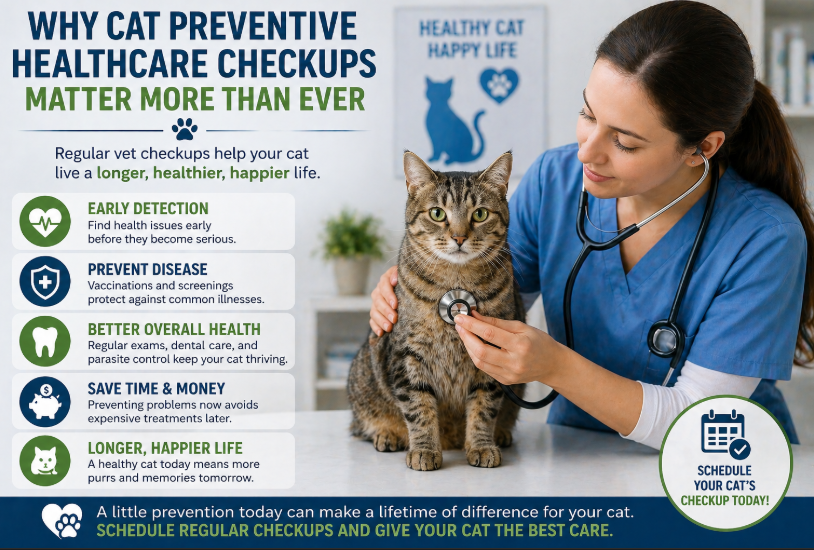
In today’s world, cat preventive healthcare checkups are more important than ever for ensuring your pet lives a long and healthy life. Cats are experts at hiding illness, which means problems often go unnoticed until they become serious. Because of this, regular checkups provide a proactive way to monitor your cat’s health and catch issues before they escalate. When you stay consistent with these visits, you give your cat the best chance at avoiding unnecessary suffering and complications.
Many cat owners assume that indoor cats are less at risk, yet that belief can lead to missed warning signs. Even cats that rarely leave the house can develop conditions such as dental disease, kidney issues, or obesity. By prioritizing cat preventive healthcare checkups, you shift from reacting to problems to preventing them. This approach not only improves your cat’s quality of life but also helps you feel more confident in your role as a responsible pet owner.
Why Early Detection Is Critical For Cats
One of the biggest reasons cat preventive healthcare checkups matter is early detection. Cats often show subtle symptoms, which are easy to overlook during daily routines. However, routine veterinary visits can identify these small changes before they turn into serious health concerns.
For example, weight fluctuations might indicate metabolic problems, while minor dental issues can quickly develop into painful infections. During checkups, veterinarians perform thorough exams that go beyond what you can see at home. As a result, potential risks are addressed early, making treatment simpler and more effective.
Additionally, early detection reduces stress for both you and your cat. Instead of dealing with emergency situations, you can manage health concerns calmly and with proper guidance. This proactive approach highlights why cat preventive healthcare checkups are essential for long-term wellness.
What Happens During A Routine Cat Checkup
Understanding what to expect can make cat preventive healthcare checkups feel less intimidating. Typically, a visit includes a full physical examination, where the veterinarian checks your cat’s weight, coat condition, eyes, ears, and overall body function. These basic checks provide valuable insights into your cat’s health.
In addition, vets often assess dental health, which is a common issue among cats. They may also recommend blood tests or screenings, especially for older cats or those with existing conditions. These tests help detect internal problems that are not visible externally.
Another important part of the visit involves discussing your cat’s behavior and daily habits. Changes in appetite, energy levels, or litter box use can reveal underlying concerns. By combining professional evaluation with your observations, cat preventive healthcare checkups become a powerful tool for maintaining health.
Common Health Issues Prevented Through Regular Visits
Regular monitoring plays a key role in preventing many common feline health issues. Cat preventive healthcare checkups can help detect conditions such as kidney disease, diabetes, and thyroid imbalances before symptoms become severe. Early diagnosis allows for better management and improved outcomes.
Dental disease is another major concern. Many cats develop plaque and gum problems that can lead to infections if left untreated. Routine checkups allow veterinarians to address these issues early, preventing pain and complications.
Obesity is also increasingly common, especially among indoor cats. During checkups, vets can evaluate your cat’s weight and recommend dietary adjustments. By addressing these concerns early, cat preventive healthcare checkups help maintain a healthy balance and reduce long-term risks.
The Role Of Vaccinations And Preventive Treatments
Vaccinations and preventive treatments are essential components of cat preventive healthcare checkups. Even indoor cats benefit from vaccinations, as they protect against diseases that can be introduced through limited exposure. Keeping vaccinations up to date ensures your cat remains protected.
Preventive treatments also include parasite control. Fleas, ticks, and worms can affect cats regardless of their environment. Regular checkups allow veterinarians to recommend appropriate treatments based on your cat’s lifestyle.
Furthermore, these visits provide an opportunity to review your cat’s overall care routine. From grooming habits to nutrition, every aspect of your cat’s life can be evaluated and improved. This comprehensive approach highlights how cat preventive healthcare checkups support complete well-being.
How Lifestyle And Environment Impact Cat Health
Modern lifestyles have changed how cats live, and this makes cat preventive healthcare checkups even more important. Many cats spend most of their time indoors, which can lead to reduced activity levels. Over time, this can contribute to weight gain and related health issues.
Environmental factors also play a role. Stress from changes in routine, new pets, or limited stimulation can affect your cat’s behavior and health. Regular checkups help identify these issues and provide solutions that improve your cat’s environment.
Additionally, diet plays a significant role in overall health. During checkups, veterinarians can assess your cat’s nutrition and recommend adjustments if needed. By addressing lifestyle factors, cat preventive healthcare checkups ensure that your cat’s daily routine supports long-term health.
Building A Strong Health Routine For Your Cat
Consistency is key when it comes to maintaining your cat’s health. Scheduling regular cat preventive healthcare checkups creates a routine that helps you stay on track. These visits serve as reminders to monitor your cat’s condition and make necessary adjustments.
In between visits, observing your cat’s behavior is equally important. Changes in appetite, grooming, or activity levels can provide early clues about potential issues. When combined with professional care, this awareness strengthens your ability to keep your cat healthy.
Creating a routine also reduces anxiety for your cat. When visits become a normal part of life, your pet is more likely to remain calm during appointments. Over time, this consistency makes cat preventive healthcare checkups easier and more effective.
Overcoming Common Concerns About Vet Visits
Some cat owners hesitate to schedule visits due to cost, time, or fear of stressing their pet. However, these concerns should not outweigh the benefits of cat preventive healthcare checkups. In many cases, early detection saves money by preventing expensive treatments later.
Time can also be managed with proper planning. Scheduling appointments in advance and choosing convenient times helps make visits more manageable. Additionally, many clinics offer efficient services that minimize waiting time.
Stress for your cat can be reduced with simple steps. Using a comfortable carrier, keeping the environment calm, and offering reassurance can make a significant difference. By addressing these concerns, you can ensure that cat preventive healthcare checkups remain a regular part of your routine.
Long-Term Benefits Of Preventive Care
The long-term benefits of cat preventive healthcare checkups extend beyond immediate health concerns. Regular monitoring helps track your cat’s development and detect patterns over time. This information allows veterinarians to provide more personalized care.
Preventive care also strengthens the bond between you and your pet. When your cat feels comfortable and healthy, they are more likely to engage and interact positively. This improves their overall quality of life and enhances your relationship.
Moreover, staying proactive reduces the likelihood of sudden health emergencies. Instead of reacting to crises, you are prepared and informed. This peace of mind is one of the most valuable outcomes of consistent preventive care.
Conclusion
Cat preventive healthcare checkups matter more than ever because they provide a proactive approach to protecting your pet’s health. By focusing on early detection, regular monitoring, and consistent care, you can prevent many common health issues before they become serious. These visits are not just routine tasks but essential steps toward ensuring a longer, healthier life for your cat.
When you prioritize preventive care, you invest in your cat’s future. Small, consistent actions can lead to significant improvements in well-being, helping your pet stay active, comfortable, and happy. Ultimately, cat preventive healthcare checkups are one of the most effective ways to support your cat’s overall health and quality of life.
FAQ
- How often should I take my cat for a routine checkup?
Most cats benefit from annual visits, while older cats may need more frequent monitoring. - Are indoor cats really in need of regular vet visits?
Yes, indoor cats can still develop health issues that require early detection and care. - What are the signs my cat might need a checkup sooner?
Changes in appetite, behavior, or litter box habits are important signals to watch. - Do vaccinations matter for adult cats?
Yes, vaccinations help protect against diseases and should be updated regularly. - Can preventive care really extend my cat’s life?
Yes, early detection and consistent monitoring can significantly improve lifespan and quality of life.