
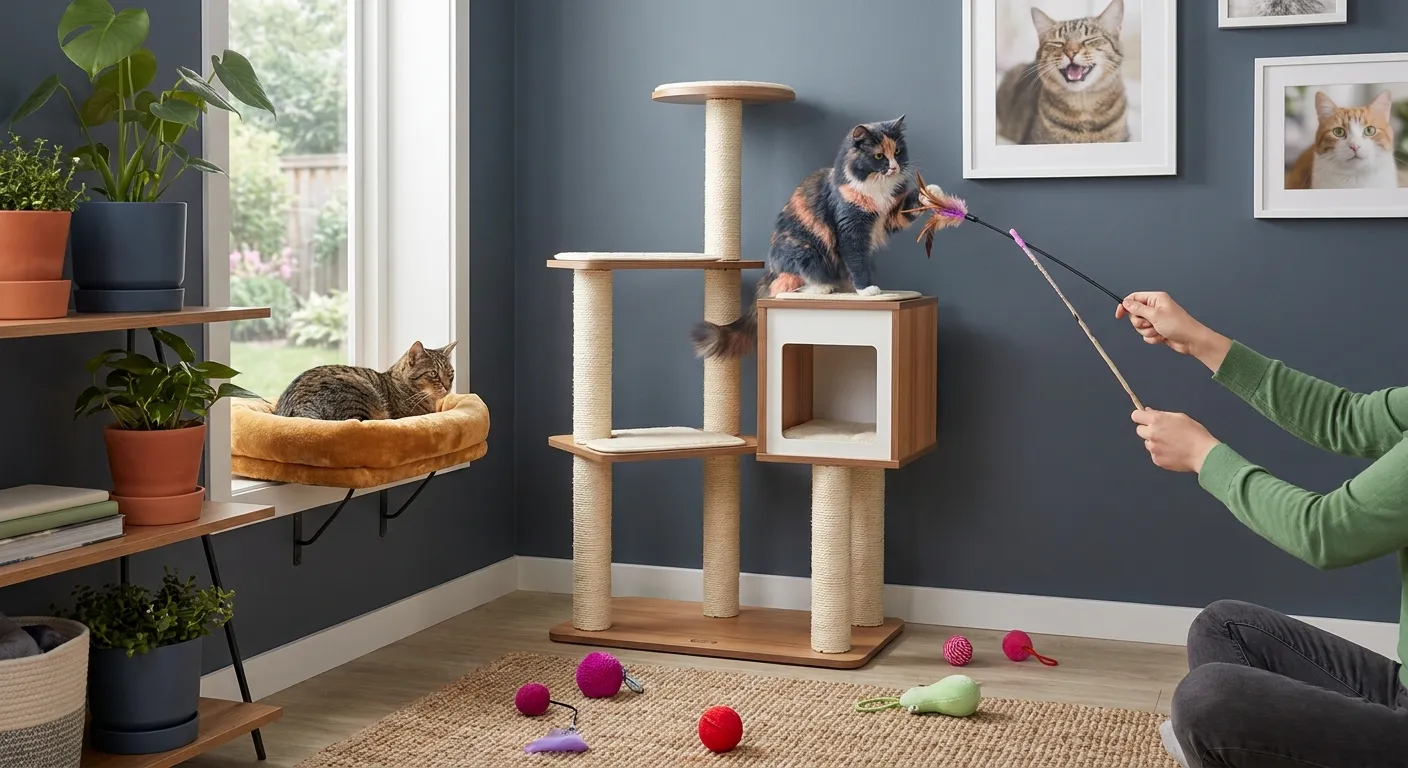
Your cat’s home is their entire world. While a warm bed and regular meals are important, simply existing in a house isn’t enough for a cat to truly thrive. An enriching cat home environment goes beyond basic needs; it’s about stimulating their natural instincts, providing mental challenges, and offering a sense of security and joy. When cats lack environmental enrichment, they can develop behavioral problems, stress, and even health issues.
At Best Cat Care, we understand that a happy cat makes a happy home. This guide will explore practical and creative ways to transform your living space into an enriching cat home environment, boosting your feline’s physical health, mental well-being, and overall happiness.
Understanding Your Cat’s Instincts
Cats are natural predators, climbers, explorers, and creatures of routine. Even the most pampered house cat retains these wild instincts. They need opportunities to ‘hunt’ (play), ‘climb’ (vertical spaces), ‘hide’ (safe retreats), and ‘mark’ (scratch). A lack of outlets for these innate behaviors can lead to boredom, anxiety, and destructive habits. Creating an enriching environment means acknowledging and catering to these fundamental needs.
Vertical Space: A Cat’s Paradise
Cats inherently seek high vantage points. From up high, they feel safe, can survey their ‘territory,’ and observe the world from a secure distance. Providing vertical space is one of the most impactful ways to create an enriching cat home environment. Consider:
- Cat Trees and Condos: Multi-level structures offer climbing, scratching, and napping spots.
- Wall-Mounted Shelves and Perches: Create a ‘cat highway’ around your room, allowing them to explore elevated paths.
- Window Perches: A simple perch offers hours of entertainment, allowing your cat to watch birds, squirrels, and neighborhood activity.
Ensure these structures are sturdy and accessible, catering to your cat’s agility level. Furthermore, regularly inspect them for wear and tear, replacing or repairing as needed to ensure safety.
Scratching Posts: Essential for Health and Home
Scratching is a natural, necessary feline behavior. Cats scratch to stretch their muscles, shed outer claw sheaths, and mark their territory visually and with scent glands in their paws. Providing appropriate scratching surfaces is crucial for protecting your furniture and promoting your cat’s well-being. For more in-depth guidance on this topic, refer to our article on How to Stop Cat Scratching Furniture: A Comprehensive Guide to Protecting Your Home.
Offer a variety of textures (sisal, cardboard, carpet) and orientations (vertical posts, horizontal pads). Place scratching posts in prominent areas where your cat likes to stretch or near furniture they might otherwise target. Positive reinforcement can encourage proper use. Indeed, having multiple scratching options throughout the home significantly contributes to an enriching environment for cats.
Play and Mental Stimulation
Play is not just fun; it’s essential for your cat’s mental and physical health. Interactive play sessions mimic the hunt, engaging their minds and bodies. Aim for at least two 10-15 minute play sessions daily.
- Interactive Toys: Wand toys with feathers or small plush animals are excellent for engaging their predatory drive. Let them ‘catch’ the toy at the end of each session to satisfy their hunting instinct.
- Puzzle Feeders: These toys dispense treats or kibble as your cat manipulates them, providing mental challenge and slowing down eating.
- Solo Play Toys: Balls, crinkle toys, and catnip-filled mice can keep your cat entertained when you’re busy. Rotate toys regularly to maintain novelty and interest.
Moreover, consider the type of toys your cat prefers. Some cats love chasing, while others enjoy batting at stationary objects. Observing your cat’s play style will help you choose the most effective enrichment tools for them.
Creating Safe Retreats and Cozy Nooks
Cats value security and privacy. They need places where they can retreat, observe without being seen, or simply nap undisturbed. Providing these safe havens is vital for their emotional well-being and contributes greatly to an enriching cat home environment. Therefore, integrate various hiding spots into your home:
- Cat Beds and Caves: Soft, enclosed beds provide warmth and security.
- Cardboard Boxes: Simple yet effective, boxes offer a temporary, fun hideaway.
- High-Up Perches: As mentioned, vertical spaces also serve as secure resting spots away from household activity.
- Under Furniture: Ensure there are accessible, safe spaces under beds or sofas if your cat enjoys these spots.
These retreats are particularly important for shy or anxious cats. They allow them to feel safe and in control of their environment, reducing potential stress. If you notice signs of stress or anxiety in your feline, our guide on Managing Cat Stress and Anxiety: A Guide to Calmer Felines offers valuable insights.
Sensory Enrichment: Engaging All the Senses
An optimal cat living space engages more than just sight and touch. Incorporating sensory elements can significantly enhance their daily experience.
Smell
Cats rely heavily on their sense of smell. Introduce novel scents in a controlled manner:
- Catnip and Silvervine: These natural herbs can provide a burst of euphoric stimulation for many cats.
- Familiar Scents: Offer blankets or toys with your scent, or the scent of another friendly pet, to provide comfort.
- Natural Scents: Occasionally bring in a fresh branch (non-toxic to cats) or a pinecone for them to investigate.
Always ensure any new scents or plants introduced are safe for feline exposure. Consult a veterinarian or a reliable source like the ASPCA for a list of toxic plants.
Sound
While cats enjoy quiet, certain sounds can be stimulating:
- Nature Sounds: Soft bird chirping or gentle rain sounds can be calming or intriguing.
- Interactive Toys: Toys that crinkle, jingle, or squeak during play mimic prey sounds.
However, avoid loud, sudden noises that can cause fear or stress. The goal is to provide positive auditory experiences, not overwhelming ones.
Sight
Window perches already address visual stimulation. Additionally, consider:
- Bird Feeders: Placing a bird feeder outside a window provides natural