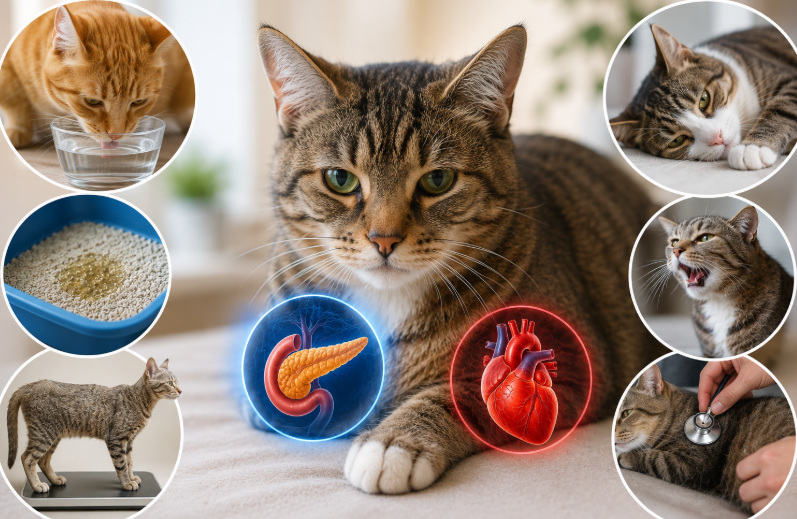
The warning signs in cats with diabetes and heart disease can be subtle because cats often hide illness until they feel very uncomfortable. At first, you may only notice small changes, such as more drinking, larger litter box clumps, less energy, weight loss, or faster breathing while resting. These signs may seem easy to explain away, especially if your cat is older or normally quiet. However, diabetes and heart disease can both become serious when they go unnoticed. Because cats cannot tell us when something feels wrong, their habits often give the first clues.
Diabetes affects how your cat’s body uses sugar for energy. When insulin does not work properly, sugar builds up in the blood instead of moving into the cells. As a result, your cat may drink more, urinate more, lose weight, or seem hungry all the time. Heart disease affects how well the heart moves blood through the body. Some cats with heart problems show no obvious symptoms until breathing becomes difficult or weakness appears suddenly.
Although these conditions are different, they can both affect your cat’s energy, appetite, breathing, movement, and behavior. That is why paying attention to daily routines matters. A small change may not always mean an emergency, but a repeated pattern deserves care. If your cat suddenly acts different, drinks more than usual, avoids activity, or seems weak, a veterinary checkup can help find the cause early.
Why Cat Illness Can Be Easy To Miss
The warning signs in cats are often hard to spot because cats naturally protect themselves by hiding pain. This behavior comes from instinct. In the wild, a sick or weak cat could become vulnerable, so many domestic cats still act normal even when they feel unwell. Instead of showing obvious distress, they may sleep more, hide, stop grooming, or avoid favorite activities.
This makes cat health different from dog health. A dog may whine, limp, cough, or seek comfort when something is wrong. A cat may simply sit in a quiet room and move less. Because of this, owners may not realize a problem is developing until symptoms become stronger. That delay can matter with diabetes and heart disease, since both conditions may worsen without treatment.
Routine changes can be important early clues. Maybe your cat no longer jumps onto the sofa. Perhaps they leave food behind, drink from odd places, or use the litter box more often. You may also notice that their coat looks dull or greasy because they are grooming less. These details may seem minor, yet they can help your vet understand what is happening.
The best way to notice warning signs in cats is to know what is normal for your own pet. Watch how much your cat eats, drinks, sleeps, plays, and uses the litter box. Also, notice how they breathe when resting. A cat’s normal habits create a baseline. Once that baseline changes, you can respond sooner instead of waiting for severe illness.
Common Diabetes Clues in Cats
One of the most common signs of feline diabetes is increased thirst. You may refill the water bowl more often, or your cat may begin drinking from the sink, bathtub, or toilet. Some cats suddenly become very interested in water even though they barely drank before. This happens because extra sugar in the blood pulls more water into the urine.
Frequent urination usually follows. The litter box may have larger clumps, stronger odor, or need cleaning more often. In a multi-cat home, this can be harder to notice. However, if one cat starts visiting the box more often or having accidents outside it, do not assume it is bad behavior. A medical issue may be causing the change.
Weight loss is another major clue. A diabetic cat may eat well and still lose weight because the body cannot use glucose properly for energy. Instead, the body starts breaking down fat and muscle. This can make the cat look thinner over the back, hips, or shoulders. Sometimes the appetite increases at the same time, which can confuse owners.
Some cats with diabetes also become tired or weak. They may sleep more, play less, or avoid jumping. In certain cases, diabetes can affect the nerves and cause weakness in the back legs. Your cat may walk lower on the back legs, seem unsteady, or struggle to climb. This change should always be checked by a vet.
Coat changes can also appear. A cat that feels unwell may groom less, which can make the fur look oily, dull, or messy. Since poor grooming can also come from arthritis, dental pain, obesity, or kidney disease, it does not confirm diabetes by itself. Still, when it appears with thirst, urination, hunger, or weight loss, it becomes more concerning.
Vomiting, dehydration, poor appetite, and severe weakness are more urgent. A cat with untreated diabetes can become very sick. If your cat stops eating, hides, vomits repeatedly, or seems confused, contact your veterinarian right away. Fast care can prevent symptoms from becoming more dangerous.
Heart Disease Signs Cat Owners Should Watch
Heart disease can be especially tricky because warning signs in cats may not appear until the condition has progressed. Some cats with heart disease eat normally and seem calm at home. Others only show mild tiredness or reduced play. Because of this, heart problems may be discovered during a routine exam when a vet hears a murmur or abnormal rhythm.
Breathing changes are among the most important signs to notice. A healthy cat should breathe quietly and comfortably when resting. If your cat breathes faster than normal, uses the belly to breathe, stretches the neck forward, or seems unable to relax, this can signal distress. Open-mouth breathing in a resting cat is an emergency and should never be ignored.
Activity changes can also point to a heart problem. Your cat may stop climbing, avoid stairs, or rest after short play sessions. Since many cats naturally sleep a lot, this symptom can be easy to miss. However, a cat that suddenly gives up favorite high places may be showing weakness, pain, or shortness of breath.
Collapse, fainting, or sudden severe weakness needs urgent care. Even if your cat recovers quickly, the episode should not be dismissed. Heart rhythm problems, poor blood flow, or other serious conditions may cause these events. Pale gums, cold paws, or extreme tiredness can also signal a problem.
A sudden inability to use the back legs can be a serious heart-related emergency. Some cats with heart disease can develop a blood clot that blocks blood flow to the rear legs. This may cause crying, dragging the back legs, cold back paws, or sudden paralysis. If this happens, go to an emergency vet immediately.
Coughing is not always the main heart symptom in cats. Many people expect coughing because dogs with heart disease may cough. However, cats often show breathing effort, weakness, hiding, or collapse instead. That is why breathing rate and effort are more useful signs to monitor at home.
Shared Symptoms That Deserve Attention
Some warning signs in cats can point to diabetes, heart disease, or another condition. Fatigue is a good example. A diabetic cat may feel tired because the cells are not getting energy properly. A cat with heart disease may feel tired because the heart is not moving blood efficiently. Kidney disease, dental pain, infection, and thyroid problems can also cause low energy.
Appetite changes can also mean different things. A diabetic cat may eat more than usual at first. A very sick cat may eat less or refuse food completely. Heart disease may reduce appetite if breathing becomes difficult or the cat feels weak. Any cat that stops eating for more than a day should be checked, especially if they are overweight.
Behavior changes matter too. A sick cat may hide under furniture, avoid people, become clingy, act irritable, or stop sleeping in favorite spots. Some cats become quieter, while others seem restless. Because cats love routine, behavior shifts are often early signs that something feels wrong.
Litter box changes should also raise concern. Large urine clumps can suggest diabetes, kidney disease, or another issue. Accidents outside the box may happen when a cat urinates more, feels weak, has pain, or cannot reach the box in time. Instead of assuming your cat is being difficult, treat the change as useful information.
Breathing changes always need extra attention. Count your cat’s breaths when they are asleep or deeply relaxed. If the resting rate is consistently higher than normal, or if the breathing looks forced, call your vet. If your cat struggles to breathe, breathes with an open mouth, or looks panicked, seek emergency care.
Body condition can reveal hidden illness. Weight loss can hide under thick fur, so gently feel your cat’s ribs, spine, hips, and shoulders. If bones become easier to feel, your cat may be losing muscle or fat. A regular weight check at home can help you catch changes before they become obvious.
When To Call the Vet
Call your veterinarian if you notice increased thirst, frequent urination, weight loss, increased hunger, low energy, poor grooming, back leg weakness, or repeated vomiting. These signs may match diabetes, but they can also point to other diseases. Your vet may recommend blood sugar testing, urine testing, and a full physical exam.
Breathing symptoms need faster action. If your cat breathes with an open mouth, collapses, cannot use the back legs, has pale gums, or struggles to breathe, seek emergency care. These symptoms can point to heart disease or another urgent condition. In these cases, do not wait for a routine appointment.
During a diabetes check, your vet may ask about eating, drinking, urination, weight, and activity. Testing often includes blood glucose, urine glucose, and sometimes additional bloodwork. Because stress can raise a cat’s blood sugar during a vet visit, your vet may use more than one test to confirm the problem.
During a heart check, your vet may listen for a murmur, rhythm change, or abnormal lung sounds. They may also check breathing, gum color, blood pressure, pulse quality, and overall condition. If needed, your cat may need chest X-rays, blood tests, an electrocardiogram, or an echocardiogram. These tests help show how the heart is working.
Do not start supplements, home remedies, or major diet changes without veterinary advice. Cats are sensitive to many ingredients and medications. Also, diabetes and heart disease need different types of care. A treatment that seems helpful for one issue may not be safe for another.
Prevention starts with routine care. Keeping your cat at a healthy weight can lower the risk of diabetes. Daily play, measured meals, and balanced food can support long-term health. Regular wellness exams also help your vet catch small changes before they become serious. Senior cats often benefit from bloodwork, urine testing, and blood pressure checks.
Heart disease cannot always be prevented, especially when genetics play a role. Certain breeds may have higher risk, including Maine Coons and Ragdolls. If your cat belongs to a higher-risk breed, ask your vet whether heart screening is helpful. Even mixed-breed cats can develop heart problems, so every cat benefits from regular exams.
Conclusion
The warning signs in cats with diabetes and heart disease can be quiet, gradual, and easy to miss. Increased thirst, frequent urination, weight loss, extra hunger, tired behavior, poor grooming, breathing changes, sudden weakness, and hiding can all suggest a problem. While one small change may not always mean serious illness, repeated symptoms deserve attention.
Diabetes often affects thirst, urination, appetite, weight, energy, and nerve strength. Heart disease often affects breathing, stamina, circulation, and sudden weakness. Because both conditions can progress without obvious symptoms, early veterinary care is the safest choice. A simple checkup can help your vet decide which tests your cat needs.
Your daily observations are powerful. You know your cat’s normal habits better than anyone. If something feels different, trust that instinct and call your vet. Acting early can help your cat get the right diagnosis, the right treatment, and a better chance at a more comfortable life.
FAQ
1. What Are the First Signs of Diabetes in a Cat?
The first signs often include drinking more water, urinating more often, losing weight, eating more than usual, acting tired, and grooming less. Some cats may also develop weakness in the back legs.
2. How Can I Tell if My Cat Has a Heart Problem?
Watch for fast breathing, difficult breathing, low energy, fainting, sudden weakness, hiding, or trouble using the back legs. A vet exam is the only way to confirm heart disease.
3. Can a Cat Have Diabetes and Heart Disease Together?
Yes, a cat can have more than one health problem at the same time. Older cats may also have kidney disease, thyroid disease, high blood pressure, arthritis, or dental pain.
4. Is Open-Mouth Breathing in Cats an Emergency?
Yes, open-mouth breathing at rest is an emergency. Cats should not pant like dogs when they are calm. Get veterinary help right away if this happens.
5. How Often Should Senior Cats Have Health Checks?
Many senior cats benefit from checkups at least once or twice a year. Your vet may suggest bloodwork, urine testing, blood pressure checks, and heart screening based on age and risk.