
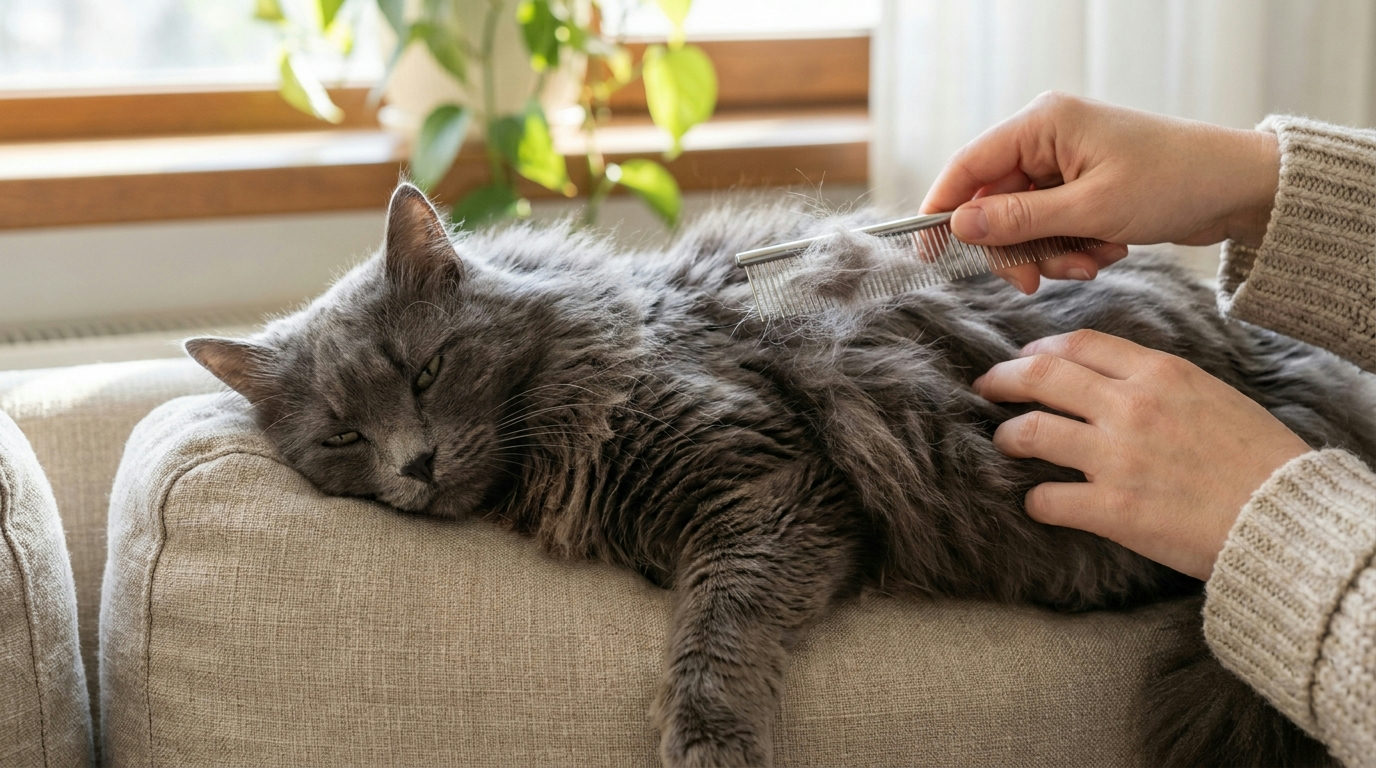
You heard the retch under the bed and started searching cat hairball remedies. Before you buy a gel, open the primary pages below, write what you saw, and decide with your veterinarian whether this is even a hairball problem.
Not veterinary advice: This content is general information only. It is not a substitute for professional veterinary advice, diagnosis or treatment. Always consult your veterinarian about your own cat.
Disclosure: Some pages we link to may include affiliate links. If you buy through them, Best Cat Care may earn a commission at no extra cost to you. It never changes what we recommend.
Open these pages before you shop for cat hairball remedies
Do not restate numbers, timelines or medical conclusions from memory. If a sentence on those pages matters for your cat, write the page title and section in your notebook and show it to your vet.
What to write down after a retch
On one card, note:
- What came up (mostly fur, food, foam, or nothing).
- How much effort you saw (active heaving versus little effort).
- How often this has happened lately.
- Appetite, energy, breathing and litter-box changes in the same window.
- Recent diet, treat or litter changes.
Bring the card and a phone photo to the appointment. That beats guessing in the waiting room.
Cat hairball remedies start with a vet gate
Open the Cornell page and write how they describe hairballs and grooming. Open the MSD page and write how they separate different kinds of bringing food or fluid back up. Do not invent a home diagnosis from either page.
If anything on your card looks urgent to you — repeated empty retching, blood, pain, poor appetite, odd breathing — that is a phone call to your vet, not a wait-and-see with a store gel.
Call your veterinarian if
- She retches repeatedly without producing anything.
- Vomiting keeps going or looks bloody.
- She stops eating or seems withdrawn.
- Her belly looks swollen or litter habits change suddenly.
- She coughs, wheezes or breathes with an open mouth.
Write which lines match. Hand the list to your vet. Forums cannot examine your cat.
Brushing: the home step that supports cat hairball remedies
Be honest about what you will actually keep doing. A short daily routine beats a rare marathon session. Both Cornell and the MSD Vet Manual point readers toward regular brushing as a first home habit — open those pages for their exact wording rather than copying tips from a thread.
- Short-haired cats: a few calm minutes with a rubber brush or fine comb, several times a week.
- Long-haired cats: wide comb first, then finer comb, ideally most days.
- Heavy shed weeks: step up frequency while she still tolerates it.
End before she is done with you. A treat helps. Our easy cat grooming guide covers technique, and our deshedding tools roundup compares tools if you need one.
Diet and store products: ask first
Some commercial diets and gels are marketed for hairballs. Whether any of them suit this cat is a vet question. If she also has a sensitive stomach, our sensitive stomach diet guide lists questions to bring — it does not replace an exam.
Change food only with a plan your vet agrees with. Hydration habits (wet food, fountain, extra bowls) can be everyday kindness; they are not a stand-alone cure aisle.
Do not start a gut-targeted product from a shelf photo alone. Ask your vet whether it fits her history.
One-page checklist for cat hairball remedies
- Open Cornell and MSD pages linked above.
- Fill the retch card (what, effort, frequency, appetite, breathing).
- Tick the “call the vet if” list.
- Book if any red-flag line matches.
- If the vet says hairballs are the issue, start a brushing plan you can keep.
- Only then discuss diet changes or store products with your vet.
How to talk to your vet without guessing
Bring the notebook with page titles, the photo, and recent changes. Ask whether the pattern sounds like hairballs or something else. Write the answer. That turns vague worry into a clearer plan for cat hairball remedies that fit this cat.
If a forum tip disagrees with your vet, keep the vet’s plan.
Build a brushing corner you will use
Pick one towel, one comb, and one treat jar. Put them in the same spot. Sessions start faster when you are not hunting tools. If she walks away, stop. Short wins build trust for the next day.
Track three weeks on a sticky note: date, minutes, and whether she stayed calm. Bring that note to your vet if you discuss cat hairball remedies again. Patterns beat guesses.
If you share the home with kids or a partner, write who owns which days. A plan that depends on one tired evening will slip.
Multi-cat households and coat work
Groom the calm cat first so the anxious one sees the routine without pressure. Separate towel per cat if someone has fleas or skin issues your vet is treating. Wash tools as your vet advises for that situation.
Do not compare coats across cats. One longhair may need more combing than a shorthair housemate. Your checklist still starts with the same open pages and the same vet gate.
What not to do while you wait for the appointment
- Do not invent doses from a shop shelf or a video.
- Do not cut mats with scissors.
- Do not force a long grooming session when she is already stressed from retching.
- Do not skip the notebook because “it is probably nothing.”
Quiet rest, fresh water, and your filled card are enough until your vet says otherwise.
After the vet visit: turn advice into a week plan
Rewrite the six-line checklist with the vet’s words in the margins. If they cleared her for a brushing focus, schedule the first five short sessions on your calendar. If they asked for a diet change or a clinic follow-up, put those dates on the same card.
Only then decide whether any store tool or food your vet named is worth buying. That order keeps cat hairball remedies honest.
FAQ: cat hairball remedies
What are the best cat hairball remedies at home?
A brushing plan you will keep, after a vet confirms hairballs are the issue. Products and special diets come after that conversation.
How often is a hairball normal?
Open the Cornell page and write what they say. Do not invent a number from memory. If the pattern worries you, call your vet.
Can I skip the vet and buy a gel?
We would not. Empty retching and other red flags need a professional look first.
Is coughing the same as a hairball?
Not always. Tell your vet exactly what you heard and saw, and open the Cornell page together if useful.
Where do affiliate links fit?
Only after you have a vet-backed plan. Tools help only if you use them.
Print this page’s checklist or copy it by hand. Paper survives a pocket better than a buried phone note when you are already worried. The goal is a calm owner with a clear question list, not a cart full of untested cat hairball remedies.
If your vet wants a stool check, bloodwork or imaging, ask how to prepare overnight so the morning visit is smoother. Write fasting or carrier instructions on the same card as the retch notes.
Closing routine
The best cat hairball remedies start with open source pages, a clear note of what you saw, and a brushing habit you will keep. Shopping comes after the vet conversation, not before.
Concrete tip for this week: print the six-line checklist, open both linked pages, fill the retch card tonight, and call your vet if any red-flag line matches — before another gel goes in the cart.
This article is general information and does not replace veterinary advice. If you are worried about your cat’s health, talk to your veterinarian.