
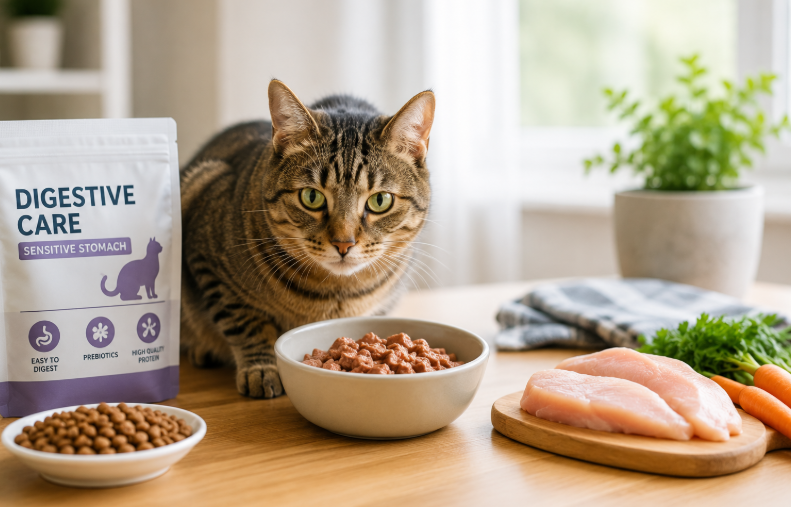
Choosing a cat sensitive stomach diet can feel confusing when your cat vomits often, has loose stools, refuses meals, or seems uncomfortable after eating. Many cat owners try different foods quickly, hoping one will fix the problem. However, sudden changes can sometimes make digestion worse. A better approach starts with calm observation, steady meal planning, and the right guidance from your veterinarian. When you understand what your cat’s stomach needs, you can build a feeding routine that supports better comfort without guessing.
Cats can have sensitive digestion for many reasons. Some react poorly to certain proteins, rich foods, artificial additives, sudden diet changes, or large meals. Others may have hairball problems, food intolerances, parasites, stress, inflammatory bowel disease, or another medical issue. Because vomiting and diarrhea can point to many conditions, a vet check is important when symptoms are frequent, severe, or new. Cornell Feline Health Center notes that ongoing vomiting may need supportive care and an easily digested diet once vomiting stops.
A good feeding plan should never focus only on the label. Instead, it should look at your cat’s symptoms, age, weight, lifestyle, and health history. For example, one cat may do better with a wet food formula that has more moisture. Another may need a veterinary hydrolyzed protein diet during a food trial. Meanwhile, some cats improve when owners simply feed smaller, more frequent meals. Because each cat is different, the best diet is the one that solves the problem safely and consistently.
Why Some Cats Have Sensitive Stomachs
A sensitive stomach is not a diagnosis by itself. It is a sign that something in your cat’s body, diet, or routine needs attention. Your cat may vomit soon after meals, pass soft stool, produce more gas, lose interest in food, or seem uncomfortable after eating. Sometimes the cause is simple, such as eating too fast or switching foods too suddenly. However, repeated digestive trouble should not be ignored.
Food intolerance is one common reason cats struggle after meals. Unlike a true allergy, intolerance usually causes digestive signs without an immune reaction. Your cat may not handle a certain protein, fat level, fiber source, or ingredient well. Food allergy is less common, but it can affect both the skin and digestive system. VCA Animal Hospitals explains that an elimination-challenge diet trial is used to confirm suspected food allergies by removing possible allergens and then reintroducing them one at a time.
Stress can also affect digestion. Cats thrive on routine, and changes in feeding time, home environment, travel, new pets, or loud noises can upset them. Therefore, a cat that seems food-sensitive may also need a calmer routine. If your cat eats well during quiet weeks but vomits during stressful periods, environment may play a role.
Eating habits matter too. Some cats eat too fast, especially in multi-cat homes. When cats gulp food, they may vomit soon after eating. In this case, the food itself may not be the only issue. A slow feeder, separate feeding space, or smaller meal schedule can help. As a result, your cat may digest food more comfortably without a major formula change.
Hairballs may also make stomach issues look food-related. Cats swallow hair while grooming, and some cats struggle to pass that hair smoothly. More brushing, added moisture, and the right fiber balance may support better digestion. Still, frequent vomiting should not be dismissed as normal hairball behavior. If it happens often, ask your vet to check for other causes.
What Makes a Good Cat Sensitive Stomach Diet
A cat sensitive stomach diet should be easy to digest, complete, balanced, and suited to your cat’s life stage. Cats are obligate carnivores, so they need animal-based nutrients, including essential amino acids such as taurine. Because of this, homemade or overly restricted diets can become risky unless your veterinarian or a board-certified veterinary nutritionist helps design them.
Highly digestible protein is usually important. Many sensitive-stomach formulas use chicken, turkey, duck, rabbit, or fish, but the best choice depends on your cat. If your cat has eaten chicken for years and still has symptoms, your vet may suggest a novel protein or hydrolyzed protein diet. Hydrolyzed diets break proteins into smaller pieces, which may help cats with suspected food allergies.
A limited ingredient food may help some cats, but owners should understand its limits. Retail limited ingredient diets may reduce ingredient variety, yet they are not always controlled like veterinary diets. VCA Animal Hospitals cautions that retail foods may not follow the same strict steps to prevent cross-contamination as veterinary diets. Therefore, if your vet suspects a true food allergy, a prescription diet trial may be more reliable.
Moisture can also support digestive comfort. Wet food often contains more water than dry kibble, which can help hydration. Some cats with sensitive digestion do better on wet food because it is softer and easier to chew. However, other cats prefer dry food and tolerate it well. The right choice depends on your cat’s response, dental needs, budget, and feeding routine.
Fat level matters as well. Very rich foods can upset some cats, especially if they are not used to them. However, cats still need healthy fats for energy, skin, and coat health. A balanced sensitive-stomach formula should not be extreme unless your vet recommends it for a medical condition. Instead, it should provide steady nutrition without overloading digestion.
Fiber can be helpful, but it is not always the answer. Some cats with loose stools respond well to certain fiber sources, while others may become gassy or constipated. PetMD notes that cats with fiber-responsive diarrhea may improve with added fiber or specific gastrointestinal diets, but this should fit the cat’s condition. Because fiber needs vary, add it slowly and only with guidance if symptoms are ongoing.
A cat sensitive stomach diet should also avoid unnecessary extras. Artificial colors, heavy fillers, sudden flavor changes, and too many treats can make it harder to know what your cat tolerates. Treats, table scraps, milk, and flavored medications can all affect a diet trial. Therefore, when you are trying to calm digestion, keep meals simple.
How To Change Food Without Upsetting Your Cat
Even the best cat sensitive stomach diet can cause trouble if you switch too quickly. Cats need gradual transitions because their digestive systems adapt slowly. Start by mixing a small amount of the new food with the old food. Then increase the new food over seven to ten days. For very sensitive cats, the process may take two or three weeks.
A slow change helps you see whether the new food truly works. If your cat vomits after a sudden switch, you may blame the formula when the real issue was the speed of change. In contrast, a gradual plan gives the stomach time to adjust. It also makes your cat more likely to accept the new taste and texture.
During the transition, track your cat’s symptoms. Write down appetite, stool quality, vomiting, energy level, scratching, and weight changes. Simple notes can reveal patterns. For example, your cat may vomit only after large meals or only after eating a certain treat. These details help your vet make better recommendations.
Feed measured portions instead of guessing. Overfeeding can cause stomach upset, weight gain, and vomiting. Use the feeding guide on the package as a starting point, but adjust based on your cat’s body condition and vet advice. If your cat needs weight loss, avoid cutting food too sharply. Cats need safe, steady nutrition.
Smaller meals may work better than one or two large meals. Many cats digest better when food arrives in moderate portions. If your cat vomits bile early in the morning, your vet may suggest a small bedtime meal or timed feeder. This can help prevent an empty stomach from becoming irritated.
Slow feeders can help cats that eat too fast. You can use a puzzle bowl, lick mat for wet food, or food puzzle for dry food. However, make sure your cat does not become frustrated. The goal is calmer eating, not stress. If your cat gives up, try an easier feeder first.
Keep treats under control. When owners start a cat sensitive stomach diet, treats often ruin the plan. Even small extras can trigger symptoms or confuse results. If you need to reward your cat, ask your vet whether a small amount of the approved food can be used as a treat. This keeps the diet consistent.
When a Vet Diet Trial May Be Needed
If your cat has repeated vomiting, chronic diarrhea, weight loss, blood in stool, poor appetite, or sudden behavior changes, do not rely on food changes alone. These signs can point to problems that need testing. Your veterinarian may recommend exams, stool testing, blood work, imaging, or a structured diet trial.
A true elimination diet trial takes commitment. During the trial, your cat eats only the approved food and water. No treats, flavored supplements, table scraps, or other pet food should enter the plan. This strict approach matters because even small exposures can affect results. VCA describes the elimination-challenge process as removing possible allergens first, then reintroducing ingredients to watch for a reaction.
Prescription gastrointestinal diets can help some cats with digestive upset. These foods often focus on digestibility, controlled fiber, and balanced nutrients. However, they are not all the same. Some support food allergies, while others support general gastrointestinal comfort. Your vet can match the diet to your cat’s symptoms.
A cat sensitive stomach diet should not replace medical care when symptoms continue. For example, vomiting can come from parasites, kidney disease, pancreatitis, thyroid disease, foreign objects, or inflammatory conditions. Since many problems look similar at home, testing helps avoid delays. Early care often leads to better outcomes and less stress.
Hydration deserves attention, especially if your cat has diarrhea or vomiting. Cats can become dehydrated faster than owners expect. Offer fresh water daily, consider wet food if appropriate, and contact your vet if your cat seems weak, dry-mouthed, or uninterested in drinking. Never wait too long if your cat stops eating, because cats can become seriously ill after prolonged poor intake.
It is also important to avoid human digestive remedies unless your vet approves them. Some products that seem harmless can be unsafe for cats. Supplements, probiotics, pumpkin, or fiber products may help certain cats, but they should fit the actual problem. Always confirm the dose and product type with your veterinarian.
Building a Long-Term Feeding Routine
Once you find a food that works, consistency becomes your best friend. Cats with sensitive stomachs often do better when owners avoid frequent flavor changes. Variety may sound appealing, but it can cause setbacks for cats with delicate digestion. If your cat is stable, keep the core diet the same and introduce any new item slowly.
Store food properly to keep it fresh. Dry food should stay sealed in its original bag or an airtight container. Wet food should be refrigerated after opening and served within a safe time. Spoiled food can upset the stomach and may cause your cat to refuse meals. Clean bowls daily, especially when feeding wet food.
Watch your cat’s body condition over time. A cat sensitive stomach diet should support healthy weight, steady energy, normal stools, and a shiny coat. If your cat gains or loses weight unexpectedly, adjust the plan with your vet. Digestive comfort is important, but complete nutrition matters just as much.
Multi-cat homes need careful feeding plans. If one cat needs a special diet, separate feeding areas may be necessary. Otherwise, your sensitive cat may steal food that triggers symptoms. Microchip feeders, closed rooms, or scheduled meals can help. Although this takes effort, it protects the diet plan.
Do not forget enrichment and stress control. A calm home can support better digestion. Keep feeding times predictable, provide hiding spots, offer gentle play, and avoid sudden routine changes when possible. Since stress can worsen stomach trouble, emotional comfort belongs in the feeding plan too.
Your cat’s needs may change with age. Senior cats may develop dental pain, kidney issues, thyroid problems, or reduced appetite. A food that worked for years may stop working if health changes. Therefore, schedule regular wellness visits and bring up any digestive symptoms early. This keeps your cat’s diet aligned with current needs.
The best cat sensitive stomach diet is not always the most expensive food or the trendiest label. It is the food your cat can digest well, enjoy consistently, and use to maintain good health. For some cats, that means a simple wet food with a familiar protein. For others, it means a veterinary diet, strict trial, or carefully managed feeding schedule.
In the end, patience matters more than quick fixes. Digestive problems can take time to understand, especially when several factors are involved. However, steady observation, slow transitions, and veterinary support can make a major difference. When you choose a cat sensitive stomach diet thoughtfully, you give your cat a better chance at calmer meals, healthier stools, and a more comfortable daily life.
FAQ
1. What Food Is Best for a Cat With a Delicate Stomach?
The best food depends on the cause of the problem. Many cats do well with highly digestible protein, balanced fat, added moisture, and simple ingredients. However, cats with suspected allergies may need a veterinary hydrolyzed or novel protein diet.
2. Should I Feed Wet or Dry Food for Digestive Issues?
Wet food may help some cats because it adds moisture and has a softer texture. However, some cats tolerate dry food better. The best option depends on your cat’s symptoms, preferences, and vet guidance.
3. How Long Does It Take for a New Food To Help?
Some cats improve within a few days, but others need several weeks. A slow transition usually works best. If symptoms continue, worsen, or include weight loss, contact your veterinarian.
4. Can Treats Cause Stomach Problems?
Yes, treats can trigger vomiting, loose stools, or poor diet trial results. If your cat has digestive trouble, limit treats and avoid table scraps. Use approved food as a reward when needed.
5. When Should I Call the Vet About Digestive Upset?
Call your vet if your cat vomits often, has diarrhea for more than a day, stops eating, loses weight, seems weak, or has blood in stool. These signs may need medical care.