
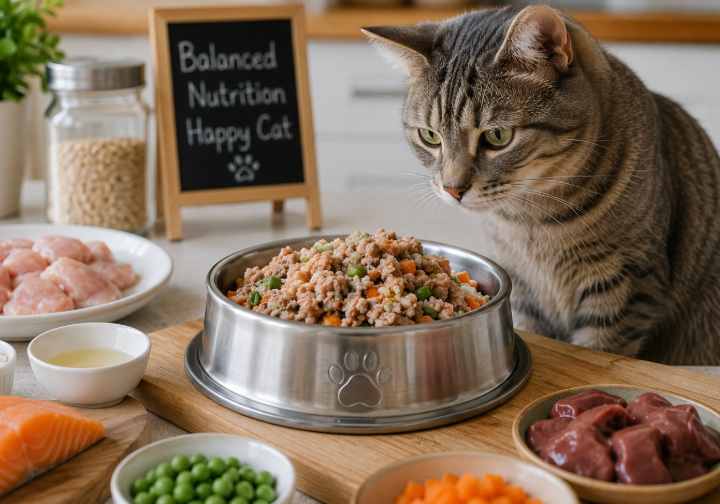
Homemade cat food can sound like the healthiest choice because it feels fresh, personal, and easy to control. Many cat owners like the idea of choosing real ingredients, avoiding fillers, and preparing meals with care. However, cats have very specific nutrition needs, so a homemade diet must do more than look wholesome in a bowl. It must provide the right balance of animal protein, fat, vitamins, minerals, amino acids, and calories every day. Without that balance, even a recipe made with good intentions can slowly harm your cat’s health.
Cats are obligate carnivores, which means they depend on nutrients found in animal-based foods. They need high-quality protein, healthy fats, taurine, arginine, vitamin A, arachidonic acid, calcium, phosphorus, and other nutrients in the right amounts. Because of this, plain chicken, fish, rice, or broth is not enough as a complete meal. Those foods may seem clean, yet they cannot meet your cat’s full nutritional needs alone.
The real question is not whether fresh meals are possible. Instead, the question is whether homemade cat food is safe and balanced for your cat’s age, weight, activity level, and health. A growing kitten, healthy adult cat, senior cat, pregnant cat, diabetic cat, or kidney cat may need a different nutrient plan. Therefore, a general recipe from a blog, video, or social post can be risky if it has not been properly formulated.
Why Balance Matters More Than Fresh Ingredients
A fresh bowl of food can look healthy while still missing essential nutrients. For example, cooked chicken breast gives protein, but it does not provide enough calcium, taurine, iodine, vitamin E, and other key nutrients when fed alone. Fish may offer flavor and useful fats, yet too much fish can create mineral problems. Liver contains important vitamins, although excess liver can add too much vitamin A.
Balance matters because cats often eat the same food every day. If one nutrient is missing, the problem may build slowly. Over time, poor balance can affect bones, muscles, heart health, vision, digestion, skin, coat quality, and immune strength. Some signs may not appear until the deficiency or excess has already caused harm.
Commercial cat foods labeled complete and balanced must meet recognized nutrient standards or feeding test requirements. A homemade recipe does not automatically meet those standards. Unless the recipe has been reviewed by a veterinary nutrition professional, there is no reliable way to know if it covers your cat’s daily needs.
This is where many owners make mistakes. They assume variety will cover the gaps. Unfortunately, feeding chicken one day, beef the next, and fish later still may not provide enough calcium or taurine. It may also add too much phosphorus, sodium, fat, or certain vitamins. Variety can help interest, but it does not replace proper formulation.
Nutrients Cats Cannot Miss
Homemade cat food must include more than meat. Cats need taurine, which supports the heart, eyes, digestion, and reproduction. They also need arginine, an amino acid that helps the body process waste from protein. Without enough of these nutrients, serious problems can develop.
Calcium and phosphorus must also stay in the right balance. Meat is naturally high in phosphorus and low in calcium. If a cat eats mostly meat without a safe calcium source, the body may pull calcium from the bones. This can weaken the skeleton and affect long-term health.
Fat is important too. Cats need fat for energy, skin health, coat quality, and nutrient absorption. However, too much fat can upset digestion or add extra calories. Too little fat may leave the diet less satisfying and less balanced. The right amount depends on your cat’s body condition and needs.
Vitamins and trace minerals are just as important. Iodine, zinc, copper, manganese, vitamin D, vitamin E, and B vitamins all play roles in health. Because these nutrients must be measured carefully, random human supplements are not safe. A cat’s body is small and sensitive, so excess amounts can cause harm.
Common Homemade Diet Mistakes
One common mistake is using plain meat as the main diet. Meat is important for cats, but meat alone is incomplete. In nature, cats eat prey that includes muscle meat, organs, bone, fluids, and connective tissue. A bowl of cooked chicken does not copy that full nutrient pattern.
Another problem is skipping supplements because they seem unnatural. Many complete home-prepared recipes need measured supplements to fill nutrient gaps. Taurine, calcium, iodine, vitamin E, and other nutrients may need to be added. The exact type and amount matter, so guessing is unsafe.
Ingredient swapping can also ruin balance. If a recipe calls for chicken thighs and you use tuna, the calories, minerals, fats, and protein levels change. If it calls for one supplement brand and you use another, the nutrient profile may no longer match. Even small changes can matter when your cat eats the food daily.
Online recipes create another concern. Some recipes are vague, incomplete, or based on human food ideas rather than feline nutrition. A recipe that says “add a little calcium” or “use any meat” is not precise enough. Homemade cat food should follow exact measurements, not loose estimates.
Raw feeding adds extra risk. Raw meat can carry bacteria or parasites that may harm cats and people. Kittens, senior cats, immune-compromised cats, and homes with children need extra caution. If you prefer fresh meals, gently cooked recipes are often a safer option.
Ingredients That Need Extra Caution
Some ingredients sound natural but may not be suitable as regular cat food. Tuna is a good example. Many cats love it, but frequent tuna can create an unbalanced diet and may encourage picky eating. A small amount may work as a topper, yet it should not become the main protein unless a nutritionist includes it in a complete recipe.
Liver is another ingredient that needs control. It provides valuable nutrients, but too much can create vitamin A excess. Organ meats should be measured as part of a full formula. They should not be added freely because they seem nutrient-rich.
Cooked bones and raw bones can also be dangerous. Cooked bones may splinter, while raw bones may cause choking, tooth damage, stomach upset, or blockage. Bone meal or calcium powders can be used in some recipes, but only when measured correctly.
Vegetables and grains are not always harmful, yet they should not replace animal-based nutrition. Cats do not need a plant-heavy diet. Small amounts of certain fibers may help some cats, but too many plant ingredients can reduce protein quality and crowd out essential nutrients.
Toxic foods must stay out of every recipe. Onion, garlic, chives, leeks, chocolate, alcohol, grapes, raisins, excessive salt, and many seasonings are unsafe for cats. Sauces, marinades, and table scraps can also contain hidden ingredients that cause problems.
When Fresh Meals May Be Helpful
Homemade cat food may help in certain situations when it is properly formulated. Some cats have food sensitivities and need a limited ingredient plan. Others refuse many commercial foods but accept fresh cooked meals. A custom recipe may also help when a cat needs a special texture or carefully controlled ingredients.
Medical conditions need extra care. A cat with kidney disease may need controlled phosphorus. A diabetic cat may need careful calorie and carbohydrate planning. A cat with urinary issues may need attention to moisture, minerals, and urine health. Because these needs are specific, a standard recipe may not be appropriate.
Fresh meals can also support appetite. Warm cooked food often smells stronger than dry food, which may encourage picky cats to eat. Moisture-rich meals can help hydration as well. Still, appetite is only one part of the picture. A cat can enjoy a diet that is not nutritionally complete.
Some owners use fresh food as a topper instead of a full diet. This can be safer if the main food is already complete and balanced. A small spoonful of plain cooked chicken may encourage eating. However, extras should stay limited because too many toppers can dilute the nutrition of the complete food.
How To Make a Safer Plan
The safest first step is a veterinary visit. Ask whether your cat is healthy enough for a home-prepared diet. Your vet may suggest bloodwork, urine testing, weight checks, or a nutrition consultation before you change meals. This is especially important for kittens, seniors, pregnant cats, and cats with chronic disease.
Next, work with a veterinarian or board-certified veterinary nutritionist. A proper recipe should list exact ingredients by weight. It should also include supplement names, amounts, cooking steps, storage directions, calories, and daily feeding amounts. If a recipe does not include those details, it may not be safe as your cat’s main food.
Follow the recipe exactly. Do not remove supplements because they seem unnecessary. Avoid replacing meat, organs, oils, or mineral sources unless the recipe creator approves the change. Also, use a kitchen scale instead of guessing. Accurate measuring keeps the diet consistent.
Food safety matters as much as nutrition. Wash your hands, clean surfaces, cook ingredients safely, and store portions quickly. Refrigerate or freeze prepared meals in airtight containers. Thaw food in the refrigerator, and throw away anything that smells off or sits out too long.
Transition slowly to protect digestion. Mix a small amount of the new food with your cat’s current food. Then increase the amount over one to two weeks. Some cats need even more time. A slow change helps you notice vomiting, diarrhea, refusal, itching, or stool changes before the diet becomes the full meal.
Signs the Diet Is Not Working
A poor diet may not cause obvious problems right away. Your cat may slowly lose weight, gain weight, shed more, vomit, develop loose stool, or seem tired. The coat may become dull, greasy, or flaky. Grooming may also decrease if your cat feels unwell.
Digestive changes deserve attention. Mild stool changes may happen during a transition, but ongoing diarrhea, constipation, vomiting, or gas is not normal. Your cat may be reacting to an ingredient, fat level, supplement, or sudden diet change. A vet can help rule out illness and guide adjustments.
Refusal is another warning sign. If your cat will not eat the recipe, do not force it. Cats can become seriously ill when they stop eating. Return to a safe food your cat accepts and ask your vet for help. The recipe may need a different protein, texture, temperature, or feeding method.
Long-term nutrient problems can be harder to see. Too little calcium may affect bones. Low taurine may affect the heart and eyes. Excess vitamin A may harm joints and movement. Since these issues may develop slowly, regular veterinary checks are important.
Homemade cat food should support your cat’s health, not create stress or confusion. If preparing it becomes inconsistent, expensive, or overwhelming, a complete commercial diet may be safer. There is no shame in choosing a trusted prepared food. The best diet is one your cat eats, your vet supports, and you can manage correctly.
Conclusion
Homemade cat food can be safe, but only when it is complete, balanced, and carefully planned. Fresh ingredients alone do not guarantee good nutrition. Cats need specific animal-based nutrients, proper minerals, enough taurine, safe fats, correct calories, and measured supplements. Without those pieces, a homemade diet can cause health problems even when it looks healthy.
The safest approach is to work with your veterinarian or a board-certified veterinary nutritionist. A proper recipe should match your cat’s life stage, weight, health, and daily needs. It should also include exact measurements and clear supplement instructions. Once you have a plan, follow it closely and schedule regular checkups.
If you want more control over your cat’s meals, fresh home-prepared feeding may be worth exploring. However, it should never rely on guesswork, random online recipes, or plain meat alone. With the right guidance, homemade cat food can become a thoughtful option. Without that guidance, a complete commercial diet is usually the safer choice.
FAQ
1. Is Fresh Food Always Better for Cats?
Fresh food is not automatically better. It must be complete, balanced, and safe. A fresh recipe with missing nutrients can be less healthy than a well-made commercial cat food.
2. Can I Feed My Cat Cooked Chicken Every Day?
Cooked chicken can be a small treat or topper, but it is not a complete diet. Cats also need calcium, taurine, vitamins, minerals, and other nutrients.
3. Do Cats Need Supplements in Home-Prepared Meals?
Most complete home-prepared diets need measured supplements. Common needs may include taurine, calcium, iodine, vitamin E, and other nutrients, depending on the recipe.
4. Is Raw Food Safe for Cats?
Raw food can carry bacteria or parasites. Some cats may also face higher risk due to age, illness, or weak immunity. Ask your vet before choosing raw feeding.
5. Who Should Formulate a Cat’s Fresh Diet?
A veterinarian or board-certified veterinary nutritionist is the safest choice. They can create a recipe that fits your cat’s age, weight, health, and nutrient needs.