
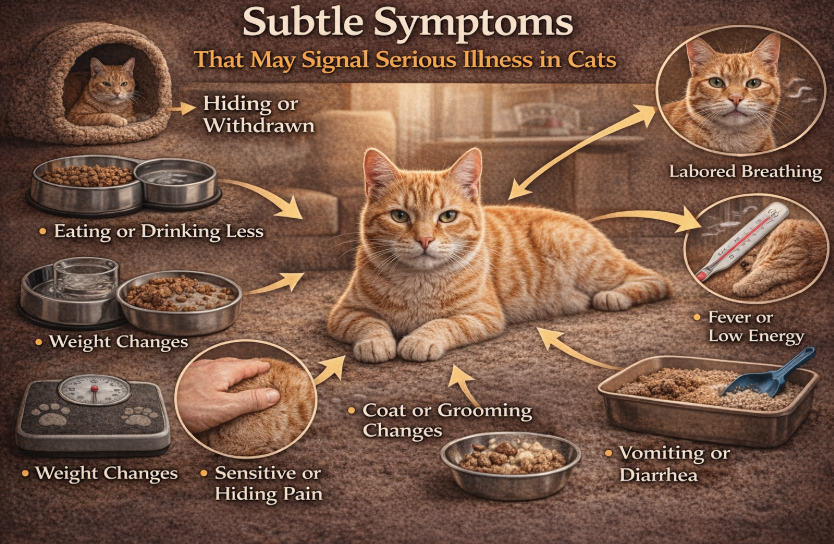
Recognizing subtle symptoms cat illness is essential because cats are experts at hiding discomfort. Unlike many pets, cats rarely show obvious signs until a condition becomes serious. Because of this, small changes in behavior or routine often provide the earliest clues. While these signs may seem minor, they can signal underlying problems that need attention.
Your cat relies on you to notice what it cannot express. Therefore, learning to identify subtle symptoms cat illness allows you to act early and prevent more serious complications. Although not every change means illness, consistent or unusual patterns should never be ignored.
Small Behavior Changes That Signal Trouble
One of the earliest subtle symptoms cat illness often appears in behavior. Cats follow routines closely, so even slight changes can indicate discomfort. For example, a normally social cat that begins hiding more often may be feeling unwell.
In addition, reduced interaction is another warning sign. If your cat avoids attention or becomes withdrawn, it may be dealing with pain or stress. On the other hand, sudden clinginess can also indicate that something is wrong.
Activity levels also provide important clues. A playful cat that loses interest in toys or movement may be experiencing underlying health issues. Monitoring daily habits helps you catch subtle symptoms cat illness early.
Changes In Appetite And Drinking Habits
Appetite shifts are common subtle symptoms cat illness that owners often overlook. A cat that eats less than usual may be experiencing dental problems, digestive issues, or illness. Even a short period without eating can become serious for cats.
Conversely, increased hunger can signal metabolic conditions such as hyperthyroidism or diabetes. Therefore, both decreases and increases in appetite should be taken seriously.
Water intake is equally important. Drinking more or less than usual may indicate kidney issues or other internal problems. Paying attention to these patterns helps identify subtle symptoms cat illness before they worsen.
Litter Box Habits Reveal Hidden Issues
Litter box behavior offers valuable insight into your cat’s health. Changes in urination or bowel habits are often subtle symptoms cat illness. For example, frequent urination may indicate urinary tract issues.
In addition, straining or avoiding the litter box can signal discomfort. Some cats may begin eliminating outside the box, which often reflects illness rather than behavioral problems.
Stool changes are another important indicator. Diarrhea, constipation, or unusual appearance can point to digestive concerns. Observing litter box habits regularly helps you detect subtle symptoms cat illness early.
Grooming And Coat Condition Changes
Cats spend a significant amount of time grooming, so changes in this behavior are subtle symptoms cat illness. A cat that stops grooming may be experiencing pain, low energy, or illness. As a result, its coat may appear dull or matted.
On the other hand, excessive grooming can also signal a problem. Cats may over-groom due to stress, allergies, or skin irritation. This can lead to hair loss or skin damage.
In addition, visible skin issues such as redness or flaking should not be ignored. These signs often indicate underlying conditions that require attention.
Unexplained Weight Changes
Weight fluctuations are another form of subtle symptoms cat illness that should not be overlooked. Gradual weight loss may indicate chronic disease, parasites, or metabolic issues.
Meanwhile, sudden weight gain can suggest reduced activity or hormonal imbalance. Over time, this can lead to additional health problems such as obesity.
Regularly checking your cat’s weight helps you notice changes early. Even small differences can provide important clues about your cat’s health.
Energy Levels And Sleep Pattern Shifts
Cats sleep often, but significant changes in sleep habits can be subtle symptoms cat illness. A cat that becomes unusually lethargic or inactive may be experiencing discomfort or illness.
Additionally, reduced interest in play or exploration can signal underlying problems. Cats that lose curiosity about their surroundings may not be feeling well.
On the other hand, restlessness or difficulty settling can also indicate an issue. Monitoring these patterns helps you identify subtle symptoms cat illness early.
Breathing And Vocalization Changes
Breathing should always be calm and quiet. Changes in breathing patterns are subtle symptoms cat illness that require attention. Rapid breathing, wheezing, or labored breathing can indicate respiratory or heart issues.
In addition, vocalization changes can provide clues. Cats may meow more frequently when they are in discomfort. Conversely, a normally vocal cat becoming quiet may also signal a problem.
These small changes are easy to miss but can indicate serious conditions if ignored.
Eye, Ear, And Nose Abnormalities
The eyes, ears, and nose can reveal subtle symptoms cat illness early. Watery eyes, redness, or discharge may indicate infection or irritation.
Similarly, frequent ear scratching or head shaking often points to ear mites or infection. Unusual odor from the ears is another warning sign.
Nasal discharge or sneezing may suggest respiratory issues. Although these symptoms may seem mild, they can worsen without proper care. Regular observation helps you detect subtle symptoms cat illness early.
Digestive Issues And Occasional Vomiting
Digestive problems are common subtle symptoms cat illness that should not be ignored. Occasional vomiting may not be serious, but frequent episodes often signal underlying issues.
In addition, changes in stool or appetite often accompany digestive problems. Cats may show discomfort after eating or avoid food altogether.
Monitoring these patterns allows you to respond early. Addressing digestive issues quickly helps prevent more serious conditions.
Subtle Signs Of Pain And Discomfort
Cats rarely show obvious pain, which makes subtle symptoms cat illness more difficult to detect. Instead, they display small behavioral changes. For example, a cat may hesitate before jumping or avoid climbing.
In addition, changes in posture can indicate discomfort. Cats in pain may sit differently or move more slowly than usual.
Furthermore, sensitivity to touch or sudden aggression can signal pain. Recognizing these signs early allows for timely care and treatment.
Why Early Detection Matters
Understanding subtle symptoms cat illness is crucial for early intervention. The sooner you identify a problem, the easier it is to treat. Early detection often leads to better outcomes and less stress for your cat.
Moreover, addressing issues early improves quality of life. Cats that receive prompt care recover faster and experience less discomfort.
Regular observation and routine veterinary visits play an important role. By staying attentive, you can protect your cat from serious health problems.
Conclusion
Subtle symptoms cat illness often appear quietly, making them easy to overlook. However, these small changes can signal serious conditions if ignored. By paying attention to behavior, appetite, grooming, and physical condition, you can detect problems early.
Consistency in observation is essential. Small differences in routine or appearance can provide valuable insight into your cat’s health. Acting early not only prevents complications but also ensures your cat stays comfortable and healthy.
Ultimately, recognizing subtle symptoms cat illness is one of the most important responsibilities of a cat owner. With awareness and timely action, you can help your cat live a longer and healthier life.
FAQ
- What are the earliest warning signs a cat may be sick?
Changes in behavior, appetite, and grooming are often the first signs. - How do cats hide illness so well?
Cats instinctively hide weakness, which makes early detection more difficult. - Should I worry about small changes in my cat’s routine?
Yes, even minor changes can signal underlying health issues. - When should I take my cat to the vet?
If symptoms persist for more than a few days or worsen, seek veterinary care. - Are appetite changes always serious in cats?
Not always, but consistent changes should be checked to rule out illness.