
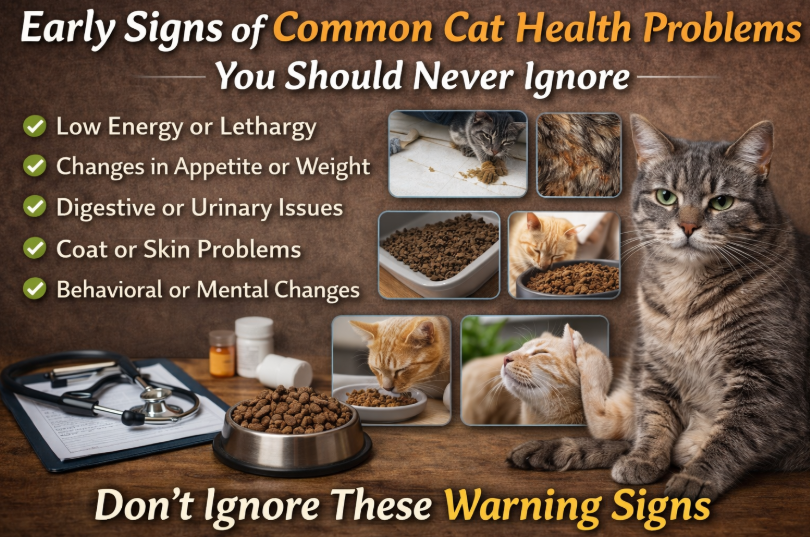
Recognizing early signs cat health problems is essential if you want to protect your pet from serious illness. Cats are naturally good at hiding discomfort, which means subtle changes are often the only clues something is wrong. While these signs may seem minor at first, they can quickly develop into more serious conditions if ignored.
Because cats cannot communicate directly, they rely on behavior and physical changes to signal distress. Therefore, paying close attention to even small differences in routine or appearance can make a huge difference. When you understand the early signs cat health issues, you can act quickly and ensure your cat stays healthy and comfortable.
Changes in Appetite and Eating Habits
One of the most noticeable early signs cat health problems is a change in appetite. Cats typically follow consistent eating patterns, so any sudden shift should raise concern. If your cat stops eating or eats significantly less, it could indicate dental issues, digestive problems, or underlying illness.
On the other hand, increased hunger may also signal a problem. Conditions such as diabetes or hyperthyroidism often cause excessive appetite. Therefore, observing both decreases and increases in food intake is important.
In addition, pay attention to how your cat eats. Difficulty chewing, dropping food, or avoiding hard kibble can point to oral pain. These subtle behaviors often appear before more obvious symptoms develop.
Unusual Weight Loss or Gain
Weight changes often accompany early signs cat health concerns. If your cat loses weight without a clear reason, it may indicate a serious issue. Conditions such as parasites, metabolic disorders, or chronic disease can cause gradual weight loss.
Conversely, unexpected weight gain can signal hormonal imbalance or reduced activity levels. Over time, this can lead to obesity-related problems, including joint strain and diabetes.
Regularly monitoring your cat’s weight helps you detect changes early. Even small differences can provide valuable insights into your cat’s overall health.
Low Energy and Lethargy
Cats naturally enjoy rest, but excessive sleeping or lack of interest in play can signal early signs cat health problems. If your cat becomes less active or avoids interaction, it may be experiencing discomfort or illness.
Moreover, lethargy often appears alongside other symptoms. For example, your cat may stop grooming or show less curiosity about its surroundings. While occasional tiredness is normal, ongoing lethargy should not be ignored.
Because energy levels reflect overall health, changes in activity can provide early warnings. Monitoring your cat’s daily behavior allows you to notice these differences quickly.
Changes in Grooming and Coat Condition
A healthy cat spends a significant amount of time grooming. Therefore, changes in grooming habits are often early signs cat health issues. If your cat stops grooming, its coat may appear dull, greasy, or matted.
Alternatively, excessive grooming can also indicate a problem. Cats may over-groom due to stress, allergies, or skin irritation. This behavior can lead to hair loss or skin damage if left untreated.
In addition, visible skin issues such as redness, bumps, or flaking should be taken seriously. These symptoms may indicate infections, parasites, or allergies that require attention.
Digestive Problems and Litter Box Changes
Litter box habits provide important clues about your cat’s health. Frequent vomiting, diarrhea, or constipation are common early signs cat health problems. While occasional issues may not be serious, persistent symptoms should be evaluated.
Changes in urination are equally important. Increased frequency, straining, or accidents outside the litter box may signal urinary tract issues. These conditions can become life-threatening if not treated promptly.
Moreover, strong odors or unusual stool appearance can indicate digestive problems. Monitoring these changes helps you catch issues before they worsen.
Breathing Difficulties and Coughing
Breathing should always be smooth and quiet. If your cat shows signs of labored breathing, it may indicate early signs cat health concerns affecting the lungs or heart. Symptoms such as wheezing, coughing, or open-mouth breathing require immediate attention.
In some cases, breathing issues develop gradually. You may notice your cat tiring easily or avoiding physical activity. Although these signs may seem minor, they often signal underlying conditions.
Because respiratory problems can escalate quickly, early detection is crucial. Seeking veterinary care at the first sign of trouble can make a significant difference.
Behavioral Changes and Mood Shifts
Behavior often reflects how your cat feels physically and emotionally. Sudden aggression, hiding, or withdrawal are common early signs cat health problems. These changes may indicate pain, stress, or illness.
Additionally, increased vocalization or unusual quietness can signal discomfort. Cats may meow more frequently or avoid interaction altogether. Understanding your cat’s normal behavior helps you recognize when something is off.
Furthermore, changes in sleep patterns or daily routines should not be overlooked. Even small shifts can reveal important health concerns.
Eye, Nose, and Ear Abnormalities
Healthy cats have clear eyes, clean ears, and minimal nasal discharge. Therefore, any changes in these areas can indicate early signs cat health issues. Watery eyes, redness, or discharge may signal infection or allergies.
Similarly, ear problems such as scratching, head shaking, or unusual odor often point to mites or infections. Nasal discharge or sneezing can indicate respiratory issues that require attention.
Because these symptoms are easy to spot, regular observation is key. Early treatment helps prevent complications and keeps your cat comfortable.
Bad Breath and Oral Health Issues
Many cat owners overlook oral health, yet it plays a major role in overall well-being. Persistent bad breath is one of the early signs cat health problems related to dental disease. Plaque buildup, gum infection, and tooth decay can all cause discomfort.
In addition, difficulty eating or drooling may indicate oral pain. Left untreated, dental issues can lead to more serious infections that affect other parts of the body.
Regular dental care and checkups help prevent these problems. Paying attention to your cat’s mouth ensures early detection and treatment.
Frequent Illness or Slow Recovery
A strong immune system helps cats recover quickly from minor illnesses. However, frequent sickness or slow healing can signal early signs cat health concerns. If your cat often appears unwell or takes longer to recover, it may indicate underlying issues.
For example, repeated infections can point to weakened immunity or chronic disease. Additionally, wounds that heal slowly may suggest poor circulation or metabolic problems.
Monitoring your cat’s recovery patterns provides valuable information. Early intervention can improve outcomes and prevent long-term complications.
Conclusion
Ignoring small changes in your cat’s behavior or appearance can lead to serious consequences. Early signs cat health problems often appear subtly, making them easy to miss. However, recognizing these warning signals allows you to act quickly and protect your pet’s well-being.
Consistency in observation is essential. By paying attention to appetite, energy levels, grooming habits, and behavior, you can detect issues early. Small actions, such as regular checkups and proper care, make a significant difference in your cat’s health.
Ultimately, understanding early signs cat health issues empowers you to provide better care. When you respond promptly, you help your cat live a longer, healthier, and more comfortable life.
FAQ
- What are the first warning signs that a cat may be sick?
Changes in appetite, energy levels, and grooming habits are often the earliest indicators. - When should I take my cat to the vet?
You should seek veterinary care if symptoms persist for more than a few days or worsen quickly. - Are behavioral changes a sign of illness in cats?
Yes, unusual behavior such as hiding or aggression can indicate pain or discomfort. - How often should I monitor my cat’s health?
Daily observation helps you notice small changes before they become serious problems. - Can minor symptoms become serious if ignored?
Yes, even small issues can develop into major health concerns without early intervention.