
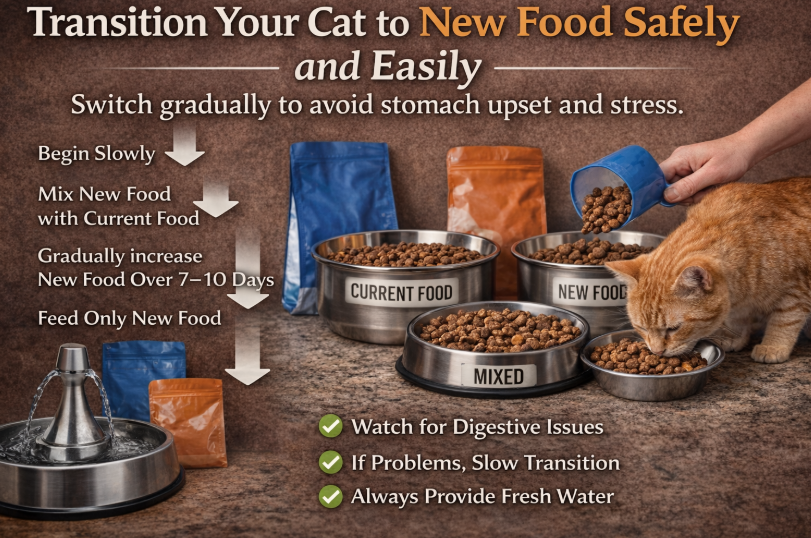
Learning how to transition cat to new food is an essential skill for every cat owner. While it may seem simple to switch food overnight, sudden changes can upset your cat’s digestive system and cause stress. Cats are creatures of habit, so even small changes in their routine can affect their appetite and overall well-being.
Because of this, introducing new food should always be done gradually. A careful approach allows your cat to adjust without discomfort while maintaining a healthy digestive balance. When you understand how to transition cat to new food properly, you can prevent common issues like vomiting, diarrhea, or food refusal.
Why a Gradual Transition Matters
Cats have sensitive digestive systems, so abrupt dietary changes often lead to problems. When you transition cat to new food too quickly, the gut bacteria do not have time to adjust. As a result, your cat may experience stomach upset or loose stools.
In addition, cats can be picky eaters. A sudden switch might cause them to reject the new food completely. Therefore, a slow transition helps your cat become familiar with the new taste and texture without feeling overwhelmed.
Moreover, a gradual change reduces stress. Since cats rely on routine, introducing new food slowly keeps their environment predictable. This approach not only protects their digestion but also supports emotional comfort.
Step By Step Feeding Transition Plan
The safest way to transition cat to new food is to follow a gradual mixing method. This process typically takes about seven to ten days, although some cats may need more time.
Start by mixing a small portion of the new food with your cat’s current food. For the first two days, keep the ratio around 25 percent new food and 75 percent old food. This allows your cat to begin adjusting without a sudden change.
Over the next few days, increase the amount of new food gradually. Move to a 50-50 mix, then 75 percent new food and 25 percent old food. By the end of the transition, your cat should be eating the new food entirely.
During this process, observe your cat closely. If you notice digestive issues, slow down the transition. Adjusting the pace helps ensure your cat stays comfortable throughout the change.
Signs Your Cat Is Adjusting Well
As you transition cat to new food, it is important to monitor how your pet responds. Positive signs include steady appetite, normal stool consistency, and consistent energy levels. These indicators suggest your cat is adapting well to the new diet.
Additionally, your cat may show curiosity toward the new food. This is a good sign that the flavor and texture are appealing. However, some cats take longer to accept changes, so patience is key.
On the other hand, negative signs such as vomiting, diarrhea, or refusal to eat should not be ignored. If these symptoms appear, pause the transition and return to the previous ratio for a few days. This allows your cat to recover before continuing.
Handling Picky Eaters During Transition
Some cats resist change more than others. When you try to transition cat to new food, picky behavior can make the process more challenging. However, there are ways to encourage acceptance without forcing the issue.
First, try warming the food slightly. This enhances the aroma and makes it more appealing. You can also mix in a small amount of wet food if your cat prefers moisture-rich meals.
Another effective method is maintaining a consistent feeding schedule. Offering food at the same time each day helps your cat develop a routine. If your cat refuses to eat, remove the food after a set time and try again later.
Avoid giving too many treats during this period. Treats can reduce your cat’s interest in the new food and slow down the transition process.
Choosing the Right New Food
Selecting the right diet is just as important as the transition itself. When you transition cat to new food, ensure the new option meets your cat’s nutritional needs. High-quality protein should always be the primary ingredient.
In addition, consider your cat’s age, activity level, and health condition. Kittens, adult cats, and senior cats all require different nutrient levels. Choosing a diet that matches these needs supports overall health.
If your cat has allergies or sensitivities, look for limited-ingredient formulas. These diets reduce the risk of adverse reactions and make the transition smoother.
Consulting a veterinarian can also help you make the best choice. Professional guidance ensures the new food aligns with your cat’s specific requirements.
Common Mistakes to Avoid
Many cat owners make simple mistakes when trying to transition cat to new food. One common error is rushing the process. While it may be tempting to switch quickly, this often leads to digestive issues.
Another mistake is mixing too many new foods at once. Introducing multiple changes can confuse your cat and make it harder to identify the cause of any problems. Instead, focus on one new food at a time.
Additionally, ignoring your cat’s preferences can create resistance. Cats have individual tastes, so finding a food they enjoy is essential. Paying attention to their reactions helps you choose a better option.
Consistency is also important. Changing feeding routines frequently can stress your cat and disrupt the transition process. Stick to a steady schedule for the best results.
When to Slow Down the Transition
Not all cats adjust at the same pace. Sometimes, you may need to slow down when you transition cat to new food. If your cat shows signs of discomfort, such as loose stools or reduced appetite, it is best to pause.
Returning to the previous food ratio for a few days allows your cat’s system to stabilize. Once symptoms improve, you can continue the transition at a slower pace.
In some cases, a longer transition period of two weeks or more may be necessary. This is especially true for older cats or those with sensitive stomachs. Taking extra time ensures a smoother adjustment.
Patience is key during this process. Rushing can lead to setbacks, while a careful approach promotes long-term success.
The Role of Hydration During Transition
Hydration plays a crucial role when you transition cat to new food. Cats often have a low thirst drive, so ensuring they get enough moisture is important. Wet food can help increase water intake during this period.
Additionally, always provide fresh water. Placing multiple water bowls around your home can encourage drinking. Some cats prefer running water, so a pet fountain may also help.
Proper hydration supports digestion and reduces the risk of urinary issues. Therefore, maintaining good water intake is essential during any dietary change.
Long Term Benefits of a Proper Transition
Taking the time to transition cat to new food correctly offers lasting benefits. A smooth transition helps maintain digestive health and prevents unnecessary stress. Over time, your cat becomes more adaptable to changes.
Furthermore, a well-balanced diet improves energy levels, coat condition, and overall health. Cats that receive proper nutrition are more likely to stay active and happy.
Consistency in feeding habits also strengthens your bond with your pet. When your cat feels secure and comfortable, it becomes easier to introduce changes in the future.
Conclusion
Knowing how to transition cat to new food safely is a vital part of responsible pet care. While the process requires patience, the benefits are well worth the effort. Gradual changes protect your cat’s digestive system and reduce stress.
By following a structured plan, observing your cat’s reactions, and choosing high-quality food, you can ensure a successful transition. Small adjustments along the way help prevent problems and promote long-term health.
Ultimately, taking a thoughtful approach allows your cat to enjoy new food without discomfort. With the right strategy, you can support your pet’s well-being and create a positive feeding experience.
FAQ
- How long should a cat food transition take?
Most transitions take about 7 to 10 days, but some cats may need longer depending on their sensitivity. - What happens if I switch my cat’s food too quickly?
A sudden change can cause digestive issues such as vomiting, diarrhea, or refusal to eat. - Can I mix wet and dry food during the transition?
Yes, combining both can help improve acceptance and provide better hydration. - What should I do if my cat refuses the new food?
Try slowing down the transition, warming the food, or adjusting feeding times to encourage eating. - Is it normal for stool changes during a diet switch?
Minor changes can occur, but persistent issues should be addressed by slowing the transition or consulting a vet.