
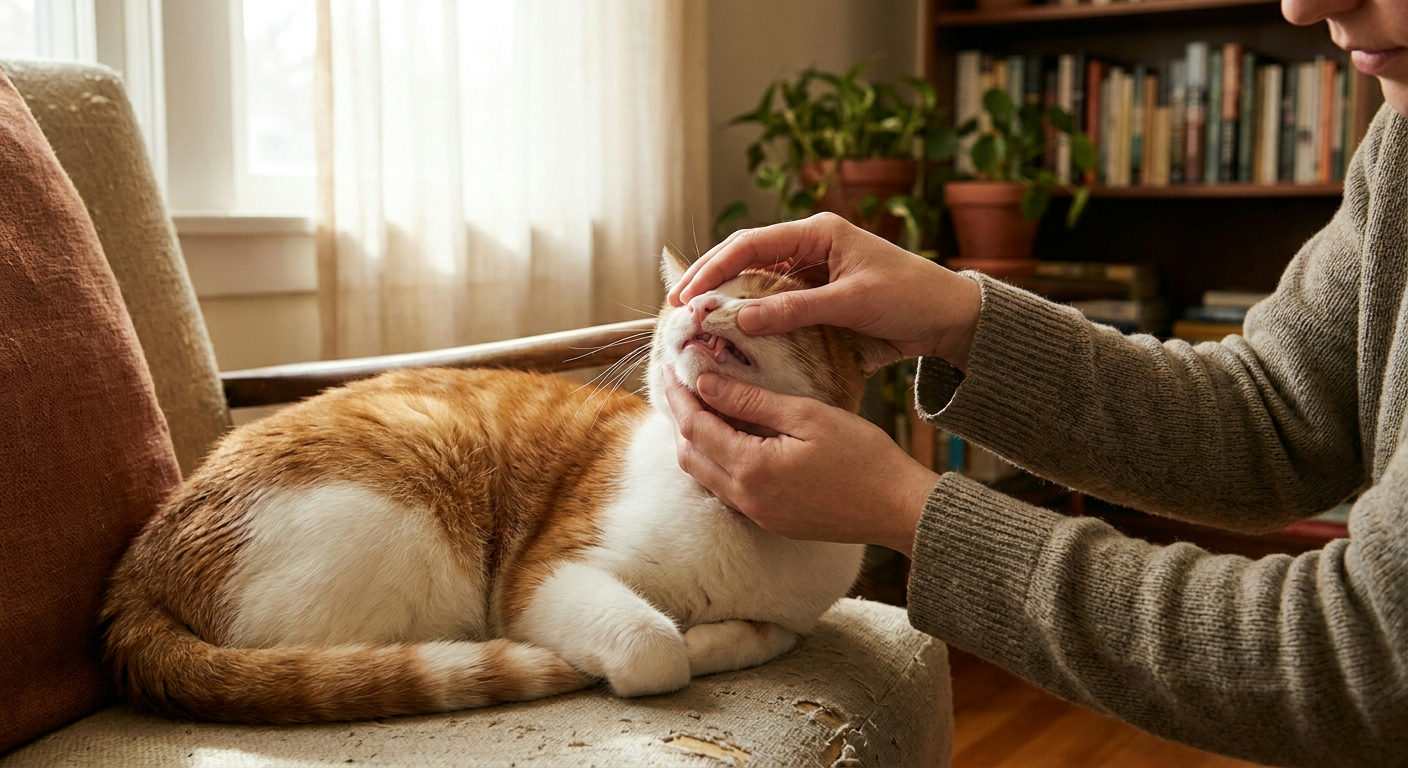
Cat dental care has two jobs at home: noticing changes that need veterinary attention and following an appropriate preventive routine. A clean-looking tooth does not tell you everything about the mouth, and continued eating does not establish that the teeth and gums are healthy. Start with an examination and a plan for your individual cat rather than a collection of dental products.
This is general information, not veterinary advice or a diagnosis. Contact your veterinarian about pain, a change in eating, drooling or an abnormal-looking mouth. If your cat stops eating, seek veterinary advice promptly rather than trying to solve the problem with a toothbrush. The steps below help you prepare useful observations and build a routine after your vet confirms what is appropriate.
Understand what home care can and cannot tell you
Cornell’s feline dental guidance distinguishes gingivitis, periodontitis and tooth resorption. These conditions can cause pain and require different assessment and treatment. It recommends cat-specific toothpaste and advises consulting a veterinarian before brushing inflamed gums, because brushing can hurt. An owner cannot diagnose the condition by deciding how much visible tartar is present.
Use those distinctions to frame the first conversation: is the mouth comfortable enough for home care, what needs treatment, and what should happen next? You do not need to name a disease correctly before making the appointment. Reporting what changed is more useful than announcing a diagnosis based on a photograph or a product description.
Do not scrape deposits, poke a defect or pull at a loose-looking tooth yourself. A home observation should not become an improvised procedure. If your cat resists having the face touched, leave the inspection to the veterinary team. You can still report the change in behaviour and the circumstances in which you noticed it.
Record specific changes rather than a general impression
Write down when a change began and what you saw. Useful entries include food being dropped, a different chewing movement, new drooling, a changed breath odour or reluctance to accept familiar face handling. Describe the observation without calling one sign the most reliable test. A symptom can have more than one explanation, and the examination is where that question belongs.
Include whether appetite changed, which food was offered and whether the cat approached the bowl. A brief video of a naturally occurring eating change may help the clinic understand your description, but do not prolong discomfort to obtain footage. Ask the clinic whether it wants the recording before sending it. Keep the time and date with the note.
Bring the names of existing medicines, foods and dental products. Include any recent dental treatment and the instructions you received. If several people care for the cat, ask each whether they noticed the same change. Different observations can clarify the picture; they should not become an argument about whose interpretation is correct.
Ask for a brushing demonstration before starting
Once the vet says brushing is suitable, ask them to show the position and equipment for your cat. Have them explain what a comfortable session looks like and when to stop. Use toothpaste labelled for cats rather than a human product. Keep the package instructions available and ask about anything that conflicts with the clinical plan.
Prepare a calm place where the cat can leave. Put the equipment within reach so you are not searching for it while holding the animal. Begin with the handling your cat accepts, and ask the veterinary team how to introduce the brush gradually. There is no compulsory timetable that every adult cat or kitten must meet.
Treat a session as a small learning step. One attempt might only involve accepting the equipment nearby; another might include a brief, gentle contact demonstrated by the team. Stop if the cat appears uncomfortable or distressed. Forcing a longer session to complete a checklist does not make the routine more appropriate. Seek further help when the comfortable step is unclear.
Choose a routine you can describe accurately
AAHA’s owner guidance recommends daily brushing with suitable pet equipment as part of home dental care. Ask your vet how to work toward that routine for your cat and what alternatives might be appropriate if brushing is not possible. Avoid claiming that an occasional attempt provides the same protection as the recommended routine.
Record what actually happened: equipment accepted, brief brushing completed, or session stopped because of discomfort. This gives the veterinary team something concrete to adjust. A record should describe the routine, not prove that you are a perfect owner. If you miss a session, resume the agreed plan rather than pressing harder or longer to compensate.
If another person helps, demonstrate the same comfortable stage and explain the stop signals. Keep handling consistent. Do not ask a sitter to begin a more advanced step while you are away. Write where the supplies are, which product is being used and who to call if the mouth or eating behaviour changes.
Evaluate dental products by the exact claim
The Veterinary Oral Health Council’s accepted-product list separates cat and dog products and identifies plaque or tartar claims for listed items. Check the exact cat product and claim rather than treating the seal as a promise that every oral problem is prevented. A dental product does not replace an examination or treatment of a painful mouth.
Take a candidate’s label to the vet. Ask whether it fits your cat’s diet, medical needs and existing home-care plan. For an edible product, ask how it belongs within the feeding allowance. For an additive, clarify the instructions and whether it suits the cat’s current care. Do not combine several products simply because their packaging uses similar dental language.
Keep a product card with its full name, intended species, stated claim, directions and the vet’s advice. Avoid assigning ordinary dry food a dental-treatment role merely because it is crunchy. When a manufacturer makes a specific claim, check the evidence or accepted listing for that product. Leave an unanswered question open rather than translating advertising into a clinical recommendation.
Understand the purpose of professional assessment
AAHA’s dental-care guidelines state that dental procedures require general anaesthesia with appropriate airway protection, monitoring and support. They also emphasise assessing each patient individually. Discuss the proposed procedure and anaesthetic plan with your veterinary team; a general article cannot determine the risk or treatment needed for your cat.
Ask what the assessment includes, how dental X-rays inform decisions and how the team will contact you if it finds additional problems. Agree on the consent process before admission. If cost is a concern, request an itemised estimate and an explanation of the options. Do not assume that a cosmetic removal of visible deposits provides the same assessment as the proposed veterinary procedure.
After treatment, request written instructions for feeding, prescribed medication, follow-up and restarting home care. Repeat the key points back to the team if you are uncertain. Avoid borrowing another cat’s recovery timetable or medicines. The plan should reflect what was actually done and the clinician’s assessment of this patient.
Finish with a manageable care card
Keep one card with the clinic contact, the current home-care step, the exact products and the next agreed review. Add a short observation section for changes in eating or mouth comfort. This is the record a helper should be able to follow without guessing whether a missed brush session or a new symptom needs attention.
Cat dental care works best as a shared plan with the veterinary team. Begin by asking whether the mouth is comfortable and what assessment is needed. Then follow the demonstrated home routine and report changes clearly. Your next useful action is a specific question or observation, not an unsupported promise that a product will keep every tooth healthy.