Understanding cat food labels is one of the most important steps you can take to improve your cat’s health. While packaging often looks appealing, the real value lies in the details printed on the label. Many cat owners feel confused when reading ingredient lists or nutritional claims, which makes it harder to choose the right product.
However, once you learn how cat food labels work, everything becomes much clearer. Instead of relying on marketing terms, you can make decisions based on actual nutritional value. This knowledge allows you to avoid low-quality ingredients and focus on what truly benefits your cat.
Why Reading Labels Matters More Than You Think
Many cat owners assume all cat food is similar, but this is not true. Cat food labels reveal major differences in quality, ingredients, and nutritional balance. Therefore, learning to read them properly helps you avoid poor choices that may harm your cat over time.
In addition, labels often include hidden details that are easy to miss. Terms like “natural” or “premium” do not always guarantee quality. Instead, the ingredient list and nutritional analysis provide the most reliable information.
Moreover, understanding cat food labels gives you control. You can select food based on your cat’s specific needs rather than relying on brand claims. This approach leads to better long-term health and fewer feeding issues.
Breaking Down The Ingredient List
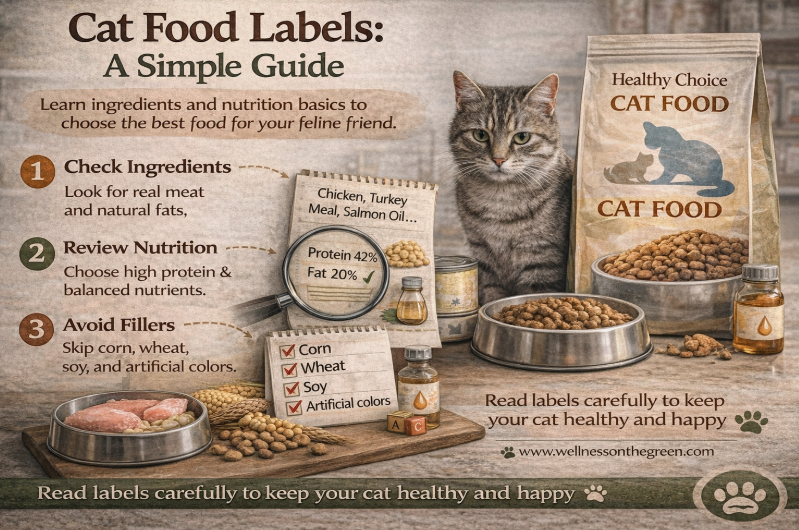
The ingredient list is one of the most important parts of cat food labels. Ingredients are listed in order of weight, meaning the first few items make up the majority of the food.
High-quality cat food should list real meat as the first ingredient. This ensures your cat receives the protein it needs as an obligate carnivore. On the other hand, products that start with fillers or by-products may not provide the same nutritional value.
In addition, it is important to recognize ingredient types. Whole meats, named animal proteins, and clearly identified fats are generally better choices. Meanwhile, vague terms like “meat meal” or “animal by-product” can be less reliable.
Understanding this section of cat food labels helps you quickly identify whether a product meets your cat’s dietary needs.
Understanding Guaranteed Analysis
Another key section of cat food labels is the guaranteed analysis. This part shows the percentages of protein, fat, fiber, and moisture in the food.
Protein levels are especially important for cats. Because they rely on animal protein, higher protein content usually indicates better quality. However, it is also important to consider the source of that protein.
Fat content provides energy and supports skin and coat health. Meanwhile, fiber helps digestion, although cats do not require large amounts.
Moisture content varies between dry and wet food. Wet food contains more water, which supports hydration. By understanding guaranteed analysis, you can compare products more effectively.
Decoding Common Marketing Terms
Marketing terms on cat food labels can be misleading. Words like “natural,” “holistic,” or “grain-free” often sound appealing but may not always reflect nutritional quality.
For example, “natural” simply means the ingredients are not artificially altered. It does not guarantee a balanced diet. Similarly, “grain-free” does not automatically mean healthier, especially if other fillers are used.
Therefore, it is important to focus on factual information rather than marketing claims. Reading the ingredient list and nutritional analysis gives you a clearer picture of the product’s value.
By understanding how cat food labels use marketing language, you can avoid being misled and make more informed choices.
Recognizing Essential Nutrients On Labels
Cats require specific nutrients to stay healthy, and cat food labels help you identify them. Taurine is one of the most important nutrients, as it supports heart and eye health.
In addition, vitamins and minerals play a crucial role. Ingredients should include essential nutrients such as vitamin A, calcium, and omega fatty acids.
Protein sources should also be clearly identified. Foods that provide high-quality animal protein support muscle health and energy levels.
Understanding these nutrients ensures your cat receives a balanced diet. It also helps you avoid products that lack essential components.
Life Stage And Special Diet Indicators
Cat food labels often include information about life stages. Products may be designed for kittens, adult cats, or senior cats, each with different nutritional needs.
Kittens require more protein and calories for growth, while senior cats may need fewer calories and added joint support. Choosing the right life stage formula ensures your cat gets appropriate nutrition.
In addition, some labels highlight special diets. These may include formulas for weight management, sensitive stomachs, or specific health conditions.
Selecting the correct formula based on your cat’s needs improves overall health and prevents future issues.
How To Spot Low Quality Ingredients
Not all cat food is created equal, and cat food labels help you identify low-quality options. Products with excessive fillers, artificial additives, or vague ingredient names should be avoided.
Common fillers include corn, wheat, and soy, which provide limited nutritional value for cats. While not always harmful, they should not dominate the ingredient list.
Artificial colors and preservatives are also unnecessary. High-quality food relies on natural ingredients to maintain freshness and appeal.
By carefully reviewing cat food labels, you can avoid these low-quality components and choose better options for your cat.
Portion Guidelines And Feeding Instructions
Feeding instructions are another important part of cat food labels. These guidelines provide a starting point for determining how much to feed your cat.
However, every cat is different. Factors such as age, activity level, and health condition affect dietary needs. Therefore, it is important to adjust portions based on your cat’s specific situation.
Overfeeding can lead to weight gain, while underfeeding may result in nutrient deficiencies. Monitoring your cat’s weight helps you maintain the right balance.
Using feeding guidelines as a reference ensures your cat receives proper nutrition without excess or shortage.
Comparing Different Brands Effectively
When choosing between products, cat food labels allow you to compare options side by side. Look at protein sources, ingredient quality, and nutrient percentages to evaluate each product.
In addition, consider your cat’s preferences. Even the best food is ineffective if your cat refuses to eat it. Finding a balance between quality and palatability is essential.
For more guidance on diet transitions and feeding strategies, you can explore https://www.wellnessonthegreen.com/ to better understand how food choices impact your cat.
Comparing labels carefully helps you make informed decisions and avoid trial-and-error feeding.
Why Consistency Matters In Feeding Choices
Once you find a high-quality food, consistency is important. Frequent changes can confuse your cat and disrupt digestion. Therefore, sticking to a reliable product helps maintain stability.
In addition, consistent nutrition supports long-term health. Cats that receive balanced diets regularly are less likely to develop feeding issues or deficiencies.
However, if a change is necessary, it should be done gradually. This approach prevents digestive upset and ensures a smooth transition.
Maintaining consistency while understanding cat food labels allows you to provide the best care for your pet.
Conclusion
Learning how to read cat food labels may seem overwhelming at first, but it becomes much easier with practice. By focusing on ingredient quality, nutritional content, and accurate information, you can make better choices for your cat.
Avoid relying on marketing claims and instead trust the details that truly matter. This approach ensures your cat receives the nutrients it needs for a healthy and active life.
Ultimately, understanding cat food labels empowers you to take control of your cat’s diet. With the right knowledge, you can provide better nutrition and support your cat’s long-term well-being.
FAQ
- What should I look for first on a cat food label?
Check the first ingredient and ensure it is a high-quality protein source. - Are grain-free diets better for cats?
Not always, as some grain-free foods still contain low-quality fillers. - How can I tell if a cat food is high quality?
Look for clear ingredient names, high protein content, and essential nutrients. - Do all cats need the same type of food?
No, cats have different needs based on age, health, and activity level. - Should I trust marketing terms on packaging?
It is better to rely on ingredient lists and nutritional analysis instead.