
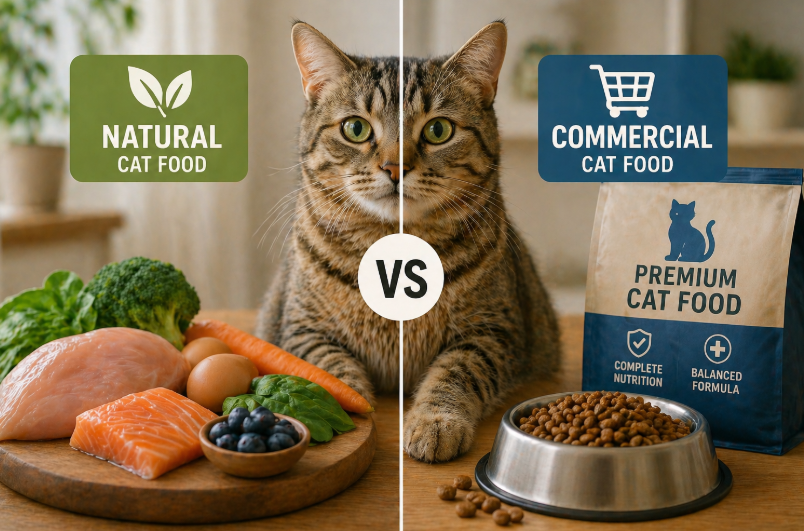
Choosing between natural vs commercial cat food can feel confusing, especially when both options promise better health and nutrition. As a cat owner, you want to provide the best possible diet, yet the variety of choices can make decision-making difficult. While natural diets often emphasize fresh ingredients, commercial foods offer convenience and balanced nutrition. Understanding how these two options differ helps you make a more confident and informed choice.
Many pet owners assume one option is always better, but the reality is more nuanced. Every cat has unique needs based on age, activity level, and health conditions. Because of this, comparing natural vs commercial cat food requires looking beyond marketing claims and focusing on actual nutritional value. When you understand what each option offers, you can choose a diet that truly supports your cat’s well-being.
Understanding Natural Cat Food Basics
When discussing natural vs commercial cat food, it is important to understand what “natural” really means. Natural cat food typically includes minimally processed ingredients, such as fresh meat, vegetables, and limited additives. Many owners prefer this option because it feels closer to what cats would eat in the wild.
However, natural diets can vary widely. Some are homemade, while others are store-bought but labeled as natural or organic. Because of this variation, quality depends heavily on preparation and ingredient sourcing. A well-prepared natural diet can provide excellent nutrition, but an unbalanced one may lead to deficiencies.
Additionally, natural feeding often requires more effort. Preparing meals, ensuring proper nutrient balance, and storing food safely all take time. Despite these challenges, many owners choose this route because they feel more in control of what their cat consumes.
What Commercial Cat Food Offers
On the other side of natural vs commercial cat food, commercial options are designed for convenience and consistency. These products are formulated to meet established nutritional standards, which ensures that cats receive essential vitamins and minerals in the correct proportions. For many owners, this reliability is a major advantage.
Commercial cat food comes in various forms, including dry kibble, wet food, and specialized diets. Each type serves a different purpose, whether it is supporting hydration, dental health, or weight management. Because these foods are produced under controlled conditions, they are often more consistent than homemade diets.
However, not all commercial foods are equal. Some lower-quality options may contain fillers, artificial additives, or low-grade protein sources. Therefore, choosing high-quality brands is essential when evaluating natural vs commercial cat food. Reading labels and understanding ingredients can help you avoid poor-quality products.
Nutritional Differences That Matter
One of the most important aspects of natural vs commercial cat food is how each option delivers nutrients. Cats are obligate carnivores, which means they require a diet rich in animal protein. Natural diets often excel in this area when they include fresh, high-quality meat.
However, commercial foods are carefully formulated to include all essential nutrients, including taurine, which is critical for heart and eye health. Without proper knowledge, homemade natural diets may lack these key nutrients. As a result, cats can develop health issues over time.
Balance is the key factor here. While natural food can be highly nutritious, it must be carefully planned. Meanwhile, commercial food offers convenience and completeness, but quality varies widely. Understanding these differences helps you decide which approach works best for your cat.
Cost And Convenience Considerations
When comparing natural vs commercial cat food, cost and convenience play a significant role. Natural diets, especially homemade ones, can be more expensive due to the cost of fresh ingredients. They also require time for preparation and planning, which may not fit every lifestyle.
In contrast, commercial cat food is widely available and easy to store. It allows you to feed your cat quickly without the need for daily preparation. This convenience makes it a practical choice for busy households. Additionally, commercial options often come in a range of price points, making them accessible to more people.
However, convenience should not come at the expense of quality. Even within commercial options, investing in higher-quality food can make a noticeable difference in your cat’s health. Balancing cost with nutritional value is essential when choosing between natural vs commercial cat food.
Health Benefits And Potential Risks
The health impact of natural vs commercial cat food depends largely on how each option is implemented. A well-balanced natural diet can lead to improved coat condition, better digestion, and higher energy levels. Many owners also report fewer allergies and sensitivities when using natural ingredients.
On the other hand, poorly planned natural diets can lead to serious deficiencies. For example, missing essential nutrients like calcium or taurine can cause long-term health problems. This risk highlights the importance of proper research and guidance.
Commercial foods, when high quality, provide balanced nutrition and reduce the risk of deficiencies. However, lower-quality products may include unnecessary fillers that do not benefit your cat. Therefore, careful selection is critical regardless of the option you choose.
Which Option Fits Your Cat’s Lifestyle
Deciding between natural vs commercial cat food often comes down to your cat’s lifestyle and your ability to maintain consistency. Active cats may benefit from higher protein diets, while older cats may need specialized formulas. Understanding these needs helps you make a more personalized choice.
Some owners also choose a combination approach. For example, mixing high-quality commercial food with occasional natural meals can provide both balance and variety. This method allows you to enjoy the benefits of both options without fully committing to one.
Consistency remains important. Frequent changes in diet can upset your cat’s digestive system and create unnecessary stress. Once you find a suitable option, maintaining a stable feeding routine supports both physical and emotional health.
Making The Right Choice For Long-Term Health
Ultimately, the decision between natural vs commercial cat food should focus on long-term health rather than short-term trends. While natural diets offer control and freshness, they require careful planning. Meanwhile, commercial foods provide convenience and balanced nutrition, but quality varies significantly.
Consulting with a veterinarian can help you make a more informed decision. They can assess your cat’s specific needs and recommend suitable options. This guidance is especially important if your cat has existing health conditions or dietary sensitivities.
By focusing on quality, balance, and consistency, you can ensure that your cat receives the nutrition needed for a healthy life. Whether you choose natural, commercial, or a combination of both, the goal is to support your cat’s overall well-being.
Conclusion
Comparing natural vs commercial cat food is not about choosing a single “perfect” option, but rather finding what works best for your cat. Both approaches have advantages and challenges, and the right choice depends on your cat’s needs and your lifestyle. By understanding the differences and focusing on quality, you can make a decision that supports your cat’s health, energy, and happiness.
At the end of the day, a well-fed cat is a healthy and content companion. When you take the time to evaluate your options carefully, you create a foundation for long-term wellness and a stronger bond with your pet.
FAQ
- Is natural food always better for cats than commercial food?
Not always, as both options can be healthy if properly balanced and high in quality. - Can I mix natural and commercial cat food?
Yes, many owners use a combination approach to provide balance and variety. - How do I know if my cat’s diet is balanced?
Look for signs like stable weight, good energy levels, and a healthy coat. - Are commercial cat foods safe for long-term use?
High-quality commercial foods are designed to be safe and nutritionally complete. - Should I consult a vet before changing my cat’s diet?
Yes, a vet can provide personalized advice based on your cat’s specific needs.