
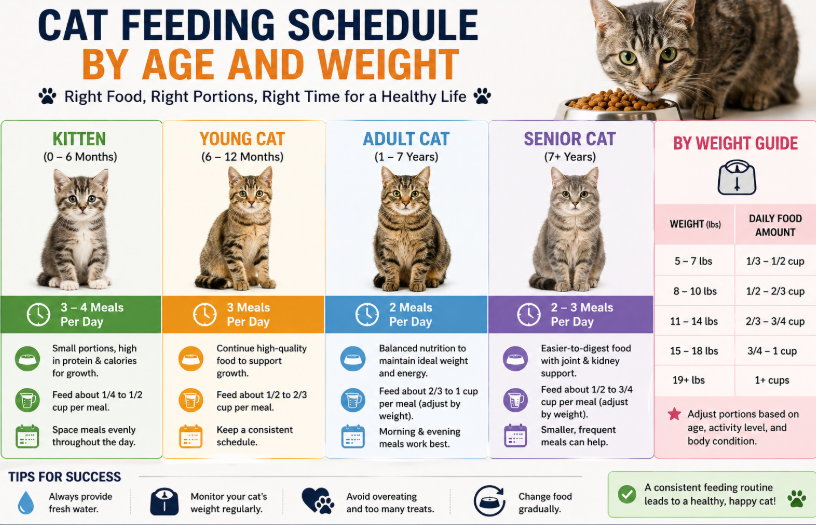
Creating the right routine starts with understanding a proper cat feeding schedule by age, because your cat’s needs change significantly over time. From playful kittens to relaxed senior cats, each stage requires a different approach to portion size, frequency, and nutrition. When you follow a structured schedule, you help maintain a healthy weight, support digestion, and prevent common feeding mistakes that can lead to long-term issues.
Many cat owners feed based on convenience rather than need, which can cause problems over time. However, when you tailor meals to age and weight, your cat becomes more energetic, balanced, and content. A well-planned cat feeding schedule by age also reduces overeating, helps regulate metabolism, and supports overall well-being. With the right knowledge, feeding becomes less of a guess and more of a consistent, healthy routine.
Why Feeding Schedule Matters More Than You Think
A consistent routine is essential when building a reliable cat feeding schedule by age, because cats thrive on predictability. When meals are served at the same times each day, your cat feels more secure and less stressed. This stability also improves digestion and helps regulate hunger signals, which reduces begging or overeating behaviors.
Additionally, structured feeding allows you to monitor your cat’s appetite more closely. If your cat suddenly eats less or skips meals, it becomes easier to notice. Early awareness of these changes can help you detect potential health issues. Therefore, following a proper cat feeding schedule by age is not just about nutrition, but also about ongoing health monitoring.
Consistency also supports behavior. Cats that eat on a regular schedule tend to be calmer and more predictable in their daily routine. As a result, both you and your cat benefit from a structured feeding plan.
Feeding Kittens For Healthy Growth
Kittens require a different approach, which makes a tailored cat feeding schedule by age essential during early development. Young cats grow rapidly and need frequent meals to support energy and development. Typically, kittens should be fed three to four times per day, depending on their age and activity level.
During this stage, portion size should be smaller but more frequent. Because kittens have small stomachs, they cannot consume large meals at once. High-quality, nutrient-dense food is also critical, as it supports brain development, muscle growth, and immune health.
As kittens grow, their feeding schedule gradually changes. By around six months, you can begin transitioning toward fewer meals per day. However, maintaining a consistent cat feeding schedule by age during this stage ensures smooth growth and prevents nutritional gaps.
Feeding Adult Cats The Right Way
Once your cat reaches adulthood, the feeding routine becomes more stable. At this stage, a cat feeding schedule by age usually involves two meals per day. This frequency supports energy balance and prevents overeating, especially for indoor cats that may have lower activity levels.
Portion control becomes more important during adulthood. Feeding too much can quickly lead to weight gain, while feeding too little may reduce energy levels. Monitoring your cat’s weight and adjusting portions accordingly helps maintain a healthy balance.
In addition, the type of food matters. Adult cats benefit from a balanced diet that includes sufficient protein, healthy fats, and essential nutrients. Following a consistent cat feeding schedule by age ensures that your cat receives the right nutrition without unnecessary fluctuations.
Adjusting Feeding Based On Weight
Weight plays a crucial role in determining the ideal cat feeding schedule by age, because every cat has unique energy needs. Overweight cats may require smaller portions and controlled feeding times, while underweight cats may need more frequent meals or calorie-dense food.
Regular weight checks help you stay on track. If your cat is gaining or losing weight unexpectedly, adjusting the feeding schedule can make a significant difference. For example, reducing portion sizes or spreading meals across the day can help manage weight more effectively.
Additionally, activity level should be considered alongside weight. Active cats burn more calories and may need slightly larger portions, while less active cats require careful portion control. By combining weight and activity insights, you can refine your cat feeding schedule by age for better results.
Feeding Senior Cats With Care
As cats age, their nutritional needs change again, making a revised cat feeding schedule by age necessary. Senior cats often have slower metabolisms and may experience changes in appetite or digestion. Because of this, smaller, more frequent meals can be beneficial.
Older cats may also develop dental issues or reduced ability to chew, which makes softer food options more suitable. Wet food or specially formulated senior diets can improve comfort and ensure proper nutrition. Maintaining hydration is also important, as older cats are more prone to kidney-related concerns.
Monitoring behavior becomes even more important at this stage. If your senior cat shows changes in eating habits, it may indicate underlying health issues. A consistent cat feeding schedule by age helps you detect these changes early and respond appropriately.
Choosing Between Free Feeding And Scheduled Feeding
When setting up a cat feeding schedule by age, one common question involves free feeding versus scheduled feeding. Free feeding allows food to be available at all times, while scheduled feeding provides meals at specific times.
Scheduled feeding is generally the better option, especially for maintaining a healthy weight. It allows you to control portions and monitor eating habits more effectively. In contrast, free feeding can lead to overeating, particularly in indoor cats.
However, some cats may adapt well to controlled free feeding if portions are carefully measured. The key is to ensure that your chosen method supports your cat’s health and aligns with a structured cat feeding schedule by age.
Common Feeding Mistakes To Avoid
Even with the best intentions, mistakes can happen when following a cat feeding schedule by age. One common mistake is overfeeding, which often results from misjudging portion sizes or giving too many treats. Over time, this can lead to obesity and related health issues.
Another mistake is inconsistent feeding times. Irregular schedules can confuse your cat and disrupt digestion. Maintaining consistency is essential for long-term health.
Switching foods too quickly is also problematic. Sudden changes can upset your cat’s digestive system and lead to discomfort. Gradual transitions are always recommended when adjusting diet.
By avoiding these mistakes, you can ensure that your cat feeding schedule by age remains effective and beneficial.
How To Create A Routine That Works
Building a successful routine requires observation and flexibility. Start by setting fixed feeding times that fit your daily schedule. Then, adjust portions based on your cat’s age, weight, and activity level.
Pay attention to how your cat responds. If your cat finishes meals quickly and seems satisfied, the schedule is likely working well. If not, small adjustments may be needed. Over time, this process helps refine your cat feeding schedule by age into a routine that supports both health and behavior.
Using feeding tools such as measured bowls or automatic feeders can also improve consistency. These tools help ensure accurate portions and maintain regular feeding times, even on busy days.
Conclusion
A well-planned cat feeding schedule by age is one of the most effective ways to support your cat’s overall health. By adjusting feeding frequency and portion sizes based on life stage and weight, you create a routine that promotes balance, energy, and long-term wellness. Each stage of your cat’s life requires a slightly different approach, but consistency remains the key to success.
When you take the time to understand your cat’s needs, feeding becomes more than just a daily task. It becomes a powerful tool for maintaining health and strengthening your bond with your pet. With the right schedule in place, your cat can enjoy a happier, healthier life.
FAQ
- How often should I feed my kitten each day?
Kittens usually need three to four meals daily to support rapid growth and energy needs. - Can I feed my adult cat only once a day?
Most adult cats do better with two meals per day for balanced energy and digestion. - How do I know if I am feeding the right portion size?
Monitor your cat’s weight and adjust portions based on body condition and activity level. - Should senior cats eat more or less than younger cats?
Senior cats often need smaller, more frequent meals due to slower metabolism and digestion. - Is it okay to leave food out all day for my cat?
Scheduled feeding is usually better for controlling portions and preventing overeating.