
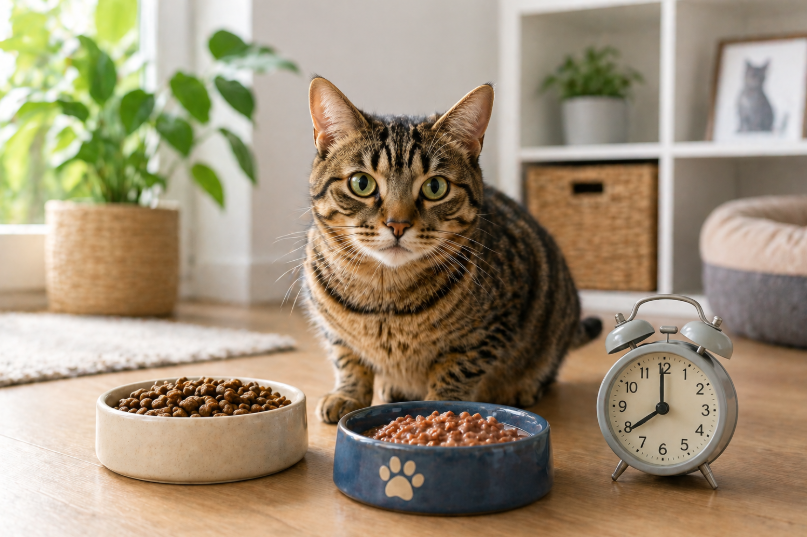
Understanding ideal feeding times cats need is one of the most effective ways to improve your cat’s health and daily behavior. While many owners focus on what to feed, the timing of meals plays an equally important role. Cats are creatures of habit, and a consistent feeding schedule helps regulate digestion, energy levels, and overall mood. When feeding times are structured, your cat feels more secure and develops predictable eating patterns.
Many feeding problems, such as overeating or begging, often come from inconsistent schedules. However, when you follow ideal feeding times cats respond with better appetite control and calmer behavior. This approach not only supports physical health but also improves your cat’s emotional well-being. With the right routine, feeding becomes a simple and reliable part of your daily life.
Why Timing Matters More Than You Think
One of the key reasons ideal feeding times cats thrive on consistency is their natural instinct. In the wild, cats hunt and eat at specific times, often during early morning and evening. This pattern is deeply ingrained, which means domestic cats still respond to similar rhythms.
When feeding times vary, it can confuse your cat’s internal clock. As a result, they may become anxious or overly hungry between meals. Consistent timing helps regulate hunger hormones and supports smoother digestion. In addition, it reduces the likelihood of overeating because your cat learns when to expect food.
Moreover, predictable feeding times help you monitor your cat’s health. If your cat suddenly loses interest in food, it becomes easier to notice. This makes ideal feeding times cats rely on a valuable tool for early detection of potential issues.
Best Feeding Times For Morning And Evening
Creating a daily schedule based on ideal feeding times cats naturally prefer can improve both health and behavior. Most cats benefit from two main meals per day, typically in the morning and evening. These times align with their natural activity cycles, making feeding more intuitive.
Morning feeding helps provide energy for the day. It also prevents excessive hunger, which can lead to overeating later. Evening feeding, on the other hand, supports relaxation and helps your cat settle into a restful state.
Spacing meals evenly is important. A gap of around 10 to 12 hours between meals works well for most adult cats. This balance ensures steady energy levels without overwhelming the digestive system. By following ideal feeding times cats can maintain a stable routine that supports overall health.
Adjusting Feeding Times Based On Age
Age plays a significant role in determining ideal feeding times cats require. Kittens, for example, need more frequent meals due to their rapid growth and high energy levels. Feeding them three to four times a day helps support development and prevents hunger.
As cats transition into adulthood, feeding frequency typically decreases. Adult cats usually do well with two meals per day, as their metabolism becomes more stable. Maintaining consistent timing remains important during this stage.
Senior cats may benefit from smaller, more frequent meals. As metabolism slows and digestion changes, spreading food intake throughout the day can improve comfort. Adjusting ideal feeding times cats need based on age ensures that nutritional needs are met at every stage of life.
How Feeding Times Affect Digestion And Energy
One of the most noticeable benefits of ideal feeding times cats follow is improved digestion. Regular meal times help the digestive system function more efficiently. When food is consumed at consistent intervals, the body can better process nutrients and maintain balance.
In addition, steady feeding times prevent sudden spikes and drops in energy. Cats that eat on a predictable schedule tend to have more consistent activity levels. This reduces hyperactive behavior followed by fatigue, creating a more balanced routine.
Hydration is also influenced by feeding habits. Cats that eat regularly are more likely to drink water consistently, especially when wet food is included. By aligning meals with ideal feeding times cats benefit from better digestion and sustained energy.
Common Mistakes That Disrupt Feeding Routines
Even with good intentions, certain mistakes can interfere with ideal feeding times cats depend on. One common issue is free feeding, where food is available all day. While convenient, this approach can lead to overeating and irregular habits.
Another mistake is inconsistent timing. Feeding at different hours each day can confuse your cat and disrupt their internal rhythm. This often leads to increased begging or refusal to eat at certain times.
Overfeeding treats is also problematic. When treats are given randomly, they can replace regular meals and reduce appetite. To maintain ideal feeding times cats require, it is important to keep treats limited and structured.
By avoiding these mistakes, you create a more stable feeding routine that supports both health and behavior.
Building A Consistent Daily Routine
Establishing a routine based on ideal feeding times cats respond to requires consistency and observation. Start by choosing two feeding times that fit your schedule. Then, stick to these times as closely as possible each day.
Using tools such as automatic feeders can help maintain consistency, especially if your schedule varies. These devices ensure that meals are delivered on time, even when you are not home.
Observation is equally important. Pay attention to how your cat responds to the schedule. If they seem overly hungry or leave food behind, adjustments may be needed. Over time, refining your approach helps create the perfect balance.
Consistency builds trust. When your cat knows when to expect food, they feel more secure and relaxed. This reinforces the effectiveness of ideal feeding times cats rely on for a healthy routine.
The Role Of Portion Control In Feeding Times
Timing alone is not enough without proper portion control. Ideal feeding times cats follow should always be paired with appropriate meal sizes. Overfeeding can lead to weight gain, while underfeeding may cause low energy.
Measuring portions ensures that your cat receives the right amount of food at each meal. This helps maintain a healthy weight and supports overall wellness. In addition, portion control prevents food waste and encourages better eating habits.
Combining portion control with consistent timing creates a balanced feeding system. This approach supports digestion, energy levels, and long-term health. When both factors are aligned, ideal feeding times cats depend on become even more effective.
How Feeding Times Influence Behavior
Behavior is closely linked to feeding habits, which is why ideal feeding times cats follow can improve daily interactions. Cats that eat on a schedule tend to be calmer and more predictable. They are less likely to beg for food or display anxiety around meal times.
Regular feeding also supports better sleep patterns. Cats often rest after eating, so consistent timing helps regulate their daily cycle. This creates a more balanced routine for both you and your pet.
Additionally, structured feeding can reduce unwanted behaviors such as food aggression. When your cat trusts that food will be available at specific times, they feel less need to compete or rush. This highlights how ideal feeding times cats rely on can improve both health and behavior.
Conclusion
Establishing ideal feeding times cats need is one of the simplest yet most powerful ways to improve your pet’s health and happiness. By aligning meals with natural instincts, maintaining consistency, and adjusting based on age and weight, you create a routine that supports long-term wellness. Feeding becomes more than just a daily task—it becomes a structured system that promotes balance and stability.
When you commit to a consistent schedule, you help your cat develop healthy habits that last a lifetime. Small adjustments in timing can lead to significant improvements in digestion, energy, and behavior. Ultimately, ideal feeding times cats thrive on provide the foundation for a healthier, happier life.
FAQ
- How many times a day should I feed my cat?
Most adult cats do well with two meals per day, while kittens may need more frequent feeding. - Is it okay to leave food out all day?
Free feeding is not recommended, as it can lead to overeating and poor habits. - What time should I feed my cat in the morning?
Early morning feeding works best, as it aligns with natural activity patterns. - Can feeding time affect my cat’s behavior?
Yes, consistent schedules can reduce anxiety and improve overall behavior. - Should senior cats have different feeding times?
Yes, older cats may benefit from smaller, more frequent meals throughout the day.