
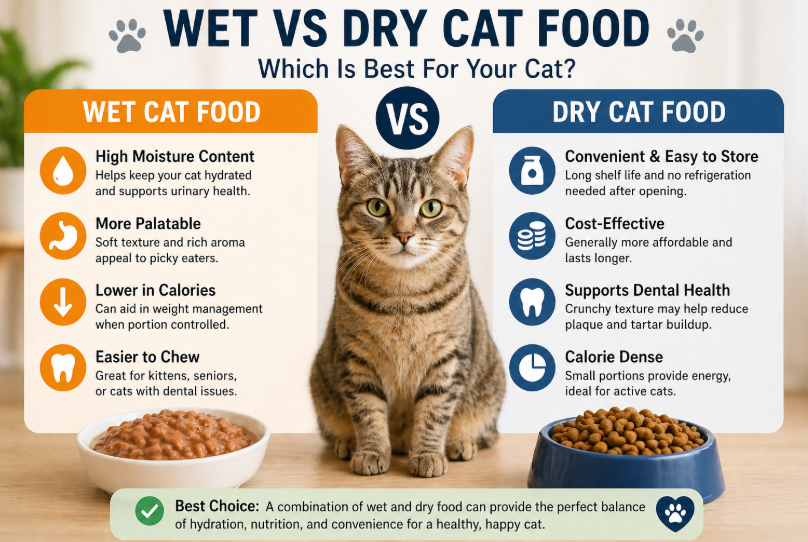
Wet vs dry cat food is a question nearly every cat owner faces at some point, especially when trying to provide the best nutrition possible. While both options can support a healthy diet, they offer different benefits that can affect your cat’s hydration, digestion, and overall well-being. By understanding how each type works, you can make a smarter decision that fits your cat’s unique needs and lifestyle.
To start, cats are obligate carnivores, which means they rely heavily on animal-based nutrients. Because of this, the quality of ingredients matters more than the form of the food. However, the form still plays a significant role in how your cat consumes and processes those nutrients. Therefore, exploring wet vs dry cat food helps you balance convenience, nutrition, and long term health.
Understanding The Basic Differences
When comparing wet vs dry cat food, the most noticeable difference is moisture content. Wet food typically contains around 70 to 80 percent water, while dry food contains only about 10 percent. As a result, wet food helps keep your cat hydrated, which is especially important for cats that do not drink much water.
Dry food, on the other hand, is more concentrated and calorie-dense. Because it contains less moisture, smaller portions can provide the same amount of energy. This makes it a convenient option for many cat owners, especially those with busy schedules.
In addition, texture and aroma differ significantly. Wet food tends to have a stronger smell and softer texture, which can be more appealing to picky eaters. Meanwhile, dry food offers a crunchy texture that some cats enjoy. Therefore, preferences often play a role when choosing between the two.
Hydration And Urinary Health
One of the most important factors in wet vs dry cat food is hydration. Cats naturally have a low thirst drive, which means they may not drink enough water on their own. Because of this, wet food can help prevent dehydration and support kidney function.
Proper hydration also plays a key role in urinary health. Cats that consume more moisture are less likely to develop urinary tract issues. Consequently, many veterinarians recommend wet food for cats prone to these conditions.
Dry food, however, does not provide the same hydration benefits. While some cats compensate by drinking more water, others do not. Therefore, if you choose dry food, it is important to ensure your cat has constant access to fresh water.
When evaluating wet vs dry cat food, hydration is often a deciding factor, especially for indoor cats or those with health concerns.
Convenience And Storage Benefits
Convenience is another major consideration in wet vs dry cat food. Dry food is easy to store, has a longer shelf life, and does not require refrigeration once opened. This makes it a practical choice for many households.
In contrast, wet food must be stored properly after opening and has a shorter shelf life. It also requires more preparation, as leftovers need to be refrigerated and served fresh. However, many cat owners find that the benefits outweigh the inconvenience.
Dry food is also easier to measure and can be used with automatic feeders. This allows for consistent feeding schedules, even when you are not at home. Therefore, for busy lifestyles, dry food often provides more flexibility.
Despite these advantages, it is important not to sacrifice quality for convenience. Choosing high-quality options ensures your cat receives proper nutrition regardless of the format.
Impact On Dental Health
Dental health is often discussed when comparing wet vs dry cat food. Many people believe that dry food helps clean teeth due to its crunchy texture. While it may reduce some plaque buildup, it is not a complete solution for dental care.
Wet food, on the other hand, does not provide any mechanical cleaning effect. However, dental health depends on multiple factors, including genetics, diet quality, and regular care. Therefore, brushing your cat’s teeth or using dental treats is still necessary.
It is also worth noting that some specialized dry foods are designed to support dental health. These products can help reduce plaque and tartar buildup when used consistently.
When considering wet vs dry cat food, dental health should not be the sole deciding factor. Instead, it should be part of a broader care routine.
Weight Management And Portion Control
Weight management is another key factor in wet vs dry cat food. Because dry food is calorie-dense, it is easier to overfeed if portions are not measured carefully. As a result, many cats that rely solely on dry food are more prone to weight gain.
Wet food, with its higher moisture content, tends to be lower in calories per serving. This can help cats feel full while consuming fewer calories. Consequently, wet food can be beneficial for weight control.
However, portion control remains essential regardless of the food type. Overfeeding any type of food can lead to obesity and related health issues. Therefore, monitoring your cat’s weight and adjusting portions accordingly is crucial.
When analyzing wet vs dry cat food, understanding how each affects calorie intake helps you maintain a healthy balance.
Cost And Budget Considerations
Cost is often a deciding factor when comparing wet vs dry cat food. Dry food is generally more affordable and lasts longer, making it a cost-effective option for many households. Additionally, buying in bulk can further reduce expenses.
Wet food, however, tends to be more expensive due to its packaging and higher moisture content. Feeding exclusively wet food can increase monthly costs significantly.
Despite this, many cat owners choose a combination of both. This approach allows you to balance cost and nutritional benefits. For example, you can feed wet food once a day and dry food at another time.
When evaluating wet vs dry cat food, finding a balance that fits your budget while meeting your cat’s needs is essential.
Combining Wet And Dry Food
For many cat owners, the best solution is not choosing one over the other but combining both. This approach allows you to enjoy the benefits of each type while minimizing their drawbacks.
For instance, wet food can provide hydration and enhance flavor, while dry food offers convenience and cost savings. By combining them, you create a more balanced feeding routine.
Additionally, variety can keep your cat interested in meals. Some cats may become bored with a single type of food, so offering both can improve appetite and satisfaction.
When considering wet vs dry cat food, a mixed feeding approach often provides the most flexibility and balance.
Choosing What Is Best For Your Cat
Ultimately, the decision between wet vs dry cat food depends on your cat’s individual needs. Factors such as age, health condition, activity level, and personal preference all play a role.
For example, kittens may benefit from wet food due to its ease of eating, while active adult cats may thrive on a combination diet. Senior cats, especially those with dental issues, may prefer softer food options.
It is also important to consult with a veterinarian if your cat has specific health concerns. Professional guidance ensures that your feeding choices support your cat’s overall well-being.
By carefully evaluating these factors, you can make a more informed decision that benefits your cat in the long run.
Conclusion
Wet vs dry cat food is not a simple choice, but understanding the differences helps you make the best decision for your cat. Both options have their strengths, and the ideal choice often depends on your cat’s needs and your lifestyle.
While wet food provides hydration and flavor, dry food offers convenience and cost efficiency. By combining both or selecting the one that suits your cat best, you can create a balanced and effective feeding routine.
In the end, the goal is to provide high-quality nutrition that supports your cat’s health, happiness, and longevity. With the right approach, you can ensure your cat enjoys every meal while staying healthy and active.
FAQ
1. Is wet food better for cats than dry food?
Wet food provides more hydration, but both options can be healthy depending on quality and portion control.
2. Can I feed my cat only dry food?
Yes, but you should ensure your cat drinks enough water to stay properly hydrated.
3. How often should I give wet food to my cat?
Many owners feed wet food once daily while using dry food for other meals.
4. Does dry food help clean a cat’s teeth?
It may reduce plaque slightly, but it does not replace proper dental care.
5. What is the best feeding combination for cats?
A mix of wet and dry food often provides the best balance of nutrition, hydration, and convenience.