
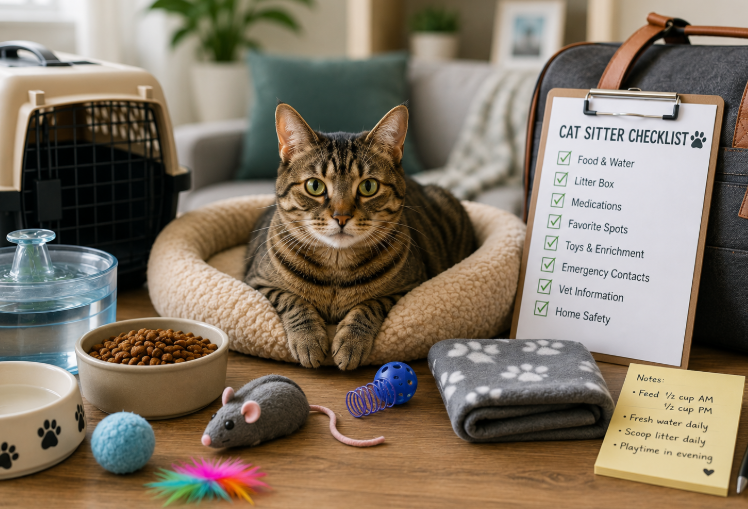
Leaving your cat alone is sometimes necessary, whether you are going to work, running errands, spending the day away, or planning a short trip. Cats may seem independent, but they still need fresh water, safe food, clean litter, comfort, and a familiar routine. When you prepare your home properly, your cat is more likely to stay calm while you are gone. A simple checklist also gives you peace of mind because the most important details are handled before you walk out the door.
Cats often hide stress better than dogs, so owners may not notice when something feels wrong. One cat may sleep more, while another may avoid meals, scratch furniture, meow near the door, or hide after you leave. However, those signs can often be reduced with better planning. Your goal is not to make your cat forget you are gone. Instead, your goal is to create a home environment that feels safe, familiar, and easy to navigate.
Start With Your Cat’s Daily Needs
The right checklist depends on how long you will be away. A few hours may only require fresh water, a clean litter box, and safe toys. A full workday may need measured meals, extra enrichment, and a calming routine. An overnight absence or weekend trip requires more planning, including a sitter or trusted visitor. Before leaving your cat alone, think honestly about your cat’s age, health, personality, and daily needs.
Kittens, senior cats, cats with medical needs, and highly social cats should not be treated like healthy adult cats. They may need more frequent check-ins, special feeding instructions, or help with medication. Even confident adult cats can struggle if the home is not prepared. Therefore, it is better to plan early than to rush at the last minute.
For more help with stress-related behavior, read our guide on how to reduce cat anxiety when leaving home.
Why Preparation Matters Before Leaving Your Cat Alone
Cats feel safest when their surroundings are predictable. They rely on familiar sounds, scents, feeding times, litter box locations, and resting spots. When one part of that routine changes, they may become unsettled. Therefore, leaving your cat alone should never be treated as a casual afterthought, especially if you will be gone longer than usual.
A well-prepared home can prevent many common problems. For example, one water bowl can spill, but several water stations reduce that risk. A litter box may seem clean in the morning, yet a sensitive cat may avoid it later if it becomes dirty. A toy may look harmless, but loose strings can become dangerous without supervision. Small details matter because your cat cannot ask for help while you are away.
Match the Setup to Your Cat’s Personality
Your cat’s emotional comfort also matters. Some cats handle solitude well, while others need extra reassurance. A shy cat may prefer quiet hiding spots. A playful cat may need safe enrichment. A senior cat may need lower beds, easy litter access, and a warmer resting area. When you match the setup to your cat’s habits, your cat feels more secure.
Routine also helps reduce stress. If you act rushed or overly emotional before leaving, your cat may notice. A calm goodbye, a familiar feeding pattern, and a predictable home setup can help your departure feel normal. Over time, your cat may learn that your absence is temporary and safe.
Check for Health Concerns First
Before you go, watch for any signs that your cat is unwell. Vomiting, diarrhea, refusal to eat, straining in the litter box, sudden hiding, coughing, limping, or unusual vocalizing should not be ignored. If something seems wrong, contact your veterinarian before you leave. It is much easier to solve a concern while you are still home.
A healthy adult cat may handle short absences well, but illness changes the situation. Cats recovering from surgery, taking medication, or showing sudden behavior changes need extra supervision. When in doubt, arrange help instead of hoping everything will be fine.
Food Tips Before Leaving Your Cat Alone
Food is one of the first things to prepare. If you will only be away for a few hours, your cat may not need an extra meal. However, if your cat eats on a schedule, keep that schedule as close to normal as possible. Measured meals help prevent overeating and reduce confusion. They also make it easier to notice changes in appetite later.
For general feeding and cat care guidance, the ASPCA cat care guide recommends choosing food based on your cat’s age, activity level, and health needs. You may also like our guide on the best diet for cats with sensitive stomachs if your cat has digestive issues.
Use Feeders Carefully
Automatic feeders can be helpful, but they should be tested before you rely on them. A feeder can jam, lose power, or open at the wrong time. Therefore, test it for several days while you are home. If your cat is nervous around new objects, introduce the feeder slowly. This prevents extra stress when you are already gone.
Wet food requires more care than dry food because it can spoil. If you feed wet meals, avoid leaving large portions out for long periods. For short absences, you may feed wet food before you leave and offer dry food in a puzzle feeder later. For longer absences, ask a sitter to serve fresh wet food. This keeps meals safer and more appealing.
Water and Litter Tips for Cats Home Alone
Water should always be available in more than one place. One bowl can tip over, get dirty, or become blocked by a closed door. Place extra bowls in quiet, stable locations. If your cat uses a fountain, still leave a backup bowl. Fountains can fail, and your cat should never depend on one water source.
Before leaving your cat alone, refresh the litter box. Scoop it, check the litter level, and make sure your cat can reach it easily. In multi-cat homes, provide enough boxes so one cat cannot guard the only bathroom area. A dirty or stressful litter box setup can lead to accidents, anxiety, or discomfort.
Keep the Litter Area Easy To Reach
The litter area should stay quiet and accessible. Do not close the door to the room by mistake. Also, avoid placing loud appliances near the box while you are gone. If your cat is older, use a low-entry box or place one closer to their favorite resting area. These small changes can prevent unnecessary strain.
A clean litter box can also help you spot health changes. When you return, check for unusual urine clumps, diarrhea, constipation, or accidents. These signs may show stress or a medical concern.
Home Safety Checklist for Leaving Cats Alone
Safety should come before enrichment. Walk through your home and look for anything your cat might chew, swallow, knock down, or get trapped inside. Put away strings, rubber bands, plastic bags, small toys, medication, cleaning products, human food, and fragile items. Also, check plants because many common houseplants are unsafe for cats.
Windows and doors need special attention. Make sure screens are secure and windows are closed or safely locked. Some cats push against screens when they see birds or insects. If you use balcony doors or sliding doors, double-check the locks. Even indoor cats can escape quickly if a door is left open by accident.
Remove Small Household Hazards
Cords can also create problems. Some cats chew charging cables, blind cords, or dangling wires. Tuck cords away or use cord protectors when needed. Keep blinds and curtains arranged so your cat cannot become tangled. This is especially important for kittens and curious cats.
Cabinets, closets, washers, dryers, and storage rooms should also be checked. Cats love small spaces and may slip inside while you are getting ready. A quick room check can prevent your cat from being trapped without food, water, or litter.
Comfort Tips Before Leaving Your Cat Alone
Comfort is just as important as safety. Leave your cat’s favorite bed, blanket, perch, or box available. Familiar scents can help your cat feel secure, so avoid washing every blanket right before you leave. If your cat enjoys your scent, place a worn shirt near a resting area. This can offer gentle comfort during your absence.
Temperature matters too. Make sure the home will not become too hot or too cold. Cats need access to warm spots and cooler areas. If sunlight moves through the room during the day, ensure your cat can leave the sun if needed. Also, make sure your cat is not trapped in one room without water, litter, or ventilation.
Keep the Environment Familiar
Lighting can help your home feel normal. If you will return after dark, consider leaving a small light on. However, avoid flashing lights, loud timers, or sudden noises that may scare your cat. Soft background sound can help some cats, but others prefer quiet. Use what matches your cat’s usual routine.
Cornell Feline Health Center offers helpful cat behavior resources for owners who notice stress, house soiling, or destructive behavior.
Safe Enrichment While Cats Are Alone
Before leaving your cat alone, choose toys carefully. Safe solo toys include sturdy balls, soft plush toys, tunnels, scratchers, and simple food puzzles. Avoid toys with loose strings, ribbons, feathers, bells, or small parts unless someone supervises play. Wand toys should always be stored away after use.
Enrichment helps prevent boredom. A window perch can give your cat something interesting to watch. A scratching post can reduce furniture scratching. A puzzle feeder can slow eating and add mental activity. However, do not introduce too many new items right before leaving. New objects can confuse or stress some cats.
Choose Calm Activities Over Risky Toys
Food puzzles can work well for cats that eat too quickly or need mental stimulation. Start with an easy puzzle so your cat does not become frustrated. A cardboard box, safe tunnel, or favorite scratcher can also keep your cat engaged without creating danger.
Some cats prefer quiet comfort over active play. For those cats, a soft bed near a window may be more useful than several toys. Watch what your cat enjoys, then prepare the home around those habits.
Care Plans Before Leaving Your Cat Alone Overnight
How long your cat can stay alone depends on many factors. A healthy adult cat may do well during a normal workday if food, water, litter, and enrichment are ready. However, an overnight absence usually calls for a sitter or trusted visitor. Longer trips require daily care, and some cats need more than one visit per day.
Before leaving your cat alone for an extended time, arrange a reliable check-in. A sitter should refresh water, serve food, scoop litter, check for accidents, and confirm your cat seems well. They should also spend time with your cat if your cat enjoys attention. For shy cats, quiet presence may be better than forced interaction.
Give Sitters Clear Instructions
If you will be away longer than one day, read our full guide on how to prepare your cat before vacation.
Leave written instructions in a visible place. Include feeding amounts, meal times, litter box locations, favorite hiding spots, medication details, vet contact information, and emergency instructions. Even if your sitter knows cats, they do not know your cat’s exact routine unless you explain it clearly.
Medication needs require extra planning. If your cat takes pills, liquid medicine, insulin, or supplements, do not assume a sitter can manage it without practice. Show them exactly what to do before you leave. Also, ask your vet what to do if a dose is missed. Clear instructions can prevent dangerous mistakes.
Emergency Planning Before You Leave
Your cat’s carrier should be easy to find. Do not store it in a closet behind boxes. If an emergency happens, your sitter may need to act fast. Place the carrier in a known location and tell the sitter where it is. You can also leave a towel nearby to make handling easier.
Emergency contact details should be simple and complete. Include your phone number, your vet’s clinic, an after-hours emergency clinic, and a backup person who can make decisions if you cannot be reached. If your sitter may need permission for urgent care, write down what they are allowed to approve.
Use Prevention as Part of the Plan
The AVMA preventive pet healthcare guide recommends veterinary evaluation, nutrition guidance, dental care, vaccines, and parasite prevention as part of routine pet care.
A pet camera can help, but it should not replace care. Cameras may reassure you and show whether your cat is eating, sleeping, or pacing. However, they cannot refill water, scoop litter, or handle emergencies. Use them as a support tool, not a substitute for human help.
Before leaving your cat alone, check that your cat’s identification is current. Indoor cats can still slip out during visits or accidents. A microchip with updated contact details is very helpful. If your cat wears a collar, use a breakaway collar with an ID tag.
For long-term wellness support, read our guide on how to prevent chronic cat diseases before they start.
Low-Stress Routines for Cats Home Alone
Your behavior affects your cat more than you may realize. If you rush, panic, or make a dramatic goodbye, your cat may become alert. Instead, keep your departure calm and ordinary. Offer food, check the essentials, speak gently, and leave without turning the moment into a big event.
A short play session before you go can help some cats settle. Let your cat chase, pounce, and release energy. Then offer a small meal or treat. This mimics a natural hunt, eat, and rest rhythm. As a result, your cat may nap more easily after you leave.
Practice Short Absences First
Some cats benefit from practice absences. Pick up your keys, step outside briefly, then return calmly. Over time, your cat may learn that departure cues are not always scary. This can help cats that become anxious when they hear shoes, bags, or keys.
When you come home, avoid overwhelming your cat. Some cats greet their owners right away, while others act distant. This does not always mean they are upset. They may simply need a few minutes to adjust. Let your cat approach you, then offer gentle attention.
What To Check When You Return
After returning, check the basics. Look at food and water levels, scoop the litter box, inspect for accidents, and notice your cat’s mood. If anything seems unusual, write it down. This helps you improve the setup next time.
Leaving your cat alone becomes easier when you learn from each absence. Maybe your cat ignored one toy but loved the window perch. Maybe the water bowl near the kitchen stayed cleaner than the one by the door. Perhaps your sitter noticed your cat hides under the bed at first, then comes out later. These details help you refine the routine.
Build a Better Routine Each Time
A strong checklist should not feel like overthinking. It is simply a way to protect your cat’s comfort. Food, water, litter, safety, enrichment, and emergency planning form the foundation. Once those pieces are ready, you can leave with more confidence.
In the end, cats do not need perfection. They need consistency, safety, and care that matches their personality. When you prepare the home, keep routines familiar, and plan for support when needed, your cat has a much better chance of staying calm. Leaving your cat alone can still bring a little worry, but a thoughtful checklist helps turn that worry into action.
Your cat depends on you to think ahead. By checking meals, water, litter, hazards, comfort items, sitter plans, and health needs, you create a safer day for your pet. The more often you prepare well, the easier the routine becomes. With the right setup, leaving your cat alone can feel less stressful for both of you.
FAQ
1. How Long Can a Cat Safely Stay Home Without Someone Visiting?
Many healthy adult cats can stay home during a normal workday if they have food, water, clean litter, and safe enrichment. However, overnight absences or longer trips usually require a sitter or trusted visitor.
2. Should I Leave Extra Food Out for My Cat?
It depends on your cat’s eating habits. Some cats graze calmly, while others overeat. Measured meals, automatic feeders, or sitter-served meals are usually safer than leaving too much food out.
3. What Should I Check Before I Walk Out the Door?
Check water bowls, food, litter, windows, doors, cords, plants, unsafe objects, temperature, and toys. Also, make sure your cat has access to resting spots and cannot get trapped in a room.
4. Do Cats Get Lonely When Owners Leave?
Some cats enjoy alone time, while others miss company. Social cats may need more play, enrichment, or sitter visits. Watch your cat’s behavior to understand what level of support they need.
5. When Should I Avoid Leaving My Cat Unsupervised?
Avoid long unsupervised absences if your cat is sick, very young, elderly, recovering from surgery, on medication, or showing unusual behavior. In those cases, arrange reliable care or speak with your vet first.