Learning how to feed cats with kidney disease naturally can feel confusing at first, especially when your cat suddenly becomes picky, loses weight, drinks more water, or turns away from food they once loved. Kidney disease changes the way a cat’s body handles waste, hydration, minerals, and appetite, so food choices matter more than they did before. However, “natural” should not mean guessing, removing important nutrients, or relying only on homemade meals without guidance. Instead, it should mean choosing moisture-rich, gentle, balanced food that supports the kidneys while still meeting your cat’s needs as an obligate carnivore.
Chronic kidney disease is common in older cats, and Cornell Feline Health Center notes that it affects many senior cats, especially those over 10 years old. The kidneys filter waste from the blood, help control hydration, and support mineral balance, so damaged kidneys need steady nutritional support. Because every cat’s stage, bloodwork, appetite, and body condition can differ, your veterinarian should guide major diet changes. Still, many cat owners want to understand what natural food choices may help, what to avoid, and how to make meals more appealing without making kidney strain worse.
The best natural feeding plan usually focuses on four simple goals. First, it should increase moisture. Next, it should manage phosphorus. Then, it should provide enough high-quality protein without overloading the body with excess waste. Finally, it should encourage your cat to eat consistently. A perfect kidney-friendly food is not helpful if your cat refuses it. Therefore, the most practical plan is one your cat will accept, your vet approves, and you can maintain every day.
Why Kidney Disease Changes a Cat’s Diet
To understand how to feed cats with kidney disease, it helps to know what changes inside the body. As kidney function declines, waste products can build up in the bloodstream. VCA Animal Hospitals explains that cats with chronic kidney disease can accumulate these waste products as filtering breaks down, and nutrition is a major part of management. This is one reason many cats with kidney disease feel nauseous, eat less, lose muscle, or become more sensitive to certain foods.
Phosphorus is one of the biggest nutrients to watch. Healthy kidneys help regulate phosphorus, but weakened kidneys may struggle to keep levels balanced. High phosphorus can make kidney disease harder to manage, so many therapeutic kidney diets contain controlled phosphorus. However, natural feeding does not mean simply removing phosphorus as much as possible. Cats still need minerals for basic body function, and severe restriction can create other problems. A veterinary team can help choose the right target based on bloodwork, disease stage, and calcium levels.
Protein also needs a careful approach. Cats need animal protein to maintain muscle, immune function, and overall strength. Yet protein produces waste that the kidneys must process. For this reason, many kidney diets use controlled amounts of high-quality protein rather than very high protein or poor-quality protein. Cornell’s dietary trial information notes that kidney diet planning can be complicated because it must balance lower protein needs with potassium, phosphorus, and muscle maintenance. As a result, the goal is not to starve the body of protein. Instead, the goal is to provide digestible protein in a kidney-conscious way.
Hydration may be the most natural support of all. Cats often have a low thirst drive because they evolved to get much of their water from prey. When kidney disease increases urine output, cats can lose more water and become dehydrated more easily. Wet food, added water, low-sodium broth, and frequent fresh water access can help support daily fluid intake. In many cases, moisture-rich meals are easier on the body than dry-only feeding.
Best Natural Foods to Support Kidney Health
When you feed cats with kidney disease, wet food is usually a strong starting point because it adds moisture with every bite. A canned veterinary renal diet is often the safest option because it is formulated for kidney support, but some cats refuse prescription foods. In that case, your vet may help you compare non-prescription wet foods with lower phosphorus levels, moderate protein, and good calorie density. The food still needs to be complete and balanced, not just made from plain meat or broth.
For a natural-style approach, look for wet foods built around quality animal protein, smooth texture, and simple ingredients. Many cats with kidney disease prefer pâté because it is easy to lick and can be mixed with warm water. Shredded or chunky foods may work for some cats, although they can dry out quickly. If your cat has dental discomfort, nausea, or low appetite, softer textures often make eating less stressful.
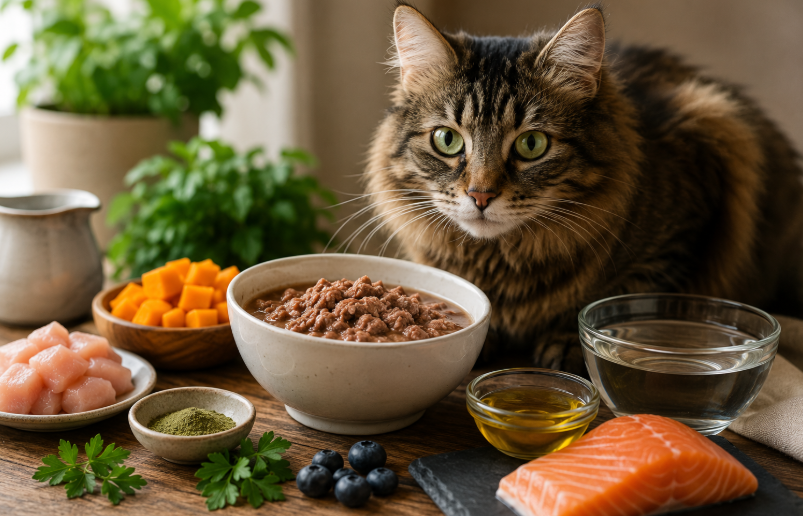
Cooked chicken, turkey, or lean meat may be used as a topper in small amounts if your vet agrees. However, plain meat alone is not balanced for cats. It can also be too high in phosphorus when used as the main diet. Therefore, toppers should encourage appetite, not replace a properly formulated food. A teaspoon of warmed cooked chicken can sometimes help a cat start eating, especially when mixed into a kidney-supportive wet meal.
Egg whites are sometimes discussed for cats with kidney issues because they provide protein with lower phosphorus than many meat sources. However, they must be cooked and used carefully. Egg yolks are more phosphorus-rich, so they may not fit every kidney plan. If you want to add egg whites, ask your vet how often and how much is safe for your cat’s size, stage, and bloodwork.
Pumpkin may help some cats with constipation, which can happen when dehydration or reduced appetite affects digestion. Use only plain pumpkin, not sweetened pie filling. Even then, it should be a small addition. Too much fiber can reduce food intake or interfere with calorie density. Since many kidney cats already struggle to maintain weight, every spoonful should serve a clear purpose.
Low-sodium broth can also make food more appealing. Choose broth with no onion, garlic, heavy salt, or seasoning. Better yet, make a simple cat-safe broth by simmering plain chicken in water and removing bones before serving the cooled liquid. This can make wet food smell better while adding hydration. However, avoid bone broth unless your vet approves it, because some versions may contain higher minerals or unsafe ingredients.
Omega-3 fatty acids from fish oil may support kidney care in some cats, but dosing matters. Do not guess with human supplements, especially flavored capsules or products with added vitamins. Too much fish oil can cause digestive upset or affect blood clotting. Ask your veterinarian for a cat-safe product and dose. VCA notes that nutrition plans for chronic kidney disease often involve several nutrients, including controlled phosphorus and supportive fatty acids.
What To Limit or Avoid Naturally
Knowing what not to feed matters just as much as knowing how to feed cats with kidney disease. High-phosphorus foods can be a problem, especially when offered often. These may include large amounts of organ meats, sardines, tuna, bone meal, raw meaty bones, dairy, and egg yolks. Some of these foods sound natural, but natural does not always mean kidney-friendly.
Raw diets also deserve caution. Cats with kidney disease may have weaker overall resilience, and raw food can carry bacteria or parasites. Cornell veterinary nutrition resources discuss the importance of balanced nutrition and caution around feeding practices that may create health risks. If you strongly prefer raw-style feeding, speak with a board-certified veterinary nutritionist first. For many kidney cats, gently cooked food is a safer compromise.
Avoid salty foods because sodium can affect blood pressure and hydration balance. Many cats with kidney disease also develop high blood pressure, so salty treats are not worth the risk. Do not offer deli meat, bacon, ham, salted fish, flavored crackers, cheese, or human leftovers. Even small amounts can add unnecessary sodium and phosphorus.
Tuna should be limited. Although many cats love the smell, tuna is not a balanced kidney diet. It can also train picky cats to reject healthier meals. If needed, use a tiny amount of tuna water from tuna packed in water with no salt added. Even then, use it as a short-term flavor boost, not a regular meal base.
Avoid plant-heavy homemade diets unless they come from a veterinary nutritionist. Cats need nutrients found in animal tissue, including taurine, certain fatty acids, and preformed vitamin A. A homemade recipe from the internet may look clean, but it can quickly become deficient or mineral-heavy. Kidney cats are especially vulnerable because small imbalances can matter over time.
Supplements also need caution. Do not add calcium, vitamin D, herbal kidney drops, essential oils, or mineral powders without veterinary advice. Some natural products can interact with medications or worsen mineral balance. In kidney disease, “gentle” does not always mean safe. Bloodwork should guide decisions.
How To Build a Natural Kidney-Friendly Feeding Routine
A feeding routine can make it easier to feed cats with kidney disease consistently. Start by offering small meals more often. Many kidney cats feel better with four to six smaller meals instead of one or two large meals. Smaller meals can reduce nausea, keep energy steadier, and make food less overwhelming.
Warm wet food slightly before serving. It should feel lukewarm, never hot. Warming increases aroma, which can help cats with reduced appetite. Stir in warm water until the food becomes soft and easy to lick. This simple habit adds hydration and may make the meal more appealing.
Keep food bowls clean and shallow. Cats may dislike deep bowls because their whiskers touch the sides. Also, kidney cats can become smell-sensitive, so leftover food odors may turn them away. Wash bowls after each meal and offer fresh portions instead of leaving wet food out too long.
Offer water in several places. Some cats prefer wide ceramic bowls, while others drink more from fountains. Place water away from litter boxes and away from loud appliances. Because kidney cats need easy access to fluids, convenience matters. Cornell also notes that senior cats need easy access to clean water because kidney function often declines with age.
Make transitions slowly. If your cat currently eats dry food, do not switch everything overnight unless your veterinarian tells you to. Mix a small amount of new wet food with familiar food, then increase it over one to two weeks. Some cats need longer. A slow transition protects appetite, and appetite is critical in kidney disease.
Track what your cat eats. Write down food type, amount, appetite, vomiting, stool quality, water intake, and weight changes. This helps your vet adjust the plan. If your cat refuses food for more than a day, call your veterinarian. Cats can become seriously ill when they stop eating, and kidney cats often need nausea support, appetite medication, fluids, or other care.
If you feed cats with kidney disease using homemade food, get a custom recipe. A board-certified veterinary nutritionist can design a cooked recipe with controlled phosphorus, adequate calories, essential amino acids, and the right supplements. Homemade feeding without a complete recipe can lead to deficiencies. It may also create too much phosphorus, too little calcium, or poor calorie balance.
Some cats do best with a mixed approach. For example, they may eat a veterinary renal wet food as the main meal, with a small natural topper for flavor. Others may eat a lower-phosphorus commercial wet food while transitioning toward a renal diet. The best plan is not always the most perfect plan on paper. It is the plan that keeps your cat eating, hydrated, and stable.
When Appetite Becomes the Main Priority
Sometimes the biggest challenge is not deciding what to feed cats with kidney disease. It is getting them to eat enough. Kidney disease can cause nausea, mouth ulcers, constipation, dehydration, and food aversion. When a cat feels sick after eating one food, they may refuse that food later. Therefore, forcing one “ideal” diet can backfire.
If your cat refuses a renal diet, talk to your vet before giving up. You can try different textures, brands, temperatures, and flavors. Some cats prefer chicken, while others prefer fish or mixed formulas. Although fish-based meals may need phosphorus review, a food your cat eats may be better than a perfect food left untouched.
Ask your vet about nausea medication if your cat sniffs food and walks away, drools, lip-licks, vomits, or hides near mealtime. Appetite stimulants may also help, but they work best when nausea, dehydration, or constipation are controlled first. Food changes alone cannot solve every symptom.
Weight monitoring is important. Cats with kidney disease often lose muscle, even when they seem to eat small amounts. Weigh your cat weekly at home if possible. Use the same scale and time of day. If weight drops, tell your veterinarian quickly. Early adjustments can prevent a crisis.
Therapeutic renal diets have evidence behind them, but they must be eaten consistently. Veterinary specialists note that nutritional modification can slow kidney disease progression and help manage clinical signs, while adequate intake helps maintain body condition. This is why your vet may strongly recommend renal food. Still, a flexible, cat-centered plan often works better than a strict plan your cat refuses.
Treats should stay simple and limited. Good options may include tiny pieces of cooked chicken, a small lick of renal wet food, or vet-approved kidney-friendly treats. Avoid freeze-dried organ treats, salty treats, cheese, and fish-heavy snacks unless your vet approves them. Treats add up, especially for small cats.
If your cat eats dry food only, ask about adding wet food gradually. Some dry renal diets are useful because they are complete and controlled, but they do not provide the same moisture as wet food. You can add water to dry food if your cat accepts it, although some cats dislike softened kibble. Never leave moistened kibble out for long because it can spoil.
Phosphate binders may be needed for some cats. These are not foods, but they can help manage phosphorus when diet alone is not enough. Only use them under veterinary direction. The dose depends on meals, blood phosphorus, calcium status, and disease stage.
A Practical Natural Meal Plan Example
A natural daily routine might begin with a small breakfast of kidney-supportive wet food mixed with warm water. If your cat hesitates, add a tiny amount of plain cooked chicken or cat-safe broth. Later, offer another small wet meal with a different texture or flavor to prevent boredom. In the evening, serve the main wet meal again with extra water stirred in. Before bedtime, offer a small portion to prevent an empty stomach overnight.
This example is not a prescription, but it shows how to feed cats with kidney disease in a gentle, realistic way. The main food should still be complete and balanced. Additions should stay small. Hydration should appear in every meal. Most importantly, your cat should eat enough calories to maintain weight.
For cats in early kidney disease, your vet may focus on phosphorus control, hydration, and monitoring. For cats in later stages, the plan may also include potassium support, blood pressure medication, anti-nausea medication, appetite support, subcutaneous fluids, or phosphate binders. The International Renal Interest Society provides widely used staging guidelines that help veterinarians assess and manage kidney disease in cats and dogs. Because stage matters, a diet that fits one cat may not fit another.
Natural feeding should also respect your cat’s preferences. Cats are creatures of habit, and sudden changes can create stress. Keep familiar bowls, quiet feeding spots, and predictable meal times. If you introduce new foods, do it calmly. When a cat feels safe, they may eat better.
Do not overlook calories. Many kidney-friendly foods are lower in phosphorus, but your cat still needs enough energy. If your cat eats only a few bites at each meal, ask your vet about calorie-dense options that remain kidney-conscious. Maintaining body condition can improve comfort and resilience.
It is also wise to schedule regular rechecks. Kidney disease can change over time, so diet may need updates. Bloodwork, urine testing, blood pressure checks, and weight tracking help your vet adjust the plan. VCA notes that many cats can have quality, active years with proper management, even though damaged kidneys have limited ability to recover. That makes steady care more valuable than any single “miracle” food.
Ultimately, the safest way to feed cats with kidney disease naturally is to combine veterinary guidance with simple, moisture-rich feeding habits. Choose wet food when possible. Control phosphorus. Use high-quality protein wisely. Keep meals appealing. Avoid salty, high-phosphorus, raw, or unbalanced foods. Support hydration every day. Above all, treat appetite as a medical priority, not a behavior problem.
Conclusion
Learning how to feed cats with kidney disease is really about balance. Your cat needs food that supports kidney function, but they also need meals they will actually eat. A natural approach works best when it focuses on moisture, controlled phosphorus, quality protein, and steady appetite support. It should not rely on risky homemade recipes, extreme restrictions, or random supplements.
With your veterinarian’s help, you can build a feeding plan that feels practical and compassionate. Wet food, warm water, small meals, safe toppers, and careful monitoring can make daily care easier. While kidney disease cannot usually be reversed, thoughtful nutrition can support comfort, hydration, and quality of life. The goal is not perfection. The goal is helping your cat feel better, eat better, and enjoy more calm, comfortable days with you.
FAQ
1. What Natural Foods Are Gentle for Cats With Kidney Problems?
Moist, complete wet foods with controlled phosphorus are usually the safest foundation. Small amounts of plain cooked chicken, cat-safe low-sodium broth, or cooked egg white may help appetite if your vet approves them.
2. Is Homemade Food Safe for a Cat With Kidney Disease?
Homemade food can be safe only when it is properly formulated by a veterinary nutritionist. Random recipes may lack essential nutrients or contain too much phosphorus for a kidney-sensitive cat.
3. Should Cats With Kidney Issues Eat Wet Food or Dry Food?
Wet food often helps because it adds moisture with every meal. However, some cats accept dry renal food better. Your vet may recommend a mix based on appetite, hydration, and bloodwork.
4. What Foods Should Kidney Cats Avoid?
Avoid salty foods, organ meats, bone meal, dairy, raw diets, seasoned broth, deli meat, and frequent tuna. These foods may add too much sodium, phosphorus, bacteria risk, or nutritional imbalance.
5. How Can I Help My Cat Eat More Kidney-Friendly Food?
Warm the food slightly, add water, try different textures, serve small meals, and keep bowls clean. If your cat still refuses food, ask your vet about nausea care or appetite support.