For our beloved feline companions, a stimulating environment isn’t a luxury—it’s a necessity for their physical and mental health. Providing robust cat environmental enrichment is paramount for ensuring your feline friend leads a fulfilling and healthy life, preventing boredom, stress, and common behavioral issues. As indoor cats, they rely on us to replicate the challenges and opportunities for exploration they would naturally seek in the wild. This guide will help you create a dynamic and engaging home that caters to your cat’s innate instincts, from kittenhood through their senior years.
Why Cat Environmental Enrichment is Essential for Feline Well-being
Cats are natural predators and explorers. Confining them to an unchanging indoor space without adequate stimulation can lead to a host of problems, including:
- Behavioral issues: Destructive scratching, inappropriate urination, aggression, over-grooming, and excessive vocalization can often stem from boredom or anxiety.
- Physical health problems: Lack of activity can contribute to obesity and related health issues like diabetes and arthritis.
- Mental stagnation: A lack of challenge can lead to lethargy, depression, and a reduced quality of life.
Effective cat environmental enrichment addresses these challenges by providing outlets for hunting, climbing, scratching, playing, and exploring, mimicking the varied stimuli of an outdoor environment in a safe, controlled setting. It encourages natural behaviors, keeps their minds sharp, and promotes physical fitness.
Pillars of Effective Feline Enrichment
Creating an enriching environment involves more than just a few toys. It requires a holistic approach that considers various aspects of a cat’s natural behaviors.
Vertical Space & Climbing Opportunities
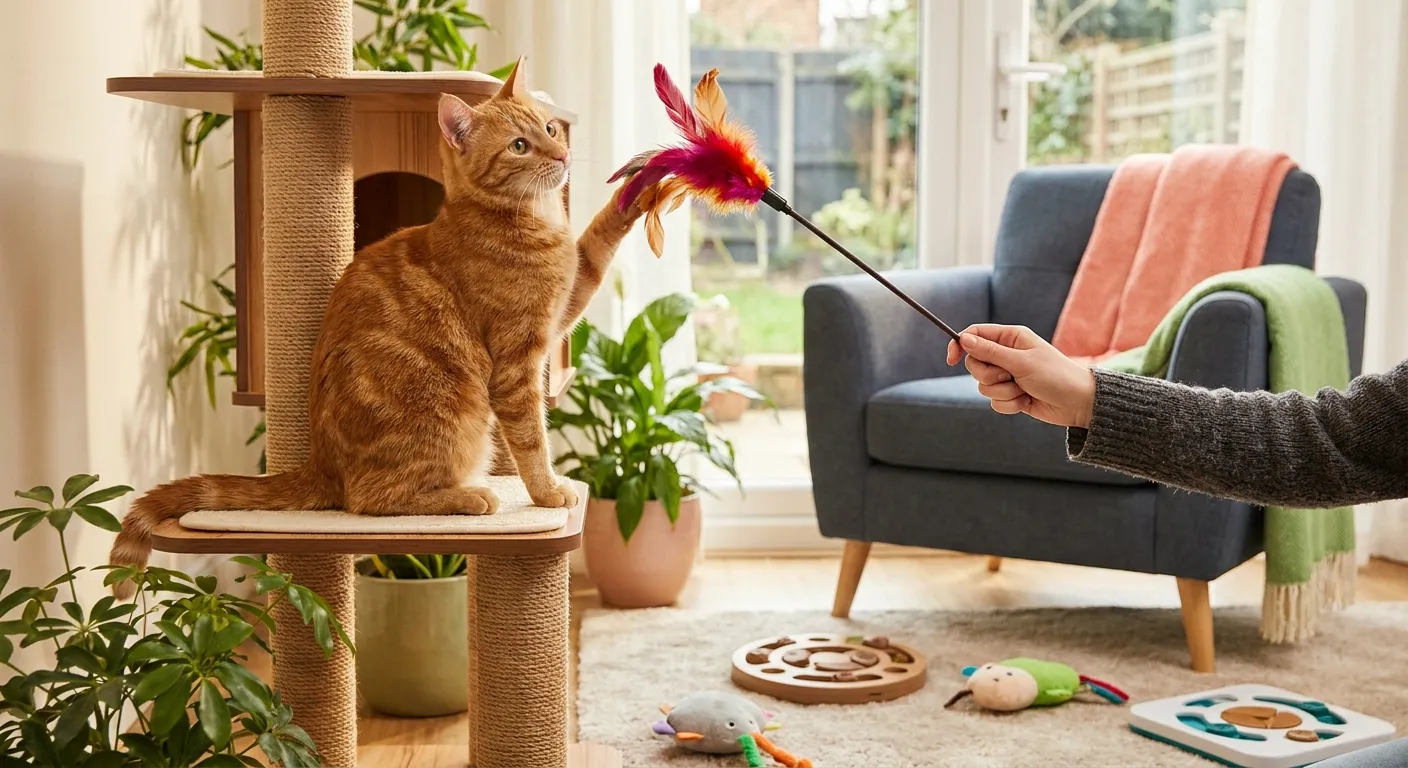
Cats thrive when they have elevated vantage points. Therefore, provide cat trees, shelves, window perches, and even cat-safe furniture that allow them to climb, observe their territory from above, and feel secure. Vary the heights and textures for added interest. This caters to their instinct to survey their domain and provides escape routes from perceived threats or other pets. Furthermore, consider installing cat shelves near windows to offer a view of the outside world, which can be incredibly stimulating.
Play & Predatory Simulation
Regular interactive play is crucial. Use wand toys, laser pointers (with a physical ‘kill’ at the end to prevent frustration), and toys that mimic prey animals. Rotate toys regularly to keep things fresh. Puzzle feeders are excellent for mental stimulation, turning mealtime into a hunting challenge that engages their problem-solving skills and slows down eating. Consider automated toys for when you’re not home, but ensure they’re not always on to prevent overstimulation. In fact, short, frequent play sessions are often more effective than one long one.
Scratching Surfaces
Scratching is a natural and necessary cat behavior for stretching, marking territory, and maintaining claw health. Offer a variety of scratching posts and boards made from different materials (cardboard, sisal, carpet, wood) and in both vertical and horizontal orientations. Place them in prominent areas where your cat likes to scratch. This will protect your furniture and provide an appropriate outlet for this essential behavior. Moreover, different cats prefer different textures and angles, so offer variety.
Resting & Hiding Spots
Cats need safe, quiet places to retreat and rest. Provide cozy beds, cat caves, cardboard boxes, and elevated perches where they can feel secure. These spaces are especially important in multi-pet households or busy homes. A sense of security contributes significantly to a cat’s overall well-being. Consequently, ensure these spots are easily accessible and located in low-traffic areas.
Sensory Enrichment: Sights, Sounds, & Smells
Engage all of your cat’s senses. Offer access to windows for bird watching, play calming music, or use a cat-safe diffuser with feline-friendly pheromones. Introduce new, safe scents like catnip or silvervine. You can also plant a small cat grass garden indoors. These elements add novelty and interest to their environment, preventing monotony. Similarly, consider a pet fountain to provide fresh, flowing water, which can entice them to drink more.
Social Interaction
While often perceived as independent, cats benefit greatly from positive human interaction. Regular petting, grooming, and play sessions strengthen your bond. If you have multiple cats, ensure they have sufficient resources (food bowls, litter boxes, resting spots) to minimize competition and stress. Some cats enjoy the company of other feline friends, but introductions should always be gradual and supervised. Furthermore, consistent positive reinforcement helps build trust and confidence.
Tailoring Cat Environmental Enrichment for Different Life Stages
The needs of a kitten differ significantly from those of a senior cat. Adjusting your enrichment strategies as your cat ages is crucial for their lifelong happiness.
Kittens: Exploration and Learning
Kittens are curious and energetic. They need ample opportunities for play, exploration, and safe socialization. Provide a variety of small, interactive toys, climbing structures that are easy to navigate, and plenty of positive human interaction. This early exposure helps them develop into well-adjusted adults. Additionally, introduce them to different sounds and textures to broaden their experiences.
Adult Cats: Maintaining Physical and Mental Health
Adult cats benefit from consistent enrichment that prevents boredom and maintains their physical fitness. Continue with interactive play, puzzle feeders, and access to vertical spaces. Introduce new toys or rotate existing ones regularly. Consider leash training for outdoor supervised excursions if your cat is receptive. This provides novel stimuli in a safe way. Moreover, regular veterinary check-ups are essential to monitor their health.
Senior Cats: Comfort and Gentle Stimulation
As cats age, their mobility and energy levels may decrease. Focus on comfort, accessibility, and gentle stimulation. Provide easily accessible ramps for climbing, soft bedding, and lower-impact toys. Puzzle feeders can still be beneficial, but choose ones that are less challenging. Ensure their resting spots are warm and free from drafts. Adjusting to their changing needs ensures their golden years are comfortable and enriching. For example, a heated cat bed can provide immense comfort to an older cat.
Practical Tips for Implementing Feline Enrichment
Implementing effective cat environmental enrichment doesn’t have to be complicated or expensive. Here are some practical tips:
- Rotate Toys: Keep a selection of toys in rotation to maintain novelty. Store unused toys out of sight.
- DIY Enrichment: Cardboard boxes, paper bags (handles removed), and crinkled paper can be excellent, inexpensive toys.
- Window Perches: Simple window perches offer hours of entertainment.
- Puzzle Feeders: Start with easy puzzle feeders and gradually increase the difficulty.
- Catnip & Silvervine: Use these in moderation to add excitement.
- Nature Videos: Some cats enjoy watching nature documentaries featuring birds or small prey.
- Safe Outdoor Access: A
Explore more: More from Best Cat Care