
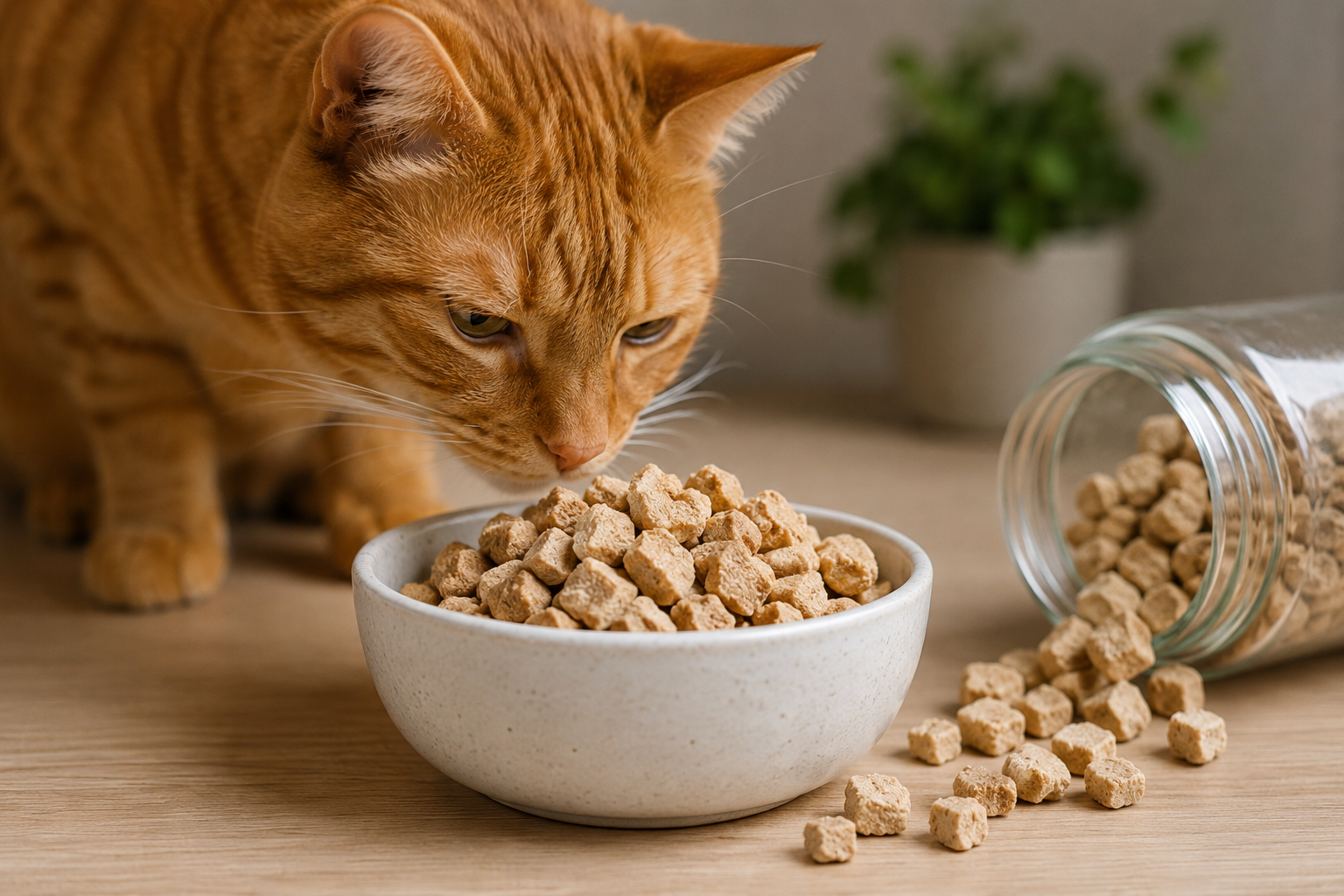
Freeze dried cat food has become more popular among cat owners who want a diet that feels closer to raw food without the same level of daily preparation. It often looks simple, clean, and convenient, which makes it appealing when you want better ingredients for your cat. However, like any pet food choice, it deserves a closer look before you make it part of your cat’s routine. While it may offer high protein, strong flavor, and easy storage, it can also carry risks if it is handled poorly, fed without enough moisture, or used without understanding your cat’s health needs.
Many cat parents first notice this type of food because it usually contains meat, organs, and limited extra ingredients. That can sound ideal, especially for cats that are picky or sensitive to heavily processed foods. In addition, the light texture and strong smell can make meals more exciting for cats that lose interest in regular kibble. Still, the words on the label do not always tell the whole story. Some formulas are complete and balanced, while others are meant only as treats, toppers, or short-term feeding options.
The freeze drying process removes moisture from raw or cooked ingredients at low temperatures. As a result, the food becomes shelf-stable while keeping much of its original shape, smell, and texture. This is different from traditional kibble, which usually uses high heat and pressure during production. Because of that, many owners see freeze dried options as a middle ground between raw feeding and commercial dry food. Even so, safer feeding depends on more than the process itself. You still need to look at the formula, storage instructions, ingredient quality, and how your cat responds over time.
For cats, moisture matters. Cats naturally have a low thirst drive, which means they often do not drink enough water to make up for dry meals. Therefore, feeding freeze dried cat food straight from the bag may not be the best option for every cat. Many brands recommend rehydrating it before serving, and that advice is worth taking seriously. Adding water can support hydration, improve texture, and make the food easier to chew. It may also help cats that have urinary or kidney concerns, although those cats should always have diet changes reviewed by a veterinarian.
Why Cat Owners Are Choosing Freeze Dried Meals
One of the biggest benefits of freeze dried cat food is convenience. Raw feeding can be time-consuming because it requires careful thawing, measuring, storage, and cleanup. Freeze dried meals, on the other hand, are lighter, easier to store, and simpler to portion. This makes them helpful for busy cat owners who want a meat-forward diet but do not want to handle fresh raw food every day. In many homes, that convenience makes the difference between trying a higher-protein food and sticking with a less ideal option.
Another reason people choose it is ingredient simplicity. Many formulas focus on animal protein, organs, and essential nutrients. Because cats are obligate carnivores, animal-based nutrition plays an important role in their diet. A meat-rich formula may support lean muscle, appetite, and overall energy when it is properly balanced. In addition, simple recipes may be easier for some cats with food sensitivities, especially when the food uses one main protein source. However, simple does not always mean complete, so the nutritional statement on the package is extremely important.
Palatability is another strong point. Cats rely heavily on smell, and freeze dried foods often have a stronger aroma than standard dry food. Because of this, they can work well for picky eaters or cats that need encouragement at mealtime. Some owners crumble freeze dried pieces over wet food to make it more appealing. Others use small amounts as training treats or appetite boosters. However, toppers should not replace a balanced meal unless the product clearly says it is complete and balanced for daily feeding.
Freeze dried cat food can also be useful for travel. Since it is lightweight and shelf-stable before opening, it can be easier to pack than cans or fresh food. This can help when you are boarding your cat, traveling, or preparing emergency supplies. Still, you need to store it correctly and avoid leaving rehydrated portions out for long periods. Once water is added, the food behaves more like fresh food, which means bacteria can grow faster at room temperature.
Texture can be another advantage. Some cats enjoy the crumbly, airy pieces, while others prefer the softened texture after rehydration. This flexibility gives owners more ways to serve meals. For example, you can add warm water to release more aroma, mash the food into a softer consistency, or mix it into wet food during a slow transition. Because cats can be cautious about change, this serving flexibility may make the switch easier.
Important Nutrition Benefits to Consider
When properly formulated, freeze dried cat food can provide concentrated nutrition in small portions. Since moisture has been removed, the food is calorie-dense compared with wet food. That can benefit cats that need more calories in less volume, such as active cats or cats with poor appetite. However, it can also lead to weight gain if portions are not measured carefully. Therefore, owners should follow feeding guidelines at first, then adjust based on body condition, activity level, and veterinary advice.
Protein quality matters more than marketing claims. A good formula should include named animal proteins, not vague meat sources. It should also include the right balance of vitamins, minerals, taurine, and fat. Taurine is especially important because cats need it for heart, eye, and overall health. Since homemade or incomplete raw-style diets can miss key nutrients, a complete commercial formula is usually safer for everyday feeding than guessing at a recipe.
Another benefit is that some freeze dried cat food recipes avoid common fillers. Many do not rely heavily on corn, wheat, soy, or large amounts of starch. This may appeal to owners who want fewer carbohydrates in their cat’s diet. However, low carbohydrate content does not automatically make a food perfect. Cats still need a complete nutrient profile, safe handling, and enough moisture. Also, some cats do well on many different types of diets, so the best choice depends on the individual cat.
For cats with sensitive stomachs, limited-ingredient options may help identify problem proteins. For example, a formula built around rabbit, turkey, duck, or another single protein may be useful during a guided diet trial. However, true elimination diets should be managed carefully. Cross-contamination, treats, flavored medications, and mixed-protein foods can interfere with results. Because of that, cats with ongoing vomiting, diarrhea, itching, or weight loss should see a veterinarian before relying on food changes alone.
Some owners also like that freeze dried cat food often has a fresher smell and appearance than heavily processed dry food. This can create a feeling of trust, especially when the ingredient list is clear. Even so, appearance is not a safety guarantee. You should still check the brand’s quality control practices, recall history, feeding statement, and storage directions. A beautiful-looking food can still be risky if it is not nutritionally complete or handled safely.
Risks You Should Not Ignore
The biggest concern with freeze dried cat food is food safety. If the product starts as raw meat, harmful bacteria may still be a concern. Freeze drying removes moisture, but it does not automatically sterilize food. This means safe handling matters every time you feed it. Wash your hands after touching the food, clean bowls after meals, seal the package well, and keep it away from children or anyone with a weakened immune system. These habits are simple, but they reduce avoidable risk.
Another risk is dehydration if the food is served dry too often. Cats may not drink enough water to balance a dry diet, even when fresh water is available. Over time, low moisture intake may be a concern for cats prone to urinary issues, constipation, or kidney problems. Therefore, rehydrating freeze dried cat food before serving is often a better daily habit. Warm water can also improve the smell and make the meal more enjoyable.
Nutritional imbalance is another issue. Not every freeze dried product is designed as a full meal. Some are treats, mixers, or toppers. If you feed those as the main diet, your cat may miss essential nutrients. Always look for a statement that says the food is complete and balanced for your cat’s life stage. Kittens, adults, seniors, pregnant cats, and cats with medical conditions may have different nutritional needs. As a result, one popular formula may not suit every cat.
Cost can also become a problem. Freeze dried diets are often more expensive than canned food or kibble. Since they are calorie-dense, the bag may last longer than it looks, but the daily cost can still be high. For multi-cat homes, this matters even more. If a full freeze dried diet is not realistic, you might use it as a topper while keeping the main diet complete and affordable. That approach can still improve meal appeal without straining your budget.
Some cats may develop digestive upset during the transition. Because freeze dried cat food can be richer than a cat’s previous diet, sudden changes may cause loose stool, vomiting, or refusal to eat. A slow transition is usually best. Start with a small amount mixed into familiar food, then increase gradually over one to two weeks. If your cat has a sensitive stomach, move even more slowly. However, stop the change and contact your vet if symptoms continue.
Portion control can be tricky because the food is light and dry. A small scoop may contain more calories than expected. This can lead to overfeeding, especially if you use it as both a meal and a treat. Measuring with a kitchen scale can help, particularly for cats that need weight control. Also, remember that adding toppers increases total calories. If you add freeze dried pieces to another complete food, reduce the main meal slightly when needed.
How to Feed It More Safely
The safest way to introduce freeze dried cat food is to read the full label first. Check whether it is complete and balanced, which life stage it supports, and whether the brand recommends rehydration. Then look at the ingredient list and calorie content. This gives you a clearer idea of how the food fits into your cat’s day. If your cat has kidney disease, urinary problems, diabetes, allergies, pancreatitis, or another diagnosed condition, ask your veterinarian before switching.
Rehydration is a simple step that can make a big difference. Add warm water, let the food soften, and stir it until the texture looks easy to eat. Avoid using boiling water unless the brand says it is fine, since very hot water may affect texture and nutrients. Serve the meal soon after adding water, then throw away leftovers after a reasonable time. Since moisture changes the safety profile, do not leave rehydrated food sitting out all day.
Storage also matters. Keep the package tightly sealed in a cool, dry place. Moisture inside the bag can affect quality and safety. Use clean scoops, avoid dipping wet spoons into the bag, and follow the “use by” date. After opening, some products may have specific storage instructions, so check the label. If the food smells rancid, changes color, feels damp, or looks unusual, do not feed it.
When choosing a brand, look beyond attractive packaging. A trustworthy company should explain how its food is made, what safety steps it uses, and whether its recipes meet recognized nutritional standards. It should also provide clear feeding instructions and customer support. While no brand is perfect, transparency is a good sign. On the other hand, vague claims, missing nutritional details, or unclear feeding statements should make you cautious.
Your cat’s response is just as important as the label. Watch appetite, stool quality, energy, coat condition, body weight, and litter box habits. Positive changes may include better meal interest, steady energy, and healthy stools. However, negative signs can include vomiting, diarrhea, constipation, excessive thirst, weight gain, weight loss, or changes in urination. If you notice concerning symptoms, pause the diet change and speak with your veterinarian.
Freeze dried cat food may work best when it fits into a balanced feeding plan rather than replacing common sense. For some cats, it can be a full daily diet when the formula is complete, rehydrated, and tolerated well. For others, it may be better as a topper or occasional treat. Both uses can be valid. The right choice depends on your cat’s health, your budget, your comfort with food handling, and the quality of the product.
Who Should Be Extra Careful
Kittens need special attention because they grow quickly and require precise nutrition. A food made for adult maintenance may not support growth. Therefore, kitten owners should choose a formula labeled for growth or all life stages, and they should confirm feeding amounts carefully. Since kittens also have smaller bodies, digestive upset can affect them faster. A gradual transition and close monitoring are especially important.
Senior cats also need thoughtful feeding. Some older cats lose muscle and may benefit from high-quality protein, but others have kidney disease, dental issues, or sensitive digestion. Freeze dried cat food may be too rich, too dry, or too high in certain nutrients for some seniors. Rehydration can help with texture and moisture, but it does not make every recipe suitable. A vet check can help you choose better options for an aging cat.
Cats with urinary concerns may need diets designed to manage mineral balance and urine concentration. Although adding water to meals can support hydration, it may not replace a therapeutic diet. If your cat has had crystals, bladder stones, urinary blockages, or repeated urinary infections, do not switch foods casually. In these cases, the wrong diet can create serious problems. Veterinary guidance is the safest path.
Households with immune-compromised people should also be cautious. Raw-style foods may require stricter handling because of possible pathogens. Even if your cat appears healthy, bacteria can spread through bowls, surfaces, saliva, or feces. Good hygiene helps, but some households may prefer cooked wet food or other options with lower handling concerns. This is not about fear. It is about matching the diet to the whole household’s safety needs.
Cats that are picky may love freeze dried meals at first, but that can create another challenge. Some may start refusing other foods once they get used to the stronger smell and richer taste. To avoid this, offer variety within safe limits and avoid using too many toppers too often. A cat that eats only one flavor or texture may become harder to feed later, especially if that food becomes unavailable.
Final Thoughts on Choosing Wisely
Freeze dried cat food can be a useful option for many cats, especially when owners want a meat-focused food that is easier to store and serve than fresh raw meals. It may improve appetite, offer simple ingredients, and provide flexible feeding options. However, it is not automatically better for every cat. The benefits depend on the formula, the brand, your cat’s health, and how carefully you handle and serve it.
The best approach is balanced and practical. Choose a complete and balanced recipe if you want to use it as a main diet. Rehydrate it whenever possible, especially for daily feeding. Measure portions, transition slowly, and watch your cat’s body condition. Also, treat hygiene as part of feeding, not as an afterthought. These steps help you get the possible benefits while reducing avoidable risks.
In the end, freeze dried cat food is neither a miracle solution nor something to dismiss completely. It is one feeding style with real strengths and real concerns. When you understand both, you can make a smarter choice for your cat. If your cat is healthy, enjoys the food, and does well on it, it may become a valuable part of your feeding routine. If your cat has medical needs, your veterinarian can help you decide whether it belongs in the bowl.
FAQ
- Is Freeze Dried Food Safe for Cats Every Day?
It can be safe for daily feeding when the product is complete and balanced, handled correctly, and suited to your cat’s health needs. However, treats and toppers should not replace a full meal unless the label clearly supports daily feeding.
- Should I Add Water Before Serving It?
Yes, adding water is usually a smart choice. It improves moisture intake, softens the texture, and may make the food smell more appealing. It is especially helpful for cats that do not drink much water.
- Can Kittens Eat This Type of Food?
Kittens can eat it only if the formula is labeled for growth or all life stages. They need carefully balanced nutrition, so adult-only formulas are not the best choice for growing kittens.
- Is It Better Than Wet Cat Food?
Not always. Wet food usually provides more moisture and may be easier for some cats to digest. Freeze dried meals may offer convenience and strong flavor, but the better choice depends on your cat’s needs.
- How Do I Know If My Cat Is Adjusting Well?
Look for steady appetite, normal stools, healthy energy, and stable weight. If your cat vomits, has diarrhea, refuses food, or shows litter box changes, slow the transition or ask your veterinarian for advice.