
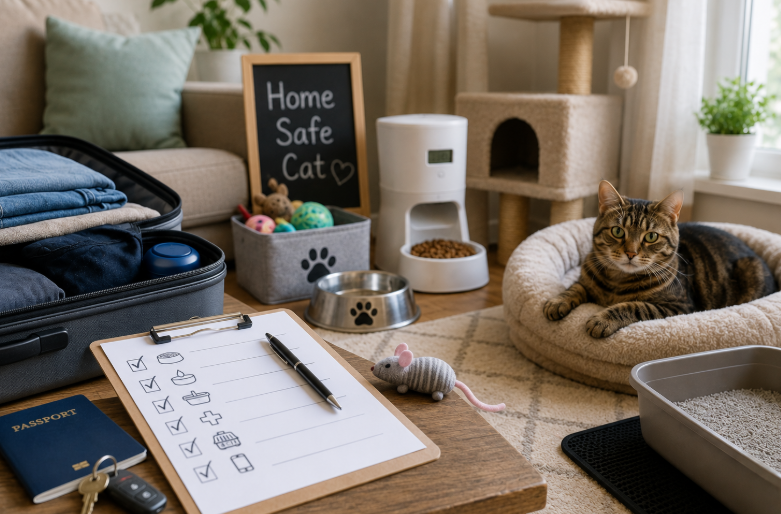
Keeping your home safe for cat care while traveling starts long before you pack your bag or close the front door. Cats may seem independent, yet they depend on a steady routine, secure rooms, fresh water, clean litter, safe hiding spaces, and reliable care. When their environment suddenly changes or their favorite person disappears for a few days, stress can build quickly. However, a thoughtful home setup can make your cat feel more secure while also lowering the risk of accidents, missed meals, escapes, and emergency surprises.
Cats are creatures of habit, so even small disruptions can affect their appetite, litter box use, mood, and confidence. A short weekend trip may feel simple to you, but your cat may notice every change. The house sounds different, feeding times may shift, and the usual daily attention may disappear. Because of this, travel preparation should focus on safety and comfort together. The goal is not only to prevent danger. It is also to help your cat feel like life still has a familiar rhythm.
Before you leave, walk through your home from your cat’s point of view. Look for loose cords, open windows, dangling blinds, unstable shelves, toxic plants, small objects, plastic bags, cleaning products, and rooms where your cat could get trapped. Also, think about food, water, litter, temperature, and who will check on your cat. When each detail has a plan, it becomes much easier to keep your home safe for cat comfort while you travel.
Why Travel Safety Starts Before You Leave
A safe travel plan begins with routine. Cats feel calmer when they know where to eat, drink, sleep, hide, and use the litter box. Therefore, avoid making big changes right before your trip. Do not move the litter box, change food brands, introduce new treats, or rearrange your cat’s main resting areas unless you must. Sudden changes can cause stress, and stress can lead to hiding, poor appetite, vomiting, or litter box problems.
Start preparing a few days early. This gives you time to notice problems before they matter. For example, you may discover that a water fountain needs cleaning, a litter box is too low on litter, or a window latch does not close firmly. You may also notice that your cat is already acting off. If your cat seems sick, has diarrhea, vomits repeatedly, urinates outside the box, or stops eating, call your vet before you travel.
A reliable caregiver is one of the most important parts of travel safety. Even if you plan to leave for only one night, your cat still needs fresh water, food, litter checks, and a basic wellness check. Automatic feeders and fountains can help, but they should never replace human attention for longer trips. Machines can jam, power can fail, and cats can knock things over. A person can notice if your cat is hiding, limping, breathing strangely, or refusing food.
Choose a cat sitter who understands feline behavior. A good sitter should know that cats may hide at first, especially when someone new enters the home. They should check quietly, speak gently, and avoid forcing interaction. If possible, invite the sitter over before your trip. Let your cat see them, smell them, and hear their voice. This simple step can make your home safe for cat care because it reduces fear when the sitter returns later.
Leave clear written instructions. Include feeding amounts, meal times, litter box details, hiding spots, medication needs, emergency contacts, your vet’s number, and your travel contact information. Also, describe what is normal for your cat. If your cat always hides under the bed, the sitter will not panic. If your social cat suddenly hides all day, the sitter will know that something may be wrong.
Secure Every Room Your Cat Can Reach
To keep your home safe for cat movement, begin by closing off risky spaces. Laundry rooms, garages, balconies, storage closets, and utility areas can contain hazards. Cats can squeeze into small openings, climb behind appliances, chew unsafe items, or get trapped when a door closes. If a room does not need to be open, shut it before you leave.
Check windows carefully. A cracked window may seem harmless, but a determined cat can push against a weak screen. Secure screens, lock windows, and close balcony doors. If your cat loves sitting near windows, leave one safe viewing spot available. A window perch can give your cat comfort, but it should be stable and away from blind cords or fragile items.
Blind cords and curtain strings can be dangerous because cats may bat, chew, or tangle in them. Tie cords high and out of reach. Also, remove dangling decorations, loose ribbons, yarn, hair ties, rubber bands, and small craft supplies. These items may look like toys, but they can cause choking or intestinal blockage if swallowed.
Kitchen counters need attention too. Put away knives, glassware, plastic wrap, foil, bread ties, food scraps, and cleaning sprays. Secure trash cans with lids or place them behind a closed door. Some cats will explore more when the house is quiet, especially if they feel bored. Because of this, travel prep should assume your cat may investigate places they usually ignore.
Remove toxic plants from reachable areas. Common household plants can be harmful to cats, including lilies, pothos, philodendron, sago palm, and many others. If you are not sure whether a plant is safe, place it in a room your cat cannot enter. This is especially important while traveling because symptoms may not be noticed right away.
Electrical cords should also be checked. Some cats chew cords when bored, anxious, or playful. Use cord covers where needed, unplug nonessential devices, and move chargers off the floor. In addition, keep essential devices, such as automatic feeders or fountains, connected in a secure place where your cat cannot pull them loose.
Set Up Food, Water, and Litter With Care
Food planning is one of the easiest ways to keep your home safe for cat health while you are away. Keep your cat’s usual food and feeding routine as consistent as possible. A sudden diet change can upset the stomach, reduce appetite, or cause diarrhea. If your sitter will feed wet food, leave exact portions in labeled containers or write clear instructions.
If you use an automatic feeder, test it before your trip. Make sure it opens at the right time, releases the right amount, and cannot be tipped over. Do not rely on a feeder you have never tested. Also, leave backup food instructions for the sitter in case the feeder jams or loses power. Dry food may work in some feeders, but wet food usually needs careful handling because it can spoil.
Fresh water matters even more than food during travel. Leave more than one water station in case one bowl spills. Wide, heavy bowls work well because they are harder to tip. If your cat uses a fountain, clean it before you leave and check the filter. Still, place an extra water bowl nearby because fountains can stop working. This backup can make your home safe for cat hydration if something goes wrong.
Litter boxes should be clean, easy to reach, and available in enough locations. Scoop all boxes before leaving. If your cat is older, anxious, or has health issues, consider adding an extra box in a quiet area. A sitter should scoop daily and watch for changes. Very small urine clumps, very large clumps, diarrhea, blood, or no stool can signal a problem.
Avoid scented litter changes right before travel. Cats can reject unfamiliar smells, textures, or box locations. If your cat dislikes the box while you are away, accidents may happen. Keep everything familiar. Also, place a litter mat nearby to reduce tracking, but do not block the entrance for senior cats or cats with mobility issues.
If your cat takes medication, organize it clearly. Use labeled containers and written instructions. Include the dose, timing, method, and what to do if your cat refuses. Never assume a sitter knows how to give pills or insulin. If medication is essential, choose someone experienced or ask your veterinary clinic about boarding or medical care options.
Create a Calm and Comfortable Cat Zone
A calm cat zone can help keep your home safe for cat stress levels while you travel. Choose a quiet area where your cat already feels comfortable. This space should include food, water, litter nearby but not beside the food, favorite bedding, scratching surfaces, and safe hiding spots. Your cat should not feel trapped, but they should have a predictable base.
Leave familiar scents in the home. A blanket, shirt, or soft towel that smells like you can comfort some cats. Do not wash every bedding item right before you leave. Familiar smells tell your cat that the space is still theirs. This can be especially helpful for nervous cats.
Hiding places are not a problem unless the cat cannot be checked. Cats often hide when routines change. Provide safe hiding options, such as a covered bed, cardboard box, open carrier, or quiet closet with no hazards. However, tell the sitter where your cat may hide. They should confirm your cat is present and safe during each visit, even if the cat does not want attention.
Keep play simple and safe. Leave sturdy toys that cannot be swallowed, shredded, or tangled. Avoid string toys, feather wands, ribbon toys, and toys with loose parts unless a person supervises play. Puzzle feeders can help some cats stay engaged, but test them before your trip. If a toy frustrates your cat, it may create more stress than comfort.
Sound can also support calm. Some cats like soft background noise, such as a radio or quiet television. Others prefer silence. Use what your cat already knows. If you leave sound on, keep the volume low and choose a safe device setup. Make sure cords are tucked away and timers are set if needed.
Lighting should feel normal too. A dark house all day and night may feel strange. Use safe lamps on timers or smart bulbs if your cat is used to evening light. Avoid candles, wax warmers, plug-in fragrance devices, or anything that heats up. Fire safety is part of making your home safe for cat care and for the house itself.
Plan for Emergencies Before They Happen
Emergency planning may feel uncomfortable, but it is one of the most loving things you can do. Leave your vet’s phone number, the nearest emergency clinic, your cat’s medical history, and permission for treatment if needed. Also, tell your sitter how to reach you and what decisions they can make if you are unavailable.
Make sure your cat’s carrier is easy to find. Do not store it deep in a garage or crowded closet. Place it somewhere the sitter can reach quickly. Add a clean towel inside, and make sure the door works. In an emergency, every minute matters, so the carrier should not become another problem.
Your cat should also have identification. Even indoor cats can escape when doors open for sitters, cleaners, deliveries, or repairs. A microchip with updated contact details is helpful. A breakaway collar with an ID tag can also help, if your cat tolerates it. Before you leave, check that doors latch properly and that your sitter knows to enter and exit carefully.
Temperature control is another major safety point. Cats can suffer in homes that become too hot or too cold. Set heating or air conditioning to a safe range, and make sure vents are not blocked. If your area has power outages, discuss a backup plan with your sitter. They should know what to do if the house becomes uncomfortable.
Tell your sitter what symptoms need urgent care. These include trouble breathing, open-mouth breathing, repeated vomiting, collapse, seizures, inability to urinate, sudden weakness, severe hiding with no eating, or signs of pain. Since cats often hide illness, a sitter should take major changes seriously.
It also helps to ask for updates. A daily message, photo, or short note can reassure you that your cat is eating, drinking, and acting normally. Photos can show posture, alertness, and general comfort. If your sitter says your cat is hiding, ask whether food is being eaten and litter is being used. Those details matter more than whether your cat comes out to play.
Before leaving, do one final walk-through. Check food, water, litter, doors, windows, cords, plants, trash, appliances, and temperature. Look behind doors, under recliners, inside closets, and near appliances. Make sure your cat is inside and visible before you go. This final check helps keep your home safe for cat peace of mind while you travel.
Conclusion
Knowing how to keep your home safe for cat care while traveling gives your pet a calmer, safer experience while you are away. Cats need more than food and water. They need a secure space, familiar routines, clean litter, stable temperature, safe rooms, and someone who checks on them with care. When you plan these details early, you reduce stress and prevent many common travel-related problems.
A good setup should feel familiar to your cat. Keep meals consistent, provide extra water, remove hazards, secure windows, put away toxic plants, and create safe hiding spaces. Also, choose a reliable sitter and leave clear instructions. These simple steps help protect your cat from accidents, hunger, dehydration, escape, and stress.
Travel is easier when you know your cat has what they need. With thoughtful preparation, your home can stay calm, secure, and comfortable until you return. Most importantly, your cat can continue their normal routine in the place they know best, which is often the safest and least stressful option.
FAQ
1. Can I Leave My Cat Alone While I Travel?
For a very short trip, some adult cats may do well with careful preparation. However, a sitter should still check food, water, litter, and your cat’s condition at least once daily.
2. How Much Water Should I Leave for My Cat?
Leave more than one water source in different areas. Use heavy bowls that cannot tip easily, and keep a backup bowl even if your cat normally uses a fountain.
3. Should I Keep My Cat in One Room While I Am Away?
Some cats feel safer in a quiet room with food, water, litter nearby, bedding, and toys. However, the room must be comfortable, temperature-safe, and large enough for normal movement.
4. What Should I Tell My Cat Sitter Before Traveling?
Share feeding instructions, litter details, hiding spots, medication needs, emergency contacts, vet information, and signs that require urgent care. Clear notes prevent confusion.
5. What Is the Biggest Home Hazard for Cats During Travel?
Common hazards include open windows, toxic plants, loose cords, unsafe toys, trash, spoiled food, and rooms where cats can get trapped. A full home check helps prevent these risks.