
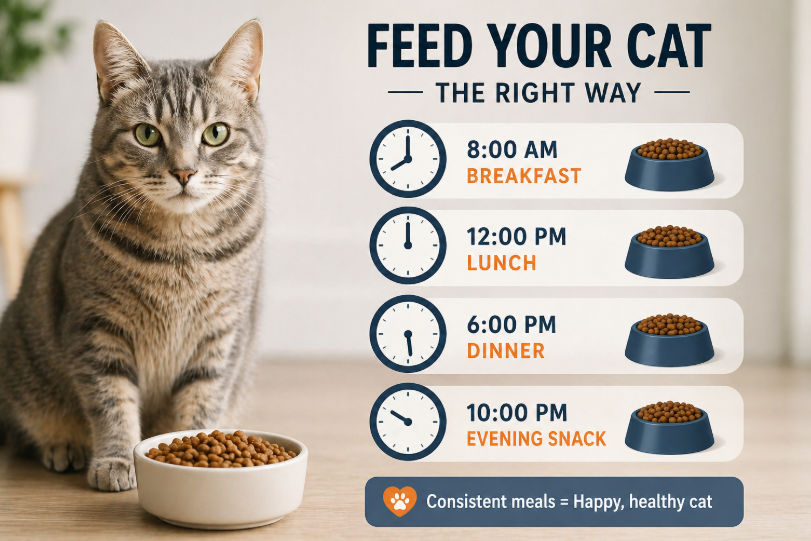
How often feed your cat is one of the most common questions pet owners ask, yet the answer is not always as simple as it seems. Every cat has unique needs based on age, lifestyle, and health condition. However, establishing the right feeding routine is essential for maintaining proper nutrition, stable energy levels, and long term wellness. By understanding your cat’s natural instincts and dietary requirements, you can create a feeding schedule that supports both physical and emotional health.
To begin with, cats are natural grazers in the wild, often eating small meals throughout the day. Because of this, their bodies are designed to process food in smaller portions rather than large, infrequent meals. Therefore, when deciding how often feed your cat, it is important to consider how their biology influences their nutritional needs. A consistent routine not only supports digestion but also helps reduce stress and unwanted behaviors.
Understanding Your Cat’s Natural Feeding Behavior
Cats evolved as hunters, which means they are accustomed to catching and eating prey multiple times daily. As a result, their metabolism works best when they receive food in smaller, regular portions. When you align feeding habits with this natural behavior, you help your cat maintain better health and energy balance.
For example, feeding once a day may lead to overeating or digestive discomfort. On the other hand, offering multiple smaller meals supports steady energy levels and prevents sudden hunger spikes. Consequently, many veterinarians recommend dividing daily food intake into at least two meals.
In addition, routine plays a major role in a cat’s sense of security. When feeding times are predictable, your cat feels more relaxed and less anxious. This stability also helps prevent behavioral issues such as excessive meowing or food aggression. Therefore, understanding how often feed your cat goes beyond nutrition and directly impacts overall well-being.
How Feeding Frequency Changes by Life Stage
One important factor when deciding how often feed your cat is their age. Kittens, adult cats, and senior cats all have different nutritional requirements, which means their feeding schedules should vary accordingly.
Kittens require more frequent meals because they are growing rapidly and need consistent energy. Typically, young cats benefit from three to four meals per day. This approach ensures they receive enough nutrients to support development without overloading their digestive system.
Adult cats, on the other hand, usually do well with two meals per day. This schedule aligns with their slower metabolism and helps maintain a healthy weight. However, some cats may prefer smaller, more frequent meals, especially if they are highly active.
Senior cats often require adjustments based on health conditions. As cats age, their metabolism may slow down, and certain medical issues may arise. Therefore, feeding smaller portions more frequently can help improve digestion and nutrient absorption. By adjusting feeding habits as your cat ages, you can better support their changing needs.
Portion Control and Feeding Balance
While understanding how often feed your cat is important, portion size is equally critical. Feeding too much, even with a proper schedule, can lead to weight gain and related health issues. Conversely, feeding too little may result in nutritional deficiencies.
To maintain balance, it is essential to follow feeding guidelines based on your cat’s weight and activity level. High-quality cat food usually provides recommendations that can serve as a starting point. However, these guidelines should be adjusted based on your cat’s individual needs.
In addition, monitoring your cat’s body condition is key. A healthy cat should have a visible waist and a slight fat layer over the ribs. If you notice changes in weight, adjusting portion sizes may be necessary. Therefore, combining proper frequency with correct portions ensures optimal results.
Another factor to consider is the type of food. Wet food provides hydration and can be easier to digest, while dry food offers convenience and longer shelf life. Many cat owners choose a combination of both to create a balanced diet. Regardless of the choice, consistency remains essential.
The Role of Routine in Feeding Success
Establishing a routine is one of the most effective ways to manage how often feed your cat. Cats thrive on predictability, and consistent feeding times help regulate their internal clock. As a result, your cat becomes more relaxed and less likely to develop disruptive behaviors.
For instance, feeding your cat at the same times each day creates a sense of structure. Over time, your cat will anticipate meals and adjust their activity levels accordingly. This routine also helps prevent overeating, as your cat learns when to expect food.
Moreover, routine feeding supports better digestion. When meals are spaced evenly, the digestive system functions more efficiently. Consequently, your cat experiences fewer issues such as vomiting or irregular bowel movements.
Automatic feeders can be helpful for maintaining consistency, especially for busy owners. These devices ensure that meals are delivered on time, even when you are not at home. Therefore, they can be a valuable tool for managing feeding schedules.
Common Mistakes in Feeding Cats
Even with the best intentions, many cat owners make mistakes when deciding how often feed your cat. One common issue is free feeding, where food is available at all times. While this approach may seem convenient, it often leads to overeating and weight gain.
Another mistake is feeding based on human schedules rather than the cat’s needs. For example, feeding only once in the evening may not align with your cat’s natural behavior. Instead, spreading meals throughout the day is more beneficial.
In addition, inconsistent feeding times can create confusion and stress. Cats rely on routine, so irregular schedules may lead to anxiety or unwanted behaviors. Therefore, maintaining consistency is essential.
Overfeeding treats is another concern. While treats can be useful for training or bonding, they should not replace balanced meals. Too many treats can disrupt your cat’s diet and contribute to weight gain. By avoiding these common mistakes, you can improve your cat’s overall health.
Adjusting Feeding Habits for Special Needs
Some cats have specific needs that require adjustments to their feeding routine. For example, cats with medical conditions such as diabetes may need more controlled feeding schedules. In these cases, working with a veterinarian is essential.
Active cats may require more frequent meals to maintain energy levels. Similarly, indoor cats with lower activity levels may benefit from fewer or smaller portions. Therefore, tailoring feeding habits to your cat’s lifestyle ensures better results.
Stress and environmental changes can also affect appetite. When introducing a new pet or moving to a new home, your cat’s eating habits may change. During these times, maintaining a consistent routine can help reduce stress and encourage normal feeding behavior.
Hydration is another important factor. Cats often have a low thirst drive, so incorporating wet food or providing fresh water regularly can support overall health. By considering these factors, you can create a more effective feeding plan.
Long Term Benefits of Proper Feeding Frequency
Understanding how often feed your cat correctly offers long term benefits that go beyond basic nutrition. A well-balanced feeding routine supports healthy weight management, which reduces the risk of conditions such as diabetes and joint problems.
In addition, proper feeding helps maintain stable energy levels. Cats that receive regular meals are more active and engaged, which contributes to both physical and mental health. This improved activity level also strengthens the bond between you and your pet.
Digestive health is another key benefit. Consistent feeding patterns allow the digestive system to function efficiently, reducing the likelihood of issues such as vomiting or constipation. Over time, this contributes to overall well-being.
Furthermore, a proper feeding routine enhances longevity. Cats that receive balanced nutrition and consistent care are more likely to live longer, healthier lives. Therefore, investing time in understanding feeding frequency pays off in the long run.
Conclusion
Knowing how often feed your cat properly is essential for supporting long term health, energy, and overall well-being. By aligning feeding habits with your cat’s natural instincts, adjusting for age and lifestyle, and maintaining consistency, you can create a routine that promotes optimal health.
While it may take some time to find the perfect schedule, the effort is worthwhile. A well-fed cat is not only healthier but also happier and more content. In the end, proper feeding is one of the simplest yet most powerful ways to care for your cat and ensure a long, fulfilling life together.
FAQ
1. How many times a day should a healthy adult cat eat?
Most adult cats do well with two meals per day, although some may benefit from smaller, more frequent meals.
2. Should kittens be fed more often than adult cats?
Yes, kittens need three to four meals daily to support their rapid growth and energy needs.
3. Is free feeding a good option for cats?
Free feeding can lead to overeating and weight gain, so scheduled meals are usually a better choice.
4. Can feeding schedules affect a cat’s behavior?
Yes, consistent feeding times can reduce anxiety and prevent behaviors like excessive meowing.
5. What type of food is best for maintaining a feeding routine?
A balanced combination of wet and dry food can support nutrition while maintaining convenience and consistency.