
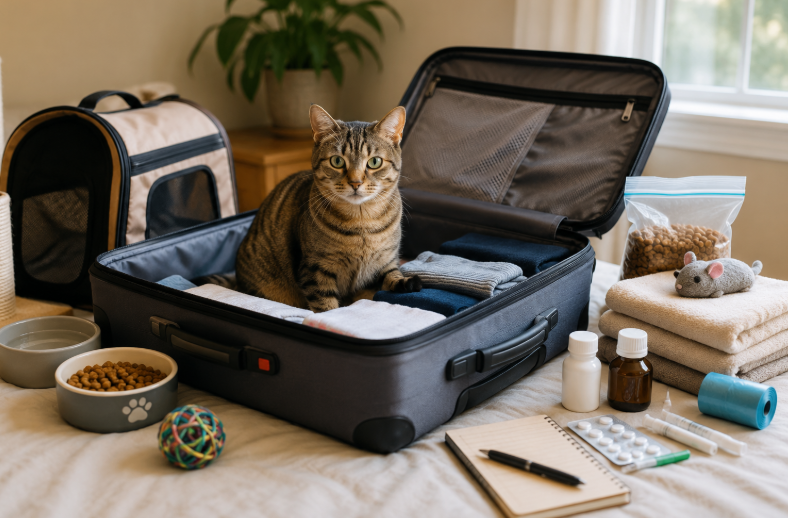
Leaving home for a trip can feel exciting, but it can also bring worry when you share your life with a cat. Cats depend on routine, familiar spaces, and predictable care, so sudden changes may upset them more than you expect. That is why it helps to prepare your cat before vacation with a clear plan that covers food, water, litter, comfort, safety, and daily attention. When everything is organized early, your cat can stay calmer, and you can travel with more peace of mind.
Many cats do better staying at home instead of being moved to a boarding facility. However, every cat is different. Some cats are social and adjust well to a trusted sitter. Others hide from strangers and need extra time to feel safe. Before you make any plans, think about your cat’s age, health, personality, feeding routine, and stress level. This simple step helps you choose the best care option instead of rushing into a decision days before your trip.
A good vacation plan starts well before your suitcase comes out. Cats often notice changes in the home, including packing, schedule shifts, and your own stress. Therefore, try to keep your normal routine as steady as possible. Feed your cat at the usual time, keep play sessions familiar, and avoid moving important items unless necessary. Although you may feel busy, those small routines help your cat feel secure.
You should also decide who will care for your cat while you are gone. For many cats, a reliable pet sitter is the best choice because the cat can stay in its own environment. A sitter can refresh food and water, scoop the litter box, check for signs of illness, and offer gentle companionship. If your cat needs medication, special meals, or close monitoring, choose someone with experience. In addition, arrange a trial visit before your trip so your cat can meet the sitter without pressure.
Why Cats Need a Calm Vacation Plan
Cats are territorial animals, and they feel safest when their surroundings smell, sound, and look familiar. Even small changes can create stress, especially for shy, senior, or anxious cats. Because of this, you should prepare your cat before vacation in a way that protects your cat’s daily rhythm. The goal is not to make your absence invisible. Instead, the goal is to make each day predictable enough that your cat feels safe.
Stress in cats can appear in different ways. Some cats hide more often, eat less, groom too much, or become unusually vocal. Others may urinate outside the litter box, avoid play, or seem restless. Since cats often hide discomfort, your sitter should know what is normal for your pet. For example, if your cat usually greets people at the door but suddenly stays under the bed, that change matters. Clear notes can help your sitter respond quickly.
Food changes can also upset cats during your absence. Therefore, do not introduce a new food right before you leave. If you need to change your cat’s diet, start weeks ahead and transition slowly. Otherwise, keep meals simple and familiar. Measure portions in advance, label them clearly, and explain feeding times. This prevents overfeeding, underfeeding, or confusion.
Water is just as important as food. Before you travel, place extra water bowls in safe areas around the house. A pet fountain can help some cats drink more, but only use one if your cat already trusts it. Since fountains can stop working, your sitter should still check regular bowls. Fresh water should be replaced daily, even if the bowl looks full.
Litter box care deserves special attention. A dirty litter box can cause stress and accidents, especially when your cat already feels unsettled. Before you leave, clean the boxes well, refill them with the same litter your cat uses, and place them where your cat can easily reach them. If you will be gone for more than a day, your sitter should scoop at every visit. For multi-cat homes, this becomes even more important.
Set Up Your Home Before You Leave
A safe home setup can make a major difference while you are away. Before your trip, walk through each room and look for possible problems. Close off unsafe spaces, secure loose cords, remove fragile items, and put away anything your cat might chew. Also check windows, screens, balconies, and doors. Even calm cats may act differently when routines change, so it is smart to reduce risks early.
To prepare your cat before vacation properly, create a comfortable area where your cat already likes to rest. This might include a favorite blanket, bed, scratching post, or quiet hiding spot. Do not wash every blanket right before leaving because familiar scents can comfort your cat. Instead, leave a few items that smell like home. You can also place one of your worn shirts near your cat’s sleeping area if your cat enjoys your scent.
Temperature matters too. Make sure your home will stay comfortable throughout your trip. Cats can overheat in warm rooms and become uncomfortable in cold spaces. Set your thermostat safely, and tell your sitter how to adjust it if needed. In addition, make sure your cat has access to both cozy spaces and cooler areas. This gives your cat more control.
Lighting and sound can help maintain routine. If your cat is used to natural light during the day, keep curtains partly open in safe rooms. At night, a small lamp can help some cats feel settled. However, avoid loud radios or sudden noise from timers. Soft background sound may comfort certain cats, but silence may suit others better. Choose what matches your cat’s normal life.
Automatic feeders can help, but they should not replace human check-ins. Technology can fail, batteries can die, and food can jam. Test any automatic feeder for several days before your vacation. Then ask your sitter to confirm that it works during each visit. The same rule applies to water fountains, cameras, and smart litter boxes. These tools can support care, but they should not become the whole plan.
It also helps to prepare an easy care station. Place food, treats, medication, cleaning supplies, litter bags, paper towels, and your written instructions in one visible spot. This saves time and prevents mistakes. In addition, leave your veterinarian’s contact details, your emergency contact, and your travel information. If your sitter cannot reach you quickly, they need to know what to do.
When you prepare your cat before vacation, think about your cat’s emotional needs, not just physical care. Some cats need playtime during sitter visits. Others prefer quiet company. A shy cat may feel safer if the sitter sits nearby without forcing contact. Meanwhile, a social cat may need brushing, treats, or interactive toys. Write these details clearly so your sitter can match your cat’s personality.
Create Simple Instructions for Your Sitter
Your sitter should not have to guess. Clear instructions reduce stress for everyone. Start with your cat’s name, age, normal behavior, feeding schedule, water routine, litter box location, favorite hiding places, and any health concerns. Then explain what your sitter should do during each visit. Keep the steps simple, but include enough detail to avoid confusion.
For example, explain how much food to give and when. If your cat eats wet food, note whether leftovers should be removed after a certain time. If your cat eats dry food, mention whether free feeding is allowed. Also list any treats and limits. Even a loving sitter may overdo treats if you do not provide guidance.
Medication instructions need extra clarity. Write the medicine name, dose, time, and method. If your cat resists pills or liquid medicine, explain the safest approach. Better yet, show the sitter before you leave. You may also ask your vet whether your cat’s medication schedule can be adjusted during travel, but never change medication without professional advice.
Emergency instructions are essential. Leave your vet’s name, phone number, clinic address, and after-hours emergency clinic details. Also state what your sitter is allowed to approve if your cat needs urgent care. This may feel uncomfortable, but it helps your sitter act fast. In addition, make sure your cat’s carrier is easy to find. Place it somewhere visible, not buried in storage.
Your sitter should know how often to send updates. Daily photos or short messages can reassure you and help catch problems early. However, ask for useful updates, not just cute pictures. A good update might mention appetite, water, litter box use, mood, and any unusual behavior. This gives you a real sense of how your cat is doing.
Before you leave, introduce your sitter to your cat’s routine in person if possible. Show where supplies are stored, how doors should be handled, and which rooms should stay closed. Also explain any escape risks. Some cats dash toward doors when visitors enter. Others hide so well that a sitter may think they are missing. Share the hiding spots your cat uses most often.
To prepare your cat before vacation with less stress, schedule at least one familiarization visit. During this visit, the sitter should speak softly, avoid sudden movements, and let your cat approach on their own terms. Treats can help, but they should not be forced. If your cat stays hidden, that is fine. The goal is to make the sitter’s presence less surprising later.
Keep Your Cat’s Routine as Normal as Possible
Cats feel safer when life follows a pattern. Therefore, your vacation care plan should copy your usual routine as closely as possible. Feeding times should stay similar, litter box cleaning should be consistent, and play should happen in familiar ways. Even if your cat seems independent, these details matter.
If your cat has a favorite toy, leave it out. However, avoid toys with strings, ribbons, feathers, or small parts unless someone supervises play. Wand toys should be stored away after use. Puzzle feeders can offer enrichment, but only use them if your cat already understands them. New toys may be fun, but they can also cause frustration if introduced at the wrong time.
Scent comfort can help some cats. Familiar bedding, scratching posts, and resting spots should stay in place. Try not to deep clean your home right before you go, especially in your cat’s favorite areas. Although a clean home is nice, removing too many familiar smells can make the environment feel strange.
You may feel tempted to give extra attention right before leaving. While affection is fine, avoid making your departure dramatic. Cats can sense emotional changes. Instead, stay calm and normal. Feed your cat, offer gentle affection, and leave without a long goodbye. This makes your exit feel less unusual.
For longer trips, your sitter should spend more than a few minutes in the home. A quick visit may cover food and litter, but it may not meet your cat’s emotional needs. If your cat enjoys company, ask for a longer visit when possible. If your cat is anxious, quiet presence can still help. The sitter can read, sit nearby, or simply let your cat observe from a safe distance.
You should also consider whether your cat needs overnight care. Some cats do well with one or two daily visits. However, kittens, seniors, cats with medical needs, and highly social cats may need more support. Multi-cat households may also need closer supervision, especially if one cat guards food or litter boxes. Choosing the right visit schedule is one of the best ways to prepare your cat before vacation.
Before leaving, monitor your cat for signs of illness. If your cat has vomiting, diarrhea, appetite changes, coughing, limping, or litter box problems, contact your vet before your trip. Travel is not the time to hope symptoms disappear. Early care can prevent a stressful emergency while you are away.
It is also wise to check identification. Indoor cats can still slip out during sitter visits. Make sure your cat’s microchip information is current. If your cat wears a collar, use a breakaway collar with an ID tag. This small step can make a major difference if something unexpected happens.
When you return, let your cat adjust at their own pace. Some cats greet owners happily, while others act distant for a while. This does not mean your cat is angry. Your cat may simply need time to settle back into the normal rhythm. Offer food, clean water, a fresh litter box, and calm attention. Avoid overwhelming your cat with loud unpacking or too much handling right away.
A thoughtful plan also helps future trips. After you come home, ask your sitter what went well and what could improve. Maybe your cat preferred afternoon visits, ignored a certain toy, or needed more wet food instructions. Use those notes next time. Each trip teaches you more about your cat’s needs.
The most important thing is to plan with your cat’s comfort in mind. When you prepare your cat before vacation, you are not just checking off tasks. You are protecting your cat’s sense of safety. With familiar routines, clear sitter instructions, safe spaces, and reliable care, your cat can stay more relaxed while you enjoy your time away.
A calm vacation starts at home. By organizing supplies, choosing the right caregiver, and keeping routines steady, you give your cat the best chance to feel secure. You also reduce your own worry because you know the essentials are handled. The more carefully you prepare your cat before vacation, the easier it becomes to leave with confidence and return to a happy, well-cared-for companion.
FAQ
1. How Early Should I Start Getting My Cat Ready for a Trip?
Start planning at least one to two weeks before you leave. This gives you time to book a sitter, prepare supplies, test feeders, update instructions, and watch for health concerns. If your cat has medical needs or anxiety, begin even earlier.
2. Is It Better To Board My Cat or Leave Them at Home?
Most cats feel calmer at home because they stay in familiar surroundings. However, boarding may work better for cats that need medical monitoring or constant care. Choose the option that fits your cat’s health, personality, and stress level.
3. How Often Should a Cat Sitter Visit?
Many healthy adult cats do well with one or two visits per day. However, kittens, senior cats, social cats, and cats with medical needs may need longer or more frequent visits. Your sitter should check food, water, litter, behavior, and overall comfort each time.
4. Should I Leave Extra Food Out While I Am Away?
Avoid leaving large amounts of food without a plan. Some cats overeat, while wet food can spoil. Instead, measure meals, use tested feeders if needed, and ask your sitter to follow a clear feeding schedule.
5. What Should I Do When I Get Home?
Stay calm and let your cat approach you naturally. Refresh food and water, clean the litter box, and return to the normal routine. Some cats need a little time to warm up again, so give them space and gentle reassurance.