Using a slow feeding cat food plan is one of the safest ways to switch your cat to a new diet without causing stress or digestive upset. Cats are sensitive to change, especially when it comes to food, so a gradual approach helps them adapt comfortably. While many owners switch food quickly, this often leads to problems like vomiting, diarrhea, or food refusal.
A well-structured slow feeding cat food plan allows your cat’s digestive system to adjust over time. At the same time, it helps your cat accept new textures and flavors without resistance. When done correctly, this method protects your cat’s health and creates a smooth transition to better nutrition.
Why A Gradual Feeding Approach Matters
A sudden diet change can disrupt your cat’s gut balance. Therefore, a slow feeding cat food plan is essential for maintaining digestive health. The bacteria in your cat’s digestive system need time to adjust to new ingredients, and rushing this process can cause discomfort.
In addition, cats rely on routine for security. When food changes too quickly, it may create stress and reduce appetite. However, a gradual shift helps maintain consistency while introducing something new.
Moreover, a slow feeding cat food plan reduces the risk of rejection. Cats can be picky, so easing them into new food increases acceptance. This approach not only protects their digestion but also improves long-term feeding habits.
Step By Step Slow Feeding Transition Method
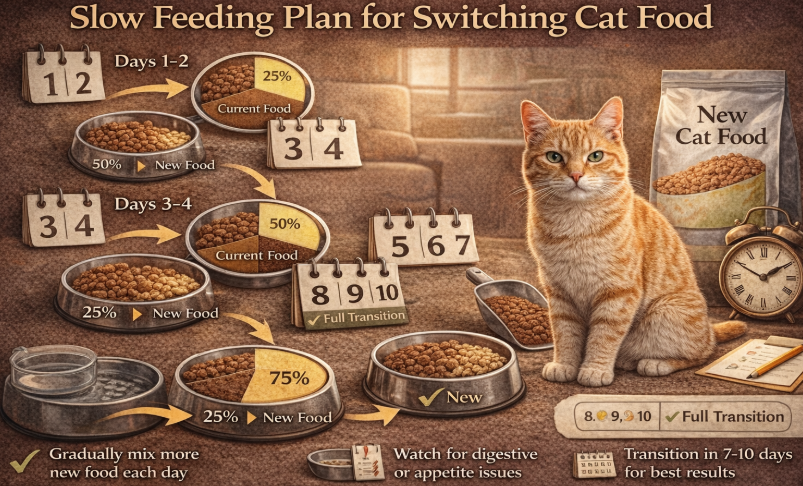
The most effective slow feeding cat food plan follows a simple step-by-step process over seven to ten days. This gradual method ensures your cat adapts without digestive issues.
Start by mixing 25 percent new food with 75 percent of the current food. For the first two days, maintain this ratio while observing your cat’s response. If everything remains normal, increase the new food portion gradually.
Next, move to a 50-50 mix for a few days. This stage allows your cat to become more familiar with the new food. After that, increase to 75 percent new food and 25 percent old food.
Finally, transition completely to the new diet. Throughout the process, monitor your cat closely. Adjust the pace if any issues appear to keep the slow feeding cat food plan effective.
Signs Your Cat Is Adjusting Well
When following a slow feeding cat food plan, it is important to watch for signs of successful adjustment. A healthy appetite, normal stool, and steady energy levels indicate that your cat is adapting well.
Additionally, your cat may show curiosity toward the new food. This is a positive sign that the transition is working. However, some cats may take longer, so patience is essential.
On the other hand, vomiting, diarrhea, or refusal to eat are signs to slow down. Returning to the previous food ratio for a few days can help stabilize your cat before continuing.
By paying attention to these signals, you can ensure your slow feeding cat food plan remains safe and effective.
Managing Picky Eating During Transition
Some cats resist dietary changes, which can make a slow feeding cat food plan more challenging. However, there are simple strategies to encourage acceptance without causing stress.
Warming the food slightly can enhance its aroma, making it more appealing. In addition, mixing wet food with dry food can improve texture and taste.
Consistency also plays a key role. Feeding your cat at the same time each day helps establish a routine. If your cat refuses food, remove it after a short period and try again later.
Avoid offering too many treats during the transition. Treats can reduce your cat’s interest in the new food and disrupt the slow feeding cat food plan.
Choosing The Right Food For Transition
Selecting the right food is just as important as the transition process. A high-quality option makes the slow feeding cat food plan more successful. Look for real meat as the primary ingredient and avoid excessive fillers.
In addition, consider your cat’s age and health needs. Kittens, adults, and senior cats require different nutritional profiles. Choosing the right formula ensures better long-term results.
If your cat has sensitivities, a limited-ingredient diet may be beneficial. This reduces the risk of digestive issues during the transition.
For more guidance on nutrition, you can explore https://www.wellnessonthegreen.com/ for additional insights into balanced feeding.
Common Mistakes To Avoid
Many owners unintentionally disrupt a slow feeding cat food plan by making simple mistakes. One common issue is rushing the process. While it may seem faster, it often leads to digestive problems.
Another mistake is switching between multiple foods at once. This can confuse your cat and make it harder to identify any issues. Instead, focus on one transition at a time.
In addition, inconsistent feeding schedules can create stress. Maintaining a regular routine helps your cat feel secure and improves acceptance of new food.
Avoiding these mistakes ensures your slow feeding cat food plan remains effective and stress-free.
When To Slow Down The Transition
Every cat adjusts at a different pace. Sometimes, you may need to slow down your slow feeding cat food plan to prevent discomfort. If your cat shows signs of digestive upset, it is best to pause.
Returning to the previous ratio for a few days allows your cat to stabilize. Once symptoms improve, you can continue the transition more gradually.
Older cats or those with sensitive stomachs may require longer transition periods. Extending the process to two weeks or more can improve results.
Taking your time ensures a smoother and safer transition for your cat.
The Role Of Hydration In Food Transition
Hydration plays an important role in a slow feeding cat food plan. Cats often do not drink enough water, so increasing moisture intake can support digestion.
Wet food is a great option for improving hydration. It provides additional moisture and makes the transition easier. In addition, always provide fresh water in accessible locations.
Some cats prefer running water, so a fountain may encourage drinking. Proper hydration helps prevent urinary issues and supports overall health during the transition.
Long Term Benefits Of Slow Feeding
Following a slow feeding cat food plan offers long-term benefits beyond the transition period. It helps maintain digestive balance and reduces the risk of future issues.
In addition, cats that adjust gradually are more likely to accept new foods in the future. This makes dietary changes easier over time.
Proper nutrition also improves coat quality, energy levels, and overall health. A well-fed cat is more active, comfortable, and resilient.
By using a slow feeding cat food plan, you create a positive feeding experience that supports long-term well-being.
Conclusion
A slow feeding cat food plan is the safest and most effective way to switch your cat to a new diet. While the process requires patience, it prevents digestive issues and reduces stress. By introducing new food gradually, you allow your cat to adapt comfortably.
Monitoring your cat’s response, maintaining consistency, and choosing high-quality food all contribute to success. Small adjustments along the way ensure the transition remains smooth and stress-free.
Ultimately, a slow feeding cat food plan supports better health and creates a positive feeding routine. With the right approach, your cat can enjoy a new diet without discomfort and thrive in the long run.
FAQ
- How long should a food transition take for cats?
Most transitions take 7 to 10 days, but sensitive cats may need longer. - What happens if I switch cat food too quickly?
A sudden change can cause vomiting, diarrhea, or refusal to eat. - Can I mix wet and dry food during the transition?
Yes, combining both can improve acceptance and hydration. - What should I do if my cat refuses new food?
Try warming the food, slowing the transition, and maintaining a feeding routine. - Is slow feeding better for all cats?
Yes, gradual changes help prevent digestive issues and improve acceptance of new food.