
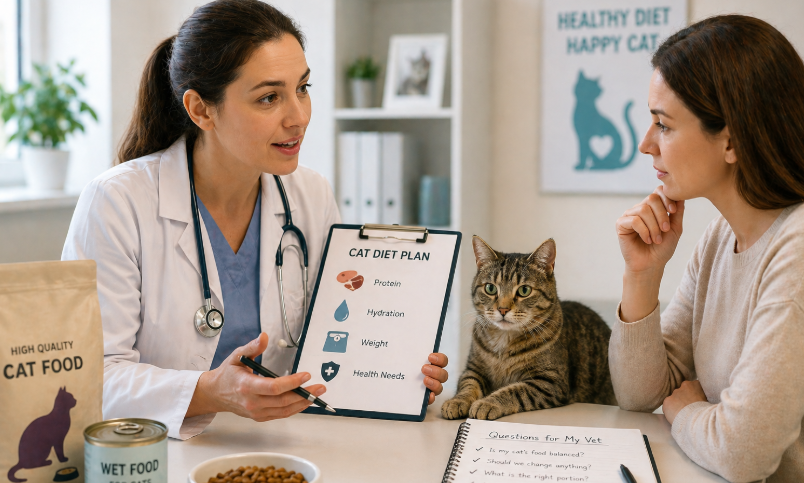
Knowing how to talk to vet about cat diet concerns can feel overwhelming, especially if you are unsure what questions to ask or how to explain your observations. However, open communication with your veterinarian is one of the most important steps you can take to improve your cat’s nutrition and overall health. Since diet plays a major role in preventing illness, maintaining energy, and supporting longevity, these conversations should never be rushed or avoided.
Many cat owners rely on online advice or product labels, yet these sources often lack personalization. Every cat has unique needs based on age, lifestyle, and medical history. Because of this, learning how to talk to vet about cat diet concerns helps you move beyond guesswork and make informed decisions. When you approach the conversation with clarity and preparation, you create a more productive discussion that benefits your cat in the long run.
Why Clear Communication With Your Vet Matters
Building a strong relationship with your veterinarian allows you to talk to vet about cat diet concerns more effectively. When communication is clear, your vet can better understand your cat’s habits, preferences, and any changes you have noticed. This information is essential because even small dietary shifts can signal underlying health issues.
Additionally, clear communication reduces confusion and ensures that recommendations are tailored to your cat. Instead of receiving generic advice, you gain specific guidance that fits your pet’s needs. Over time, this approach improves trust and makes future visits easier and more productive. As a result, your cat benefits from consistent and informed care.
Preparing Before Your Vet Visit
Preparation plays a key role when you plan to talk to vet about cat diet concerns. Before your appointment, take time to observe your cat’s eating habits, energy levels, and behavior. Write down any changes, such as reduced appetite, weight fluctuations, or digestive issues. These details provide valuable context and help your vet identify potential problems more quickly.
It is also helpful to bring information about your cat’s current food. This includes brand names, ingredients, portion sizes, and feeding schedules. If possible, take photos of labels or packaging. By doing this, you make it easier for your vet to evaluate the diet and suggest improvements. Furthermore, preparing a list of questions ensures that you do not forget important topics during the visit.
Questions You Should Ask About Your Cat’s Diet
When you talk to vet about cat diet concerns, asking the right questions can make a big difference. Start with basic questions about whether your cat’s current diet meets nutritional needs. Then, ask if any adjustments are necessary based on age, weight, or health conditions. These questions open the door to more detailed recommendations.
You can also ask about portion control, feeding frequency, and the balance between wet and dry food. If your cat has specific issues, such as allergies or digestive sensitivity, be sure to mention them. In addition, inquire about treats and supplements, since these can impact overall nutrition. By asking thoughtful questions, you gain a clearer understanding of how to support your cat’s health.
How To Describe Your Cat’s Symptoms Clearly
Being able to describe symptoms accurately is essential when you talk to vet about cat diet concerns. Instead of using general terms, provide specific examples. For instance, rather than saying your cat is “not eating well,” explain how much food is left uneaten and how long the behavior has lasted.
Timing is also important. Mention when the issue started and whether it has improved or worsened over time. If there are patterns, such as symptoms appearing after certain foods, share that information. Clear descriptions help your vet identify possible causes and recommend appropriate changes more efficiently.
Additionally, avoid minimizing concerns. Even small issues can provide important clues. By sharing everything you have observed, you give your vet a complete picture of your cat’s condition.
Understanding Your Vet’s Recommendations
After you talk to vet about cat diet concerns, it is important to fully understand the advice you receive. Sometimes recommendations may include switching food brands, adjusting portions, or introducing new feeding routines. If anything is unclear, ask for clarification before leaving the appointment.
Take notes during the discussion so you can review them later. This helps you remember specific instructions and follow them correctly. If your vet suggests a gradual diet change, ask for a timeline and step-by-step guidance. Understanding the reasoning behind each recommendation also makes it easier to stay consistent at home.
Moreover, do not hesitate to ask about alternatives. If a suggested diet does not fit your budget or your cat’s preferences, your vet can often provide other options. This ensures that the plan remains practical and sustainable.
Common Mistakes To Avoid During The Conversation
While learning how to talk to vet about cat diet concerns, it is important to avoid common mistakes that can limit the effectiveness of the discussion. One mistake is withholding information, especially about treats or human food. Even small extras can impact your cat’s diet, so honesty is essential.
Another mistake involves expecting instant solutions. Dietary changes often take time to show results, so patience is necessary. Additionally, avoid interrupting your vet or rushing through the conversation. Taking time to listen carefully ensures that you fully understand the recommendations.
Relying solely on internet advice without consulting your vet can also lead to confusion. While online resources can be helpful, they should not replace professional guidance. By avoiding these mistakes, you create a more productive and beneficial conversation.
Following Up After Your Vet Visit
The conversation does not end once you leave the clinic. After you talk to vet about cat diet concerns, it is important to monitor your cat’s response to any changes. Pay attention to improvements in appetite, energy, and overall behavior. If issues persist, keep track of them so you can report back to your vet.
Follow-up communication is just as important as the initial discussion. Many clinics offer phone or email support, which allows you to ask additional questions or provide updates. This ongoing communication helps your vet adjust recommendations if needed.
Consistency is key during this stage. Stick to the plan and avoid making additional changes without consulting your vet. By doing so, you give your cat the best chance to adapt and benefit from the new diet.
Building Confidence As A Cat Owner
Learning to talk to vet about cat diet concerns also builds your confidence as a pet owner. As you gain experience, these conversations become more natural and less stressful. You begin to understand your cat’s needs better and feel more prepared to address any issues that arise.
Confidence comes from knowledge and practice. The more you observe your cat and communicate with your vet, the easier it becomes to make informed decisions. Over time, this proactive approach leads to better health outcomes and a stronger bond with your pet.
Conclusion
Knowing how to talk to vet about cat diet concerns empowers you to take control of your cat’s nutrition and well-being. By preparing in advance, asking the right questions, and maintaining open communication, you create a partnership with your veterinarian that benefits your pet. This collaborative approach ensures that your cat receives the best possible care tailored to their unique needs.
Ultimately, these conversations are not just about food. They are about understanding your cat’s health, preventing future problems, and providing a better quality of life. With the right mindset and preparation, you can turn every vet visit into an opportunity to support your cat’s long-term wellness.
FAQ
- What should I bring to discuss my cat’s diet with the vet?
Bring details about your cat’s current food, feeding schedule, and any recent changes in behavior or appetite. - How do I know if my cat’s diet needs adjustment?
Signs like weight changes, low energy, or digestive issues may indicate that the current diet is not ideal. - Can I change my cat’s food without consulting a vet?
It is best to consult a vet before making changes, especially if your cat has health concerns. - How long does it take to see results after changing a cat’s diet?
Results can vary, but many cats show improvement within a few weeks of consistent dietary changes. - What if my cat refuses the new food recommended by the vet?
Try a gradual transition and consult your vet for alternative options if the issue continues.