
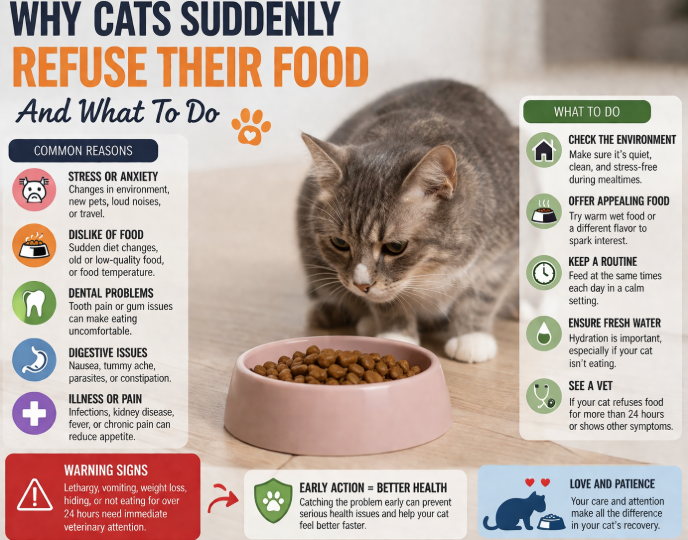
When your cat refuses food, it can feel alarming, especially if it happens suddenly. Cats are known for their steady eating habits, so any disruption often signals that something is wrong. While occasional picky behavior may not be serious, a consistent refusal to eat should never be ignored. In many cases, the reason behind why a cat refuses food can range from simple changes in routine to more serious health concerns.
Understanding the root cause is essential because cats cannot go long without eating. Therefore, knowing how to respond quickly helps prevent complications. When you recognize the reasons a cat refuses food, you can take the right steps to restore their appetite and protect their health.
Common Reasons Your Cat Stops Eating
There are several reasons why a cat refuses food, and many of them are surprisingly common. One of the most frequent causes is stress. Cats are sensitive to environmental changes, so moving homes, introducing new pets, or even rearranging furniture can affect their appetite.
In addition, food changes can trigger refusal. If you recently switched diets too quickly, your cat may reject the new food entirely. This is why gradual transitions are always recommended.
Health issues are another major factor. Dental problems, digestive disorders, or infections can make eating uncomfortable. Therefore, when a cat refuses food for more than a day, it is important to consider medical causes.
Behavioral Triggers That Affect Appetite
Sometimes the issue is not physical but behavioral. A cat refuses food when it feels anxious or unsafe. Loud noises, unfamiliar visitors, or changes in routine can lead to temporary appetite loss.
Moreover, feeding environment matters more than many owners realize. Cats prefer quiet, clean spaces for eating. If their feeding area feels stressful, they may avoid it completely.
Routine also plays a key role. Cats thrive on consistency, so irregular feeding times can confuse them. Establishing a predictable schedule helps reduce the chances that your cat refuses food due to behavioral stress.
Health Problems That May Be Involved
In some cases, a cat refuses food because of underlying health conditions. Dental disease is a common cause, as pain while chewing can discourage eating. Similarly, gastrointestinal issues can lead to nausea and appetite loss.
Kidney disease, infections, and metabolic disorders can also affect appetite. These conditions often develop gradually, so food refusal may be one of the first noticeable signs.
According to the American Veterinary Medical Association, early detection of appetite changes can improve treatment outcomes. Therefore, if your cat refuses food for more than 24 hours, a veterinary check is recommended.
Signs That Indicate A Serious Problem
While occasional food refusal may not be serious, certain signs should raise concern. If your cat refuses food and also shows lethargy, vomiting, or weight loss, the situation may be urgent.
In addition, dehydration is a major risk. Cats that do not eat often drink less, which can lead to further complications. Watching for dry gums or reduced urination helps identify dehydration early.
Furthermore, hiding behavior or unusual aggression may signal pain. When combined with refusal to eat, these symptoms require immediate attention.
What To Do When Your Cat Stops Eating
If your cat refuses food, the first step is to remain calm and observe. Check for recent changes in environment, diet, or routine that may have triggered the behavior.
Next, try offering a different type of food. Wet food often has a stronger aroma, which can stimulate appetite. Warming the food slightly can also make it more appealing.
In addition, ensure fresh water is always available. Hydration supports digestion and may encourage your cat to eat again.
If your cat refuses food for more than a day, consult a veterinarian. Early intervention can prevent more serious health issues.
How To Encourage Your Cat To Eat Again
There are several ways to encourage eating when a cat refuses food. First, create a calm feeding environment. Reduce noise and distractions to make your cat feel comfortable.
You can also try hand-feeding small portions. This builds trust and encourages interest in food. However, avoid forcing food, as this can create negative associations.
Another effective method is maintaining a consistent feeding schedule. Offering meals at the same time each day helps establish routine.
For more guidance on diet transitions, you can explore https://www.wellnessonthegreen.com/ to understand how feeding changes impact appetite.
Preventing Future Feeding Problems
Preventing future issues starts with consistency. Cats respond well to stable routines, so regular feeding times reduce stress and confusion.
In addition, gradual food changes are essential. Sudden switches often lead to refusal, while slow transitions improve acceptance.
Proper nutrition also plays a role. High-quality food with real protein sources supports appetite and overall health.
The Cornell Feline Health Center explains that maintaining a balanced diet helps prevent many feeding issues. Therefore, choosing the right food can make a significant difference.
When To Seek Veterinary Help
Knowing when to seek help is crucial. If your cat refuses food for more than 24 hours, professional advice is necessary. Kittens and senior cats may need even faster intervention.
In addition, any combination of symptoms such as vomiting, diarrhea, or lethargy requires immediate attention. These signs often indicate underlying health problems.
Early diagnosis improves treatment success and reduces complications. Acting quickly ensures your cat receives the care it needs.
Conclusion
When a cat refuses food, it is always a sign worth investigating. While some causes are simple, others may indicate serious health issues. By understanding the reasons behind appetite loss, you can respond effectively and protect your cat’s well-being.
Consistency, observation, and timely action are key. Small changes in routine or environment can have a big impact on your cat’s behavior. Therefore, staying attentive helps you catch problems early.
Ultimately, addressing the issue quickly ensures your cat stays healthy, comfortable, and well-fed. Taking the right steps can make all the difference in restoring normal eating habits.
FAQ
- How long can a cat go without eating?
Most cats should not go more than 24 to 48 hours without food. - What should I do if my cat suddenly stops eating?
Check for changes in environment or diet and offer appealing food options. - Can stress cause appetite loss in cats?
Yes, stress is a common reason for reduced appetite in cats. - Is it normal for cats to skip meals occasionally?
Occasional skipping may happen, but frequent refusal should be checked. - When should I take my cat to the vet?
If your cat avoids food for more than a day or shows other symptoms, seek help.