
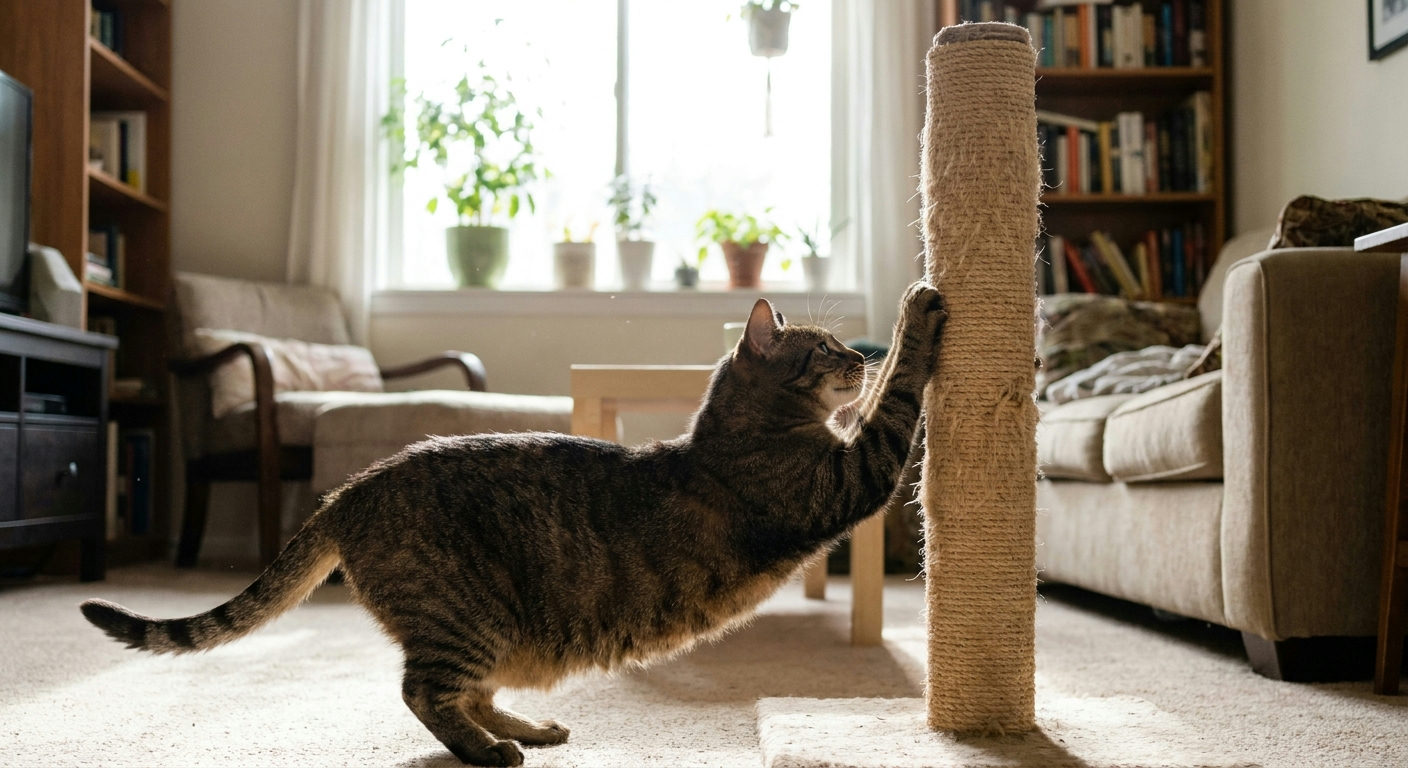
Cat scratching is a normal behaviour that needs a suitable outlet. When furniture becomes the chosen surface, start by observing where and how your cat scratches. That information can help you offer an alternative in a useful place. A post hidden in a room your cat rarely visits is not a complete redirection plan.
This guide offers a practical observation and setup routine without promising that a particular product will stop every unwanted scratch. It is general care information, not veterinary advice. Ask your veterinarian about a sudden behaviour change, apparent discomfort or a problem with the paws or claws. If redirection remains difficult, seek qualified behaviour help rather than escalating punishment.
Observe the behaviour before choosing equipment
The ASPCA’s scratching guidance describes scratching during play, stretching and marking, as well as removal of worn outer claw material. It recommends offering different orientations and surfaces, with stable posts that permit stretching. These are useful design questions rather than a reason to prescribe one post size for every cat.
Make a simple map of the places your cat uses. Record the surface, whether the movement is vertical or horizontal, and what happened immediately beforehand. You might see scratching near a resting place or a frequently used doorway. Describe the observation instead of assuming that every mark proves stress or that the cat is acting out of spite.
If you share a home with several cats, identify which cat uses each area when possible. Keep uncertain observations labelled uncertain. Damage on one sofa arm does not establish that every cat has the same preference. A map gives you a starting place for equipment; it is not a diagnosis of the relationships among the animals.
Test one alternative beside the existing location
Choose a stable scratching surface that fits the observed orientation. Check the manufacturer’s assembly and use instructions, including any required attachment. A loose base or unsuitable mounting should be corrected through the supported method, not an improvised repair that creates sharp edges or a tipping risk. Check the equipment without a cat using it first.
Place the alternative beside the area already used, leaving space for approach and movement. If several items are available, test them separately where practical so you can tell which is used. Do not buy a complete set merely because a product photo looks attractive. The initial question is whether this surface and placement provide a workable option for your cat.
Record the setup with a photograph and a short description: upright sisal post near the sofa, or horizontal cardboard pad beside the resting area. These are examples, not compulsory materials. If the cat ignores the item, the note helps you change one feature rather than move everything at once and lose track of the comparison.
Encourage investigation without forcing the paws
Let your cat approach and leave voluntarily. You can offer a familiar reward for interest or use an appropriate toy nearby under supervision. The aim is to make the area available and inviting, not to attach the cat to the post. Stop if the activity appears uncomfortable or frightening.
Do not hold the paws and drag them over the surface. The ASPCA explicitly advises against that approach. An owner demonstration can be limited to showing the equipment and giving the cat room to explore; the cat does not need to complete a human-directed scratching motion for the setup to count as ready.
Keep your response consistent among household members. Explain where the approved scratching surface is and how to reward its use. Ask visitors to leave the cat alone at the equipment rather than turn the first investigation into a group performance. A quiet opportunity is easier to observe than a session in which several people intervene.
Protect furniture while keeping an alternative available
Decide which furniture protection is practical in your home. If using a cover or protective product, check its instructions and suitability for the furniture and pets. Keep it secure and avoid loose material that could be pulled off or swallowed. Protection should accompany an accessible scratching alternative rather than remove every usable surface.
Try the protection on the specific area while leaving the new scratching item nearby. Record whether the cat uses the alternative, scratches a different part of the furniture or does neither while you observe. Do not interpret one quiet evening as a permanent result. It is one observation of the changed arrangement.
Avoid chasing the cat toward the post after a scratch. Pause, check whether the alternative is accessible and review the setup. If another cat blocks the route or the base moves, address that concrete problem. Repeatedly interrupting the animal while leaving the arrangement unsuitable does not resolve the equipment question.
Use reward and setup changes rather than startling
Cornell’s destructive-behaviour handout recommends placing a scratching post near the chosen location and rewarding its use. It explains that yelling, spraying water or startling can associate the owner with punishment. Use that guidance to create a calm response plan for the whole household.
Write the plan in ordinary language: leave the post accessible, reward its use and record any setup problem. Remove instructions to shout or spray from the care note. If a household member notices scratching elsewhere, have them report the location so you can evaluate whether another alternative is needed. The report should not become a demand to frighten the cat.
If you are too frustrated to respond calmly, step away and review the arrangement later. Furniture damage can be upsetting, but it is not evidence that the cat understands your expectations and is deliberately breaking them. A practical next step is identifying an accessible surface, not deciding which punishment the cat deserves.
Check access in a multi-cat home
Walk the routes to each scratching option. Is an item placed beside a doorway where one cat frequently rests? Can a cat approach without passing another animal at close range? Observe the actual pattern rather than applying a universal post-count formula. More equipment in the same contested corner may leave access unchanged.
Try distributing alternatives near the locations different cats already use. Record the placement and which animals investigate them. If you see avoidance, tension or other changes in the household, discuss the full pattern with the vet or a qualified behaviour professional. Scratching is one observation among several; adding a post should not substitute for addressing a broader welfare problem.
Do not force cats to share an item for a photograph or a demonstration. Let each animal choose whether to approach. A scratcher is useful only if it can be accessed and used in the home arrangement. The map you began with can help you compare that access over time without claiming that a certain number of posts guarantees harmony.
Keep claw care as a separate task
Ask your veterinary team to demonstrate appropriate claw care for your cat and explain which signs need attention. Scratching equipment does not establish that the claws are healthy, and trimming does not remove the need to scratch. Avoid prescribing a fixed trimming interval without considering the individual animal and the team’s advice.
If your cat resists paw handling, stop and ask for help. Do not combine a first claw-trimming attempt with a difficult redirection session. Keep the tasks separate so discomfort or handling stress does not become part of investigating the scratching surface. Report limping, an apparent injury or another change to the clinic rather than experimenting with equipment.
Review the arrangement through observable use
At your next review, compare the locations, materials and access notes. Keep a worn favourite surface if it remains safe and usable; appearance alone is not a reason to replace something the cat chooses. Change one practical feature when possible and record the response. There is no fixed redirection deadline or guaranteed result for every household.
Cat scratching becomes easier to manage when you give it a specific place in the home plan. Start with one observed location, offer a stable alternative beside it and reward voluntary use. Then review access and changes calmly. If the pattern suggests discomfort or the plan is not working, bring those concrete observations to the professional who can help.