When you notice your cat not adjusting diet changes, it can quickly become a source of concern. Cats are highly sensitive to food changes, and even small shifts in ingredients or texture can affect their behavior and digestion. While some cats adapt easily, others may show clear signs of discomfort that should not be ignored.
Understanding why your cat not adjusting diet situations happen is important for preventing long-term health issues. A poor transition can lead to digestive upset, stress, or even food refusal. Therefore, recognizing early warning signs allows you to act quickly and make the necessary adjustments to support your cat’s health.
Common Early Signs Your Cat Is Struggling With Food Changes
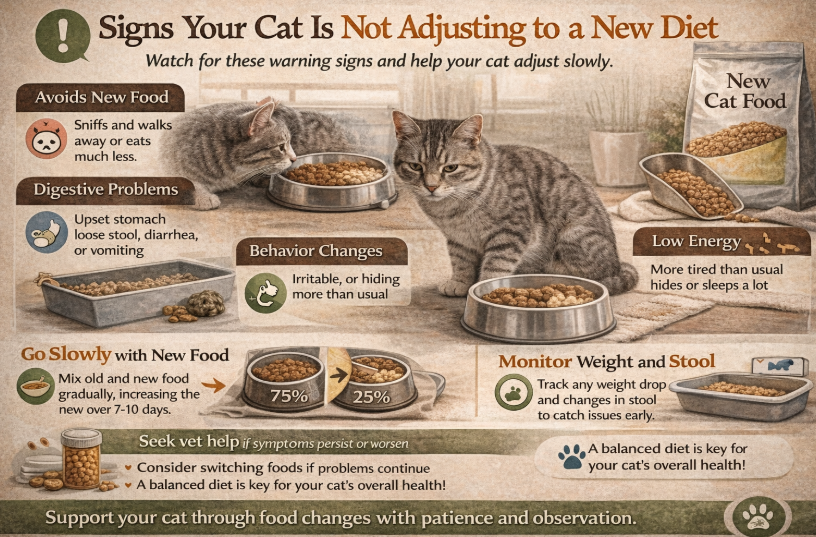
One of the first indicators of a cat not adjusting diet situation is a change in appetite. Some cats may eat less, while others may refuse food entirely. This often happens when the new food smells or tastes unfamiliar.
In addition, digestive issues are very common. You may notice loose stools, constipation, or occasional vomiting. These symptoms occur because your cat’s digestive system has not yet adapted to the new ingredients.
Another sign is behavioral change. Cats may become withdrawn or irritable when they feel uncomfortable. Because these signs can appear subtle at first, it is important to monitor your cat closely during any diet transition.
Behavior Changes That Signal Diet Adjustment Problems
Behavior often reflects how your cat feels physically. When a cat not adjusting diet properly, it may show changes in routine or mood. For example, your cat might avoid the feeding area or hesitate before eating.
Additionally, increased hiding or reduced interaction can indicate stress related to food changes. Cats rely on routine, so disruptions in their feeding habits can make them feel insecure.
Some cats may also become more vocal or restless. These changes are easy to overlook, but they can signal discomfort. Observing behavior patterns helps you identify when your cat not adjusting diet becomes a concern.
Digestive Symptoms You Should Never Ignore
Digestive problems are one of the clearest signs of a cat not adjusting diet. While mild changes may occur during transitions, persistent symptoms should not be ignored.
Frequent vomiting, diarrhea, or noticeable discomfort after eating often indicate that the new food is not suitable. In some cases, food intolerance or sensitivity may be the cause.
In addition, changes in stool consistency or odor can provide important clues. Monitoring your cat’s litter box habits helps you detect these issues early.
If symptoms continue for several days, it is best to slow down the transition. A gradual approach often resolves most cat not adjusting diet problems.
Weight And Energy Changes During Transition
Another important factor to watch is weight fluctuation. A cat not adjusting diet may lose weight if it refuses food or eats less than usual. Even small weight changes can affect your cat’s overall health.
On the other hand, reduced energy levels are also common. Cats that feel unwell may sleep more and show less interest in play. While this may seem normal at first, ongoing lethargy is a warning sign.
Tracking your cat’s weight and activity level provides valuable insight. These indicators often reveal whether your cat not adjusting diet situation is improving or worsening.
Why Some Cats Struggle More Than Others
Not all cats respond the same way to dietary changes. Some are naturally more sensitive, which makes cat not adjusting diet situations more likely. Age, health condition, and previous diet all play a role.
For example, older cats may have slower digestion, making transitions more difficult. Similarly, cats with sensitive stomachs may react more strongly to new ingredients.
In addition, sudden changes increase the risk of problems. If the transition is too fast, your cat’s system may not have enough time to adapt. This is why a gradual approach is always recommended.
How To Fix Diet Adjustment Problems Safely
If your cat not adjusting diet properly, the first step is to slow down the transition. Gradually mixing the new food with the old one allows your cat to adapt without stress.
Start with a small portion of new food and increase it slowly over time. This method gives the digestive system time to adjust and reduces the risk of discomfort.
You can also try warming the food slightly to improve its aroma. This often makes it more appealing to picky eaters.
For more guidance on transitions, you can explore https://www.wellnessonthegreen.com/ to understand how gradual changes support better digestion.
When To Consider Changing The Food Again
Sometimes the issue is not the transition but the food itself. If your cat not adjusting diet continues despite a slow transition, the new food may not be suitable.
Certain ingredients can cause sensitivities or allergies. In these cases, switching to a different formula may be necessary.
Look for high-quality options with simple ingredient lists. Limited-ingredient diets are often easier to digest and may reduce reactions.
According to the Cornell Feline Health Center, choosing the right diet is essential for long-term feline health. Therefore, selecting the right food plays a key role in preventing future issues.
Preventing Future Diet Adjustment Problems
Prevention is always better than correction. To avoid cat not adjusting diet problems in the future, always introduce new food gradually.
Consistency in feeding routines also helps. Cats feel more secure when their schedule remains stable.
In addition, choosing high-quality food from the start reduces the risk of digestive issues. Proper nutrition supports overall health and makes transitions easier.
Monitoring your cat regularly ensures you catch any issues early. Small changes in behavior or digestion can signal the need for adjustment.
Conclusion
A cat not adjusting diet situation should never be ignored, as it can lead to discomfort and health problems if left unresolved. While some symptoms may seem minor, they often indicate that your cat is struggling with the change.
By recognizing early signs, slowing down the transition, and choosing the right food, you can help your cat adapt successfully. Consistency and observation are key to ensuring a smooth dietary change.
Ultimately, taking the time to support your cat during food transitions leads to better health and a more comfortable feeding experience.
FAQ
- What are the first signs a cat is struggling with a new diet?
Changes in appetite, digestion, and behavior are the most common early indicators. - How long does it take for a cat to adjust to new food?
Most cats adjust within 7 to 10 days, but some may need more time. - Should I stop the new food if my cat has digestive issues?
It is better to slow down the transition rather than stop immediately. - Can stress cause problems during food changes?
Yes, stress can affect appetite and digestion during transitions. - When should I consult a veterinarian about diet issues?
If symptoms persist for several days or worsen, professional advice is recommended.