
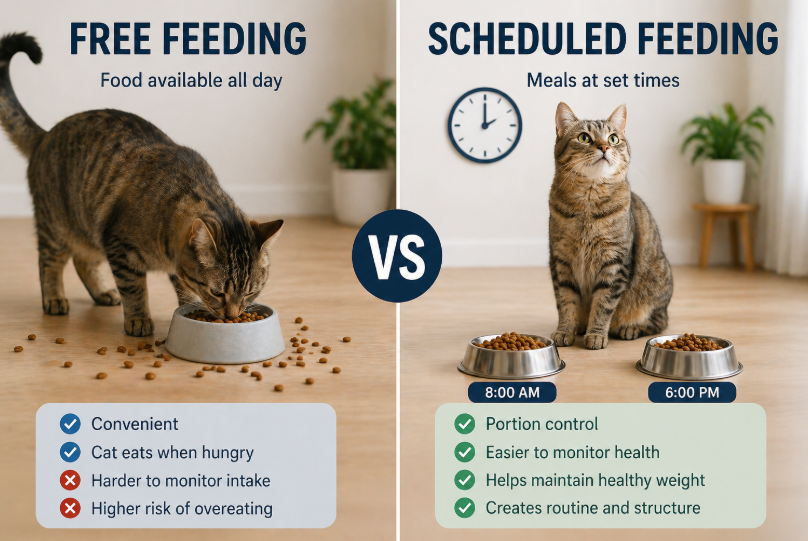
Free feeding vs scheduled feeding is a topic many cat owners struggle with, especially when trying to balance convenience with their pet’s long term health. While both approaches have their advantages, choosing the right method depends on your cat’s lifestyle, behavior, and nutritional needs. By understanding how each feeding style works, you can make a more informed decision that supports your cat’s overall well-being.
To begin with, feeding routines directly affect your cat’s digestion, weight, and daily behavior. Because cats are creatures of habit, the way food is provided can influence their energy levels and mood. Therefore, exploring free feeding vs scheduled feeding allows you to create a feeding plan that aligns with your cat’s natural instincts while also supporting a healthy routine.
Understanding Free Feeding and Scheduled Feeding Basics
Free feeding involves leaving food available at all times, allowing your cat to eat whenever they feel hungry. This method is often seen as convenient because it requires less planning and fits easily into busy schedules. However, while it may seem natural, it does not always match a cat’s true dietary needs.
On the other hand, scheduled feeding means offering meals at specific times during the day. This approach creates structure and allows you to control portion sizes more effectively. As a result, many veterinarians recommend scheduled feeding for maintaining a healthy weight.
When comparing free feeding vs scheduled feeding, it is important to consider how each method affects your cat’s eating habits. Some cats can regulate their intake naturally, while others may overeat if food is constantly available. Therefore, understanding your cat’s personality plays a key role in choosing the right method.
How Free Feeding Affects Cat Health
Free feeding may work well for some cats, especially those that can self-regulate their food intake. For these cats, having access to food throughout the day mimics natural grazing behavior. As a result, they may eat smaller portions more frequently, which can support steady energy levels.
However, many cats struggle with self-control when food is always available. Because of this, free feeding often leads to overeating and weight gain. Over time, excess weight increases the risk of health problems such as diabetes, joint issues, and heart conditions.
In addition, free feeding makes it harder to monitor your cat’s appetite. Changes in eating habits are often early signs of illness. When food is constantly available, it becomes difficult to notice these changes. Therefore, while free feeding offers convenience, it may come with hidden risks.
When evaluating free feeding vs scheduled feeding, these health considerations become especially important. A method that seems easier may not always be the best choice for long term wellness.
Benefits of Scheduled Feeding for Cats
Scheduled feeding provides structure, which is something most cats respond well to. By offering meals at consistent times, you create a routine that helps regulate your cat’s internal clock. As a result, your cat feels more secure and less anxious.
Another advantage is portion control. With scheduled feeding, you can measure each meal and ensure your cat receives the right amount of food. This helps prevent overeating and supports a healthy weight. Consequently, it reduces the risk of obesity-related conditions.
Moreover, scheduled feeding allows you to monitor your cat’s appetite more closely. If your cat suddenly eats less or more than usual, you can quickly identify potential health issues. This early detection can make a significant difference in treatment outcomes.
When comparing free feeding vs scheduled feeding, scheduled meals often provide better control and predictability. These benefits make it a preferred option for many cat owners.
Behavioral Differences Between Feeding Methods
Feeding routines also influence your cat’s behavior. With free feeding, some cats may become less engaged during mealtime because food is always available. As a result, they may lose interest in interactive feeding activities.
In contrast, scheduled feeding can increase engagement and excitement. Cats often anticipate meal times, which creates opportunities for bonding and training. For example, you can use feeding time to reinforce positive behaviors or introduce puzzle feeders.
However, scheduled feeding may initially lead to begging or vocalization, especially if your cat is used to constant access to food. Over time, though, most cats adjust to the routine and become more relaxed.
When analyzing free feeding vs scheduled feeding, it becomes clear that feeding style affects not only physical health but also emotional well-being. A structured routine often leads to more balanced behavior.
Choosing the Right Method for Your Cat
Deciding between free feeding vs scheduled feeding depends on several factors, including your cat’s age, activity level, and health condition. For example, kittens may benefit from more frequent meals due to their high energy needs. In this case, a modified scheduled feeding approach works well.
Adult cats, especially those prone to weight gain, often do better with scheduled meals. This method helps maintain a healthy balance and prevents overeating. On the other hand, highly active cats may tolerate free feeding if they can regulate their intake.
It is also important to consider your lifestyle. While scheduled feeding requires more effort, tools like automatic feeders can make the process easier. These devices allow you to maintain consistency even when you are not at home.
Ultimately, understanding free feeding vs scheduled feeding allows you to tailor your approach to your cat’s specific needs. Flexibility and observation are key to finding the right balance.
Common Mistakes to Avoid
Many cat owners unintentionally make mistakes when choosing a feeding method. One common issue is combining free feeding with high-calorie treats, which can lead to excessive weight gain. Therefore, it is important to monitor total food intake carefully.
Another mistake is inconsistent feeding times. Cats rely on routine, so irregular schedules can cause stress and confusion. Maintaining consistency helps your cat feel secure and supports better digestion.
Switching feeding methods too quickly can also create problems. If you decide to move from free feeding to scheduled feeding, it is best to do so gradually. This allows your cat to adjust without experiencing unnecessary stress.
When evaluating free feeding vs scheduled feeding, avoiding these mistakes can significantly improve outcomes. Small adjustments often lead to noticeable improvements in your cat’s health and behavior.
Long Term Impact of Feeding Choices
The choice between free feeding vs scheduled feeding has lasting effects on your cat’s health and lifestyle. Over time, consistent feeding habits contribute to better weight management, improved digestion, and stronger overall health.
Cats that follow a structured feeding routine often experience fewer health issues. They maintain stable energy levels and show more predictable behavior. As a result, they tend to be more active and engaged.
In contrast, cats that rely on free feeding may face challenges related to overeating and inactivity. While some cats manage well, many require more guidance to maintain balance.
Therefore, the long term impact of feeding choices should not be underestimated. By selecting the right method early on, you set the foundation for a healthier and happier life for your cat.
Conclusion
Free feeding vs scheduled feeding is not a one-size-fits-all decision, but understanding the differences can help you choose what works best for your cat. While free feeding offers convenience, it often lacks the control needed for maintaining optimal health. Scheduled feeding, on the other hand, provides structure, portion control, and better monitoring of your cat’s habits.
By observing your cat’s behavior and adjusting your approach accordingly, you can create a feeding routine that supports long term wellness. In the end, the goal is not just to feed your cat, but to provide a balanced lifestyle that promotes health, happiness, and longevity.
FAQ
1. Is it better to leave food out all day for cats?
Leaving food out can work for some cats, but many tend to overeat, which may lead to weight gain and health issues.
2. How many times a day should I feed my cat?
Most adult cats benefit from two scheduled meals per day, although some may need smaller, more frequent portions.
3. Can I switch from free feeding to timed meals?
Yes, but it is best to transition gradually to help your cat adjust without stress.
4. Do feeding routines affect cat behavior?
Yes, structured feeding can improve behavior by creating consistency and reducing anxiety around food.
5. What is the best option for indoor cats?
Scheduled feeding is usually better for indoor cats because it helps control weight and supports a balanced routine.