
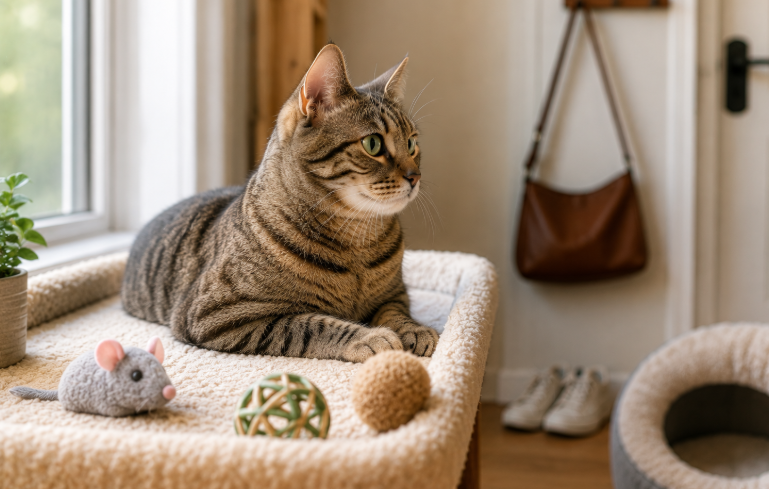
Leaving home can feel simple to you, but it may feel confusing or stressful for your cat. Many cats depend on familiar sounds, steady routines, and your presence to feel safe. Therefore, learning how to reduce cat anxiety before you leave can help your cat stay calmer, more comfortable, and more secure during your absence. A thoughtful plan does not need to be complicated. Instead, it should focus on routine, comfort, enrichment, and quiet reassurance.
Cats may seem independent, yet many form strong bonds with their people. Some cats handle short absences with no problem, while others become nervous when they notice signs that you are leaving. Your cat may follow you, meow more often, hide, scratch furniture, refuse food, or wait near the door. Although these behaviors can feel frustrating, they often come from uncertainty rather than stubbornness.
The good news is that small changes can make a real difference. You do not need to overwhelm your cat with attention before every departure. In fact, a dramatic goodbye may make your cat more alert. Instead, you can create a calm pattern that tells your cat everything is normal. Over time, this helps reduce cat anxiety because your leaving routine becomes predictable and less alarming.
Before you build a plan, it helps to understand your cat’s normal behavior. A confident cat may need only a cozy resting place and a steady feeding schedule. However, a nervous cat may need more preparation, especially if you leave for long workdays or frequent errands. Senior cats, rescue cats, kittens, and cats with past abandonment experiences may also need extra support.
Why Cats Feel Anxious When You Leave
Cats love routine because it helps them understand their world. When you leave home, your cat may notice changes long before the door closes. Picking up keys, putting on shoes, packing a bag, or turning off lights can become signals. If those signals always lead to your absence, your cat may begin to worry before you even step outside.
This reaction can happen because cats connect patterns with outcomes. For example, if your cat hears your keys and then spends hours alone, the sound of keys may trigger stress. As a result, your cat may pace, cling, or hide. To reduce cat anxiety, you need to soften those signals and make leaving feel less intense.
Some cats also become bored when they are alone. Boredom and anxiety often look similar because both can lead to restlessness. A cat without enough stimulation may scratch, knock things over, vocalize, or overgroom. Therefore, your plan should include both emotional comfort and healthy activity.
Separation-related stress can also become worse when a cat’s environment feels unsafe. Loud outdoor noises, limited hiding spaces, dirty litter boxes, or empty food bowls can make your cat feel more vulnerable. Because of this, your home setup matters as much as your goodbye routine. When your cat has control over where to rest, hide, eat, and play, it becomes easier to reduce cat anxiety throughout the day.
Health can also affect behavior. If your cat suddenly becomes clingy, fearful, aggressive, or restless when you leave, schedule a vet visit. Pain, thyroid problems, urinary issues, digestive trouble, or age-related changes can affect mood. Once health concerns are ruled out, you can focus on routine and comfort with more confidence.
Create a Calm Leaving Routine
A calm leaving routine should feel boring in the best possible way. Cats feel safer when your actions become predictable and low-pressure. Start by keeping your movements relaxed before you go. Avoid rushing around, making loud noises, or giving your cat intense attention right before leaving. Instead, move naturally and calmly.
You can also practice “fake departures.” Pick up your keys, put on your shoes, or open the door, then stay home. Repeat this at random times. At first, your cat may watch closely. However, with repetition, these signals may lose some of their emotional charge. This simple practice can reduce cat anxiety because your cat learns that departure cues do not always mean being left alone.
Your goodbye should be brief and gentle. A soft phrase, a small treat, or a short pet can help, but avoid long emotional farewells. When you act worried, your cat may feel worried too. Therefore, keep your tone steady and leave without turning the moment into a big event.
A consistent pre-leaving activity can help as well. For example, offer a small food puzzle, scatter a few treats, or place a favorite toy nearby. This gives your cat something pleasant to focus on as you leave. Make sure the activity is safe and familiar. Avoid toys with loose strings, ribbons, or small parts unless someone supervises play.
Food can be comforting when used wisely. If your cat enjoys treats, save a special but healthy treat for departure time. However, do not overfeed. The goal is to create a positive association, not a new meal problem. If your cat is anxious and will not eat while you are gone, start with very short absences and reward calm behavior when you return.
It also helps to leave your home in a steady condition. Keep blinds, lights, and background sound similar each day. If your cat likes quiet, avoid leaving loud music on. If your cat enjoys gentle household noise, soft background sound may help. Choose what matches your cat’s personality, not what seems comforting to humans.
When you return home, stay calm again. It is natural to want to greet your cat with excitement, but a big reunion can make your absence feel more dramatic. Instead, come in peacefully, set down your things, and let your cat approach you. This balanced rhythm can reduce cat anxiety because both leaving and returning feel normal.
Make Home Feel Safe and Enriching
Your cat’s environment should offer comfort, control, and stimulation. Start with safe resting spots. Cats often feel calmer when they can choose between open beds, high perches, covered hideaways, and quiet corners. A nervous cat may prefer an enclosed bed or a cardboard box with a soft blanket. Meanwhile, a confident cat may enjoy a window perch or cat tree.
Familiar scent can provide strong comfort. Leave bedding, blankets, and scratching areas in place. Try not to deep clean every favorite spot before leaving for the day. Although a clean home matters, familiar smells can reassure your cat. You may also leave a worn shirt near your cat’s resting area if your cat likes your scent.
Litter box care is another key part of emotional safety. A dirty litter box can increase stress, especially for sensitive cats. Scoop daily, keep the box in a quiet location, and avoid sudden litter changes. If your cat already feels nervous, a new litter scent or box style can make things worse. Stability helps reduce cat anxiety because your cat knows where to go and what to expect.
Food and water should also stay predictable. Feed your cat at regular times when possible. If your schedule changes, consider an automatic feeder that you test before relying on it. Fresh water should always be available in more than one place. Some cats drink more from fountains, but only use one if your cat already trusts it.
Enrichment gives your cat healthy ways to spend energy while you are away. Window views, puzzle feeders, scratching posts, tunnels, and safe solo toys can help. Rotate toys every few days so they stay interesting. However, avoid leaving out toys that could tangle, break, or be swallowed. Safety always comes first.
A short play session before you leave can also help. Use a wand toy, ball, or chase game to let your cat move naturally. Then offer a small meal or treat afterward. This follows a hunt, catch, eat, and rest pattern that many cats find satisfying. As a result, your cat may settle more easily after you go.
For cats that become anxious during long absences, consider a trusted visitor. A neighbor, friend, or pet sitter can check food, water, litter, and mood. Even a brief visit can provide reassurance for social cats. However, shy cats may prefer quiet check-ins without forced interaction. The visitor should respect your cat’s comfort level.
If your cat becomes very distressed, speak with your veterinarian or a qualified feline behavior professional. Severe anxiety may need a structured behavior plan. In some cases, calming products or medical support may help. Still, you should avoid giving supplements or medications without professional guidance.
Build Confidence Over Time
The best way to reduce cat anxiety is to build confidence gradually. Start with short, low-stress absences. Leave for a few minutes, then return calmly. Once your cat handles that well, slowly increase the time. This process teaches your cat that you always come back and that being alone can feel safe.
During this training, pay attention to your cat’s signals. If your cat eats, rests, grooms, or plays while you are gone, those are good signs. If your cat hides for hours, refuses food, or acts panicked, slow down. Progress should feel gentle, not forced. Cats learn best when they feel secure.
Your own routine matters too. Try to avoid making every departure different. If your work schedule changes often, create small anchors that stay the same. For example, feed breakfast, scoop the litter box, play for five minutes, and offer a puzzle toy before you leave. Even when the time changes, the order can feel familiar.
Some cats benefit from a dedicated “comfort zone.” This does not mean locking your cat away unless it is necessary for safety. Instead, create an area with a bed, water, scratching post, toys, and a hiding spot. Your cat can choose that space when it wants security. Over time, this zone may become a favorite place to relax.
You should also avoid punishment for anxious behavior. Scolding, spraying water, or yelling can make anxiety worse. If your cat scratches, meows, or has an accident, look for the cause. Your cat may need more enrichment, cleaner litter, better routine, or medical care. Kind, consistent changes work better than punishment.
Technology can offer helpful clues. A pet camera may show whether your cat sleeps, plays, cries, or waits at the door. However, do not obsess over every movement. Use the information to adjust your plan. If your cat settles after ten minutes, that is different from a cat that panics for hours.
Multi-cat homes need extra attention. Sometimes one cat handles departures well while another struggles. In other cases, tension between cats increases when people leave. Provide separate food stations, water bowls, litter boxes, and resting spots. More resources can reduce competition and help each cat feel secure.
If you work outside the home every day, enrichment becomes especially important. Give your cat chances to climb, scratch, watch birds, solve food puzzles, and enjoy quiet rest. When your cat’s day feels fuller, your absence may feel less empty. This practical approach can reduce cat anxiety without making your cat dependent on constant attention.
For people who travel often, preparation should begin before each trip. Keep your cat’s routine steady in the days before you leave. Avoid introducing new foods, new litter, or major furniture changes right before travel. If a sitter will visit, arrange a short meeting first. Familiarity can make the first visit less stressful.
Leaving home should never feel like a daily crisis for you or your cat. With patience, your cat can learn that departures are normal and safe. The goal is not to remove every sign of emotion. Instead, the goal is to help your cat recover quickly, rest comfortably, and trust the routine.
In the end, the most effective plan combines calm behavior, a stable home, safe enrichment, and gradual practice. When you reduce cat anxiety through small daily habits, your cat gains confidence one step at a time. You also feel more relaxed because you know your cat has comfort, care, and security while you are away.
A peaceful departure begins with consistency. Keep your goodbye simple, make the home inviting, and give your cat healthy ways to stay occupied. Over time, these steps can reduce cat anxiety and make leaving home easier for everyone. Your cat may still notice when you go, but the moment can become calmer, safer, and far less stressful.
FAQ
1. Why Does My Cat Meow When I Leave the House?
Your cat may meow because they feel uncertain, bored, or attached to your routine. Some cats vocalize when departure cues appear, such as keys or shoes. A calm routine, enrichment, and short practice absences can help.
2. Should I Leave the TV or Music On for My Cat?
Some cats enjoy soft background sound, while others prefer quiet. Use what matches your cat’s normal environment. Keep the volume low and avoid sudden, loud noises that may create more stress.
3. Can Toys Help With Separation Stress?
Yes, safe toys can help your cat stay busy while you are gone. Puzzle feeders, scratching posts, and solo toys are good options. Avoid anything with loose strings or small parts when your cat is unsupervised.
4. How Long Can a Cat Stay Alone During the Day?
Many healthy adult cats can handle a normal workday if they have food, water, clean litter, and enrichment. However, kittens, senior cats, and cats with medical needs may require more frequent care.
5. When Should I Talk to a Vet About Leaving-Home Anxiety?
Contact your vet if your cat stops eating, urinates outside the litter box, overgrooms, panics, hides for long periods, or changes behavior suddenly. Health problems can look like anxiety, so it is best to check early.